
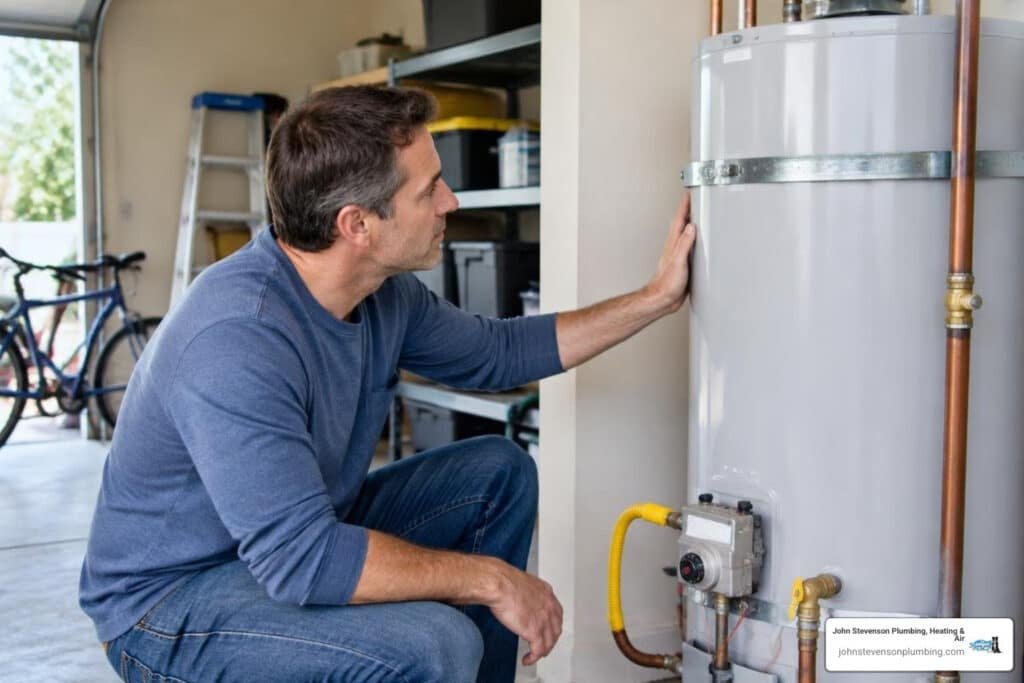
Can a Water Heater Cause Low Water Pressure in Carlsbad, CA?
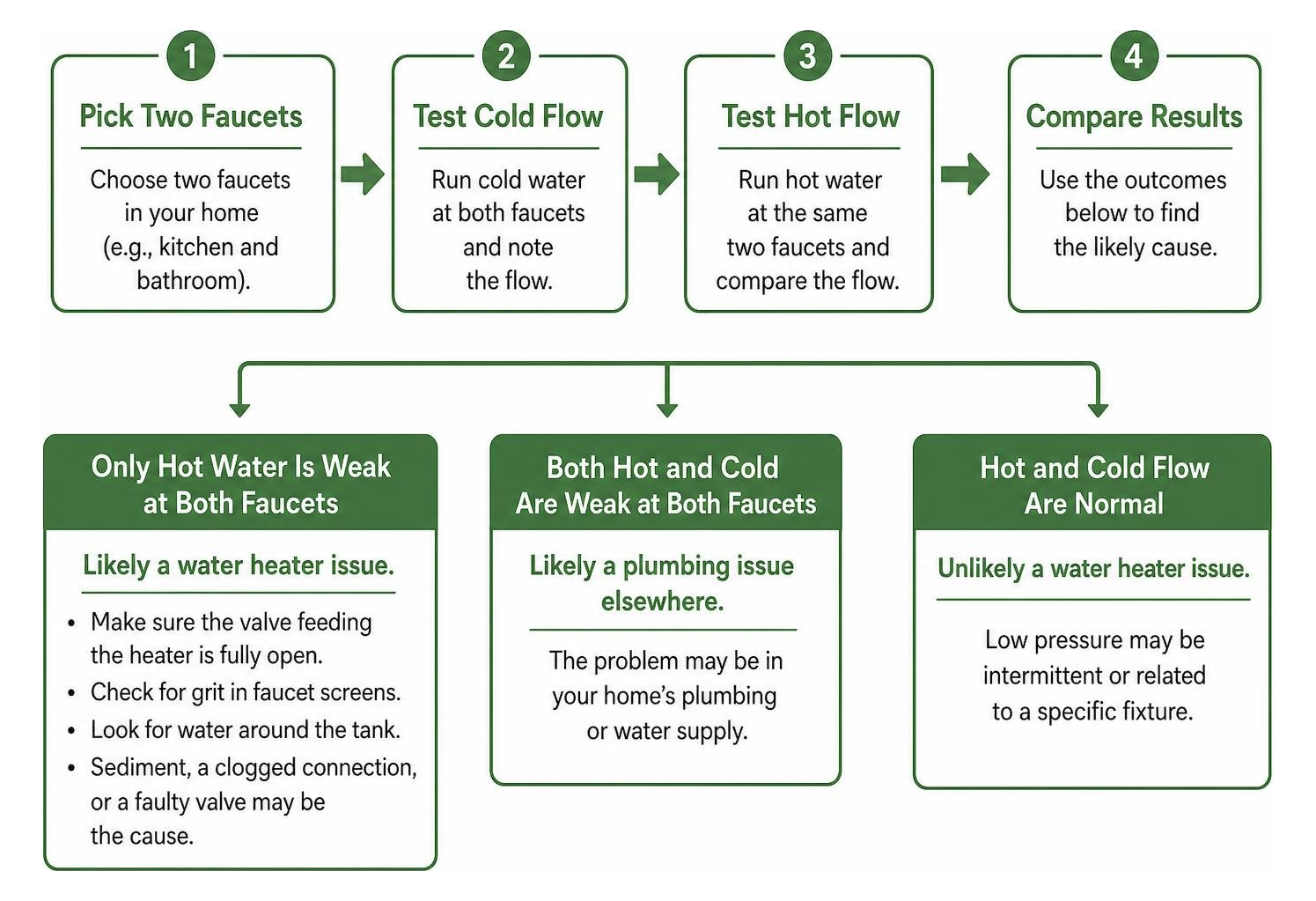
Yes. A water heater can restrict hot water flow even when your cold water runs normally. If hot water pressure has dropped in your Carlsbad, CA, home, compare hot and cold flow at two faucets. If only the hot water is weak at both, check that the valve feeding the heater is fully open. Look for grit in faucet screens and water around the tank, too. Sediment, a clogged connection, or a faulty valve may be the cause. If both hot and cold water are weak, the problem may be elsewhere in your plumbing. These checks can help you decide whether you need water heater repair.
Explore water heater installation in Carlsbad or get help with water heater repair.
I’m John Stevenson, and I’ll walk you through the checks that can help you find the cause.
If the simple checks don’t restore your hot water flow, ask us to inspect your water heater.
Can a Water Heater Cause Low Water Pressure? Core Mechanisms Explained
When you turn on the shower in the morning expecting an invigorating spray, getting hit with a weak trickle that makes washing your hair feel like an Olympic chore is frustrating. You might naturally wonder: can a water heater cause low water pressure across your entire home?
The short answer is yes. Your water heater sits at the heart of your home’s hot-water distribution network. Water enters through a cold supply line, gets heated within the vessel (or across a heat exchanger), and leaves through the hot water outlet pipe to feed your fixtures. Anything that constricts this hydraulic pathway will choke your delivery volume.
When homeowners experience a sudden drop in force, they often confuse water flow (measured in gallons per minute, or GPM) with static water pressure (measured in pounds per square inch, or PSI). While static pressure represents the physical force behind stationary water, a physical restriction inside the heater drops the dynamic flow rate dramatically when taps are opened. Understanding the key differences when diagnosing a failing water heater helps you spot whether mineral buildup, degrading components, or valve friction is the root culprit.
| Sediment Depth (Inches) | Estimated PSI Loss | Estimated Flow Reduction (%) | Typical System Symptoms |
|---|---|---|---|
| 1 – 2 Inches | 2 – 5 PSI | 5% – 10% | Slight delay in hot water delivery; faint popping sounds. |
| 3 – 5 Inches | 10 – 15 PSI | 20% – 35% | Noticeable pressure drop in upstairs showers; reduced hot water volume. |
| 6+ Inches | 20+ PSI | 40% – 60%+ | Severe flow restriction; loud kettling/rumbling; premature element failure. |
Can a Water Heater Cause Low Water Pressure via Sediment Buildup?
Sediment accumulation is the single most frequent mechanical culprit behind hot-side pressure loss, presenting in roughly 4 out of 10 low-pressure service calls on storage tanks over 6 years old.
In coastal and Southern California communities with moderate to hard water (often exceeding 7 grains per gallon), tap water carries dissolved minerals like calcium carbonate and magnesium. When water is heated inside the tank, these minerals precipitate out of the liquid solution and settle to the bottom. Over 3 to 5 years, a standard 40- to 50-gallon tank can accumulate 2 to 4 inches of calcified sediment.
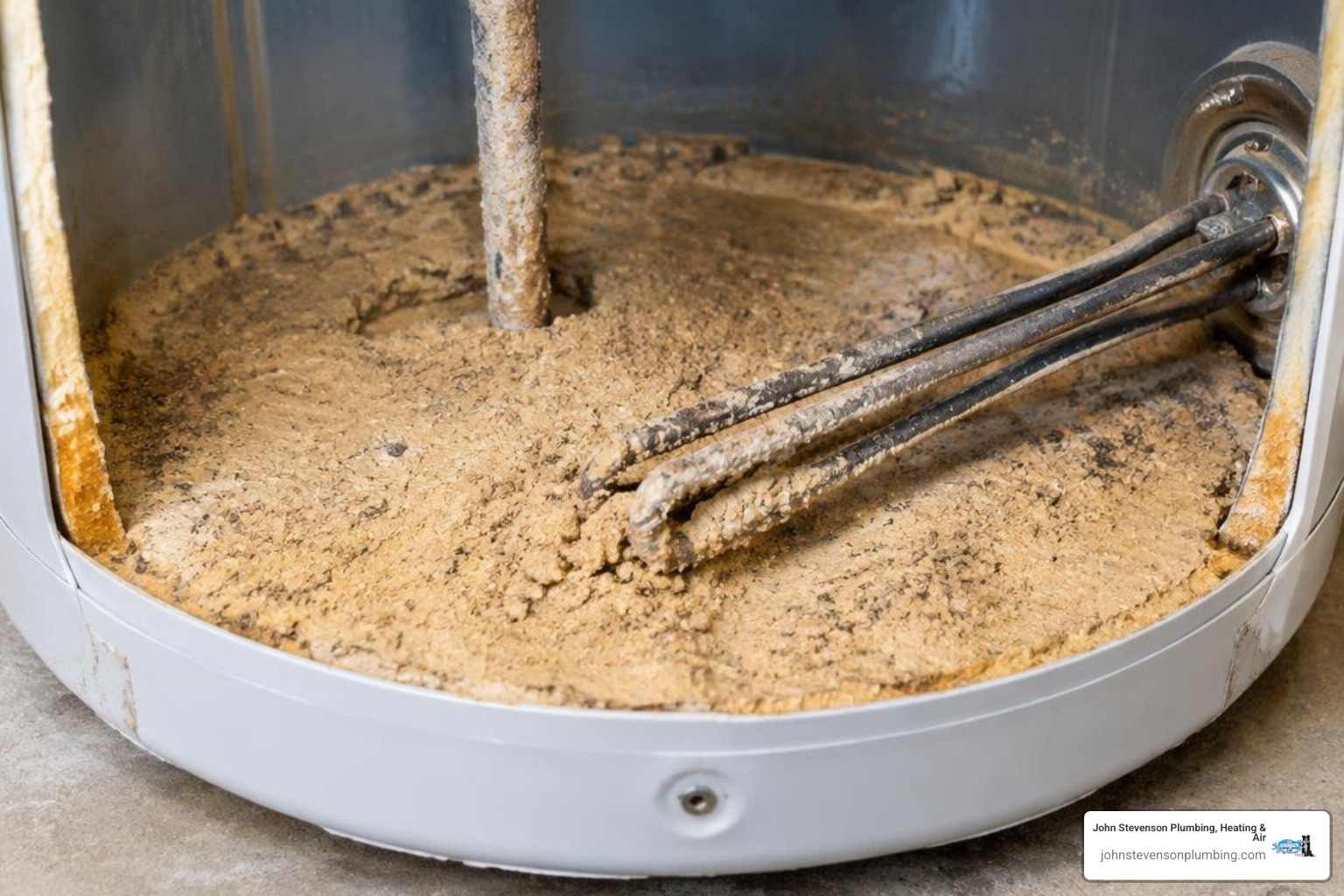
This mineral crust acts as an unwanted thermal barrier between the gas burner or lower electric element and the water. As pockets of trapped water boil beneath the rock-hard layer, the tank produces distinct popping or “kettling” noises. More importantly, as the sediment bank grows, it displaces usable water volume and can physically choke the cold water inlet dip tube and lower the intake clearances, creating severe flow bottlenecks before hot water ever reaches your fixtures.
Can a Water Heater Cause Low Water Pressure from Dip Tube Failure?
The dip tube is a long plastic pipe (usually made of cross-linked polyethylene or polypropylene) connected to the cold water inlet. Its job is to direct incoming cold water straight to the bottom of the tank so it heats efficiently rather than diluting the hot water rising to the top.

Over time, water chemistry, high operating temperatures, and chlorine can make the dip tube brittle. When a dip tube deteriorates or breaks apart:
- Plastic fragments and white flecks shear off and travel down the hot water lines.
- These shards migrate into faucet aerators, showerhead flow restrictors, and washing machine supply screens, creating localized blockages.
- Cold water enters near the top of the tank, causing short-cycling and cold-water bypass, which lowers both water temperature and dynamic flow balance.
If you clean out your bathroom aerator and find tiny white or yellowish crumbs that look like plastic sand, your dip tube is likely disintegrating.
Valve Obstructions, Heat Traps, and External Plumbing Bottlenecks
A water heater doesn’t operate in isolation; it depends on critical valves and connection hardware that can fail and restrict water flow.
- Partially Closed Shut-Off Valves: Even a 10% accidental closure of an inlet shut-off valve can cause up to a 50% perceived flow drop at the faucet. Older brass gate valves are notorious for internal gate detachment, where the handle turns freely but the internal wedge remains stuck halfway down. Upgrading to a full-port quarter-turn ball valve prevents this hidden choke point.
- Clogged Heat Trap Nipples: Modern water heaters feature dielectric heat trap nipples on the inlet and outlet ports. These fittings contain small internal plastic balls or silicone flaps designed to prevent convective heat loss. If mineral scale or debris jams one of these balls in a semi-closed position, it directly throttles water leaving the unit.
- Failing Pressure Reducing Valves (PRVs): In hilly coastal areas where municipal water lines run at high pressure (sometimes over 150 PSI), a whole-house PRV is required to regulate domestic pressure down to a safe 40–80 PSI. Most PRVs have a service lifespan of 10 to 15 years. When the internal rubber diaphragm hardens or its spring fails, you will experience a whole-house pressure drop.
- Thermal Expansion Issues: In closed plumbing systems with check valves or PRVs, water expands as it heats. Understanding expansion tank pressure is vital, because an unbuffered closed system can create erratic hydraulic swings and stress internal heater seals.
- Internal Galvanized Pipe Rust: Over several decades, older 3/4-inch galvanized steel lines can experience heavy internal oxidation, narrowing their interior channel to the diameter of a drinking straw. Because heat accelerates this chemical corrosion, hot water lines often scale up much faster than cold supply lines.
Tank vs. Tankless Water Heaters: Why Pressure Drops Differ
Low hot water pressure presents differently depending on whether your home relies on a traditional storage tank or a modern on-demand tankless system. Choosing the right design requires comparing tank vs tankless water heaters based on your family’s daily water consumption.
Storage Tank Pressure Bottlenecks
Tank-style water heaters store 40 to 80 gallons of preheated water. In these systems, pressure loss is almost always mechanical and cumulative:
- Heavy mineral buildup at the base slowly robs the system of flow capacity.
- Corroded brass drain valves and inlet fittings develop scale bridges.
- Loose sediment pieces get sucked upward into the hot water outlet pipe during high-demand usage spikes, causing sudden pressure drops across downstream fixtures.
Tankless Heat Exchanger Scale and Winter Flow Throttling
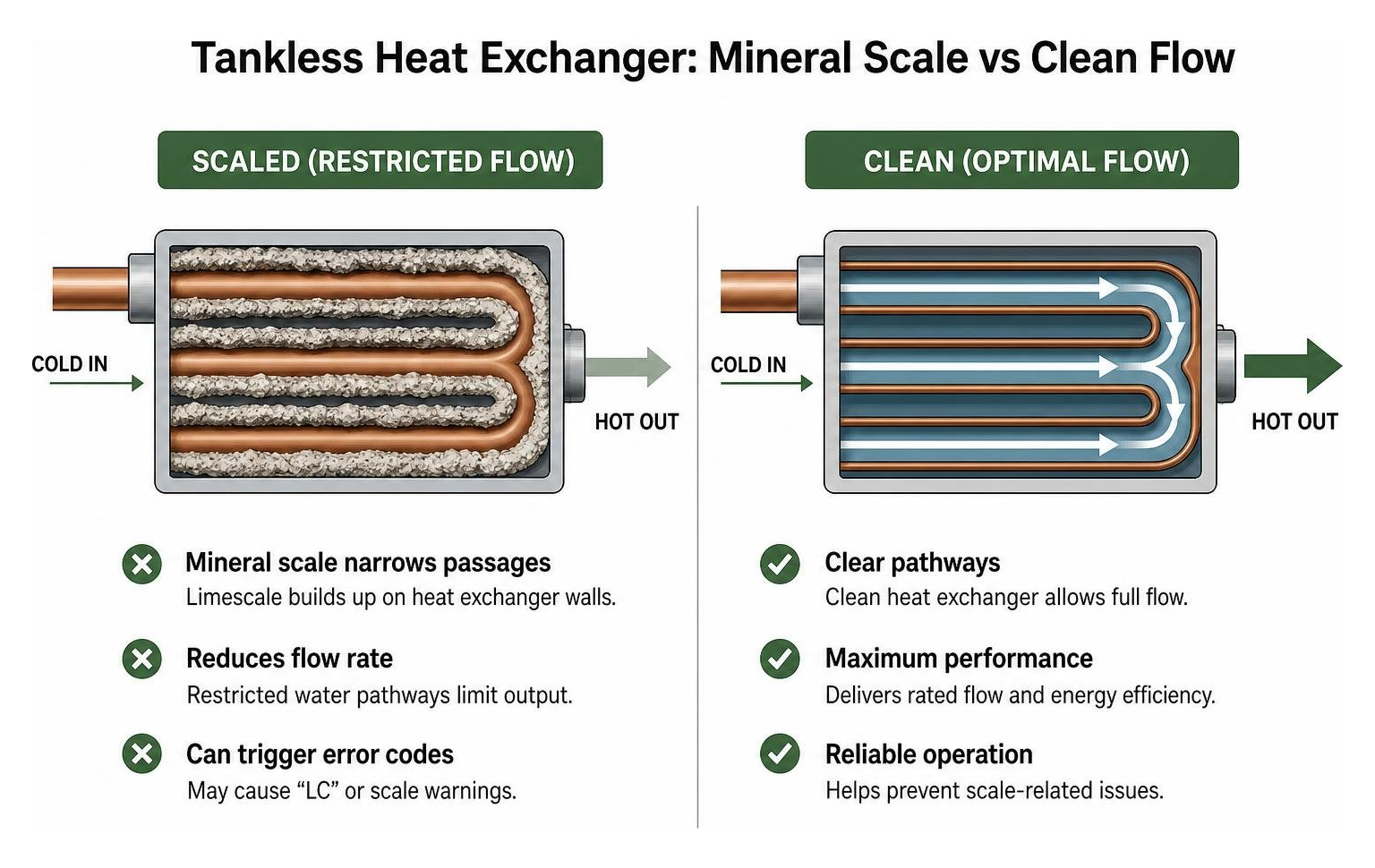
Tankless units heat water instantly as it moves through narrow copper or stainless steel heat exchanger coils. This high-efficiency design creates distinct pressure behaviors:
- Mineral Scale Choke: Because tankless heating surfaces operate at high temperatures, hard water minerals crystallize rapidly on heat exchanger walls. This limescale narrows the narrow pipe passages like plaque in an artery, dropping flow rates significantly and causing error codes (such as “LC” or scale warnings).
- Seasonal Flow Throttling: Tankless heaters are rated by their flow capacity at a given temperature rise. In winter, incoming municipal groundwater temperatures can drop sharply. To ensure water reaches the set target temperature (such as 120°F), the unit’s onboard computer automatically throttles its internal flow control valve, decreasing your output flow rate to compensate for the colder intake.
Step-by-Step DIY Diagnostic Checklist for Low Hot Water Pressure
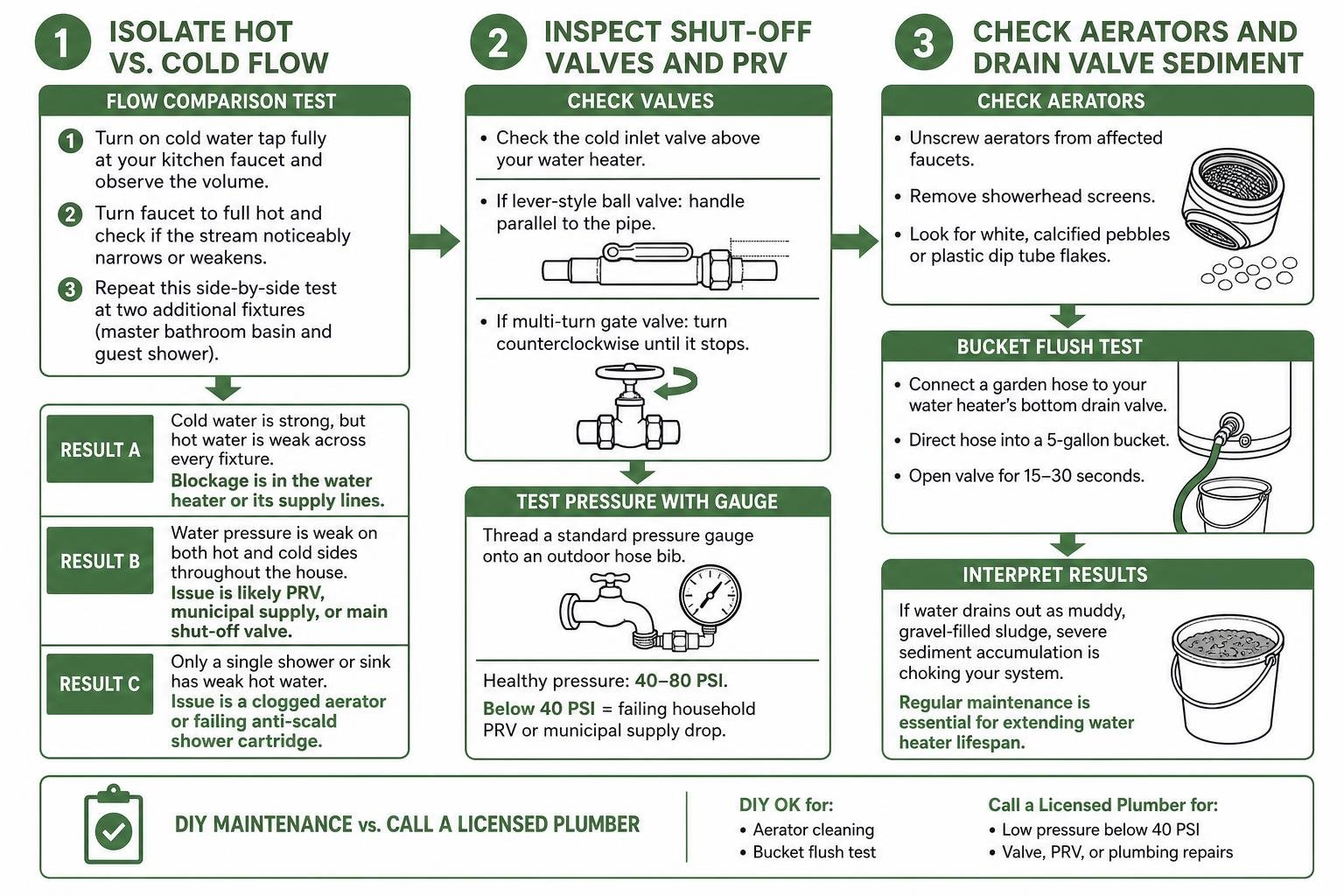
Before assuming your entire water heater is broken, use this systematic checklist to identify whether the restriction is localized to a single fixture, limited to the water heater, or affecting your whole home’s plumbing.
Step 1: Isolate Hot vs. Cold Water Flow
Run a systematic flow comparison across your home:
- Turn on the cold water tap fully at your kitchen faucet and observe the volume.
- Turn the faucet to full hot and check if the stream noticeably narrows or weakens.
- Repeat this side-by-side test at two additional fixtures (such as a master bathroom basin and a guest shower).
- Result A: Cold water is strong, but hot water is weak across every fixture. The blockage is located within the water heater or its immediate supply lines.
- Result B: Water pressure is weak on both hot and cold sides throughout the house. The issue is likely your main PRV, municipal supply, or a main shut-off valve.
- Result C: Only a single shower or sink has weak hot water. The issue is a clogged aerator or a failing anti-scald shower cartridge.
Step 2: Inspect Shut-Off Valves and PRV Operation
- Check the Cold Inlet Valve: Locate the cold water shut-off valve above your water heater. If it is a lever-style ball valve, verify the handle is parallel to the pipe. If it is a multi-turn gate valve, ensure it is turned counterclockwise until it stops.
- Test Household Pressure with a Gauge: Thread a standard water pressure gauge onto an outdoor hose bib. Healthy residential plumbing pressure should sit between 40 and 80 PSI. A reading below 40 PSI indicates a failing household PRV or municipal supply drop.
Step 3: Check Fixture Aerators and Drain Valve Sediment
- Examine Aerator Screens: Unscrew the aerators from your affected faucets and pop out your showerhead screens. Look for white, calcified pebbles or plastic dip tube flakes.
- Perform a Bucket Flush Test: Connect a garden hose to your water heater’s bottom drain valve, direct the hose into a 5-gallon bucket, and open the valve for 15–30 seconds. If the water drains out as a muddy, gravel-filled sludge, severe sediment accumulation is choking your system. Regular maintenance is essential for extending water heater lifespan.
When to Attempt DIY Maintenance vs. Calling a Licensed Plumber
Routine maintenance can solve minor flow issues, but certain repairs require the tools, testing equipment, and safety protocols of a licensed plumbing technician.
Safe DIY Fixes Homeowners Can Perform
- Aerator and Showerhead Soaks: Remove clogged aerators and soak them in warm distilled white vinegar overnight to dissolve calcium deposits.
- Routine Tank Flushing: If your water heater has been maintained regularly, connecting a hose and flushing loose sediment out through the drain valve every 6 to 12 months is a great preventative step.
- Checking and Adjusting Valve Positions: Confirming that water heater shut-off valves and water softener bypass handles are completely open.
Critical Warning Signs Requiring Professional Water Heater Repair
Do not attempt complex DIY repairs if you encounter any of the following symptoms:
- Active Tank Leaks or Base Pooling: Water leaking from the bottom seams indicates internal tank failure.
- Gas Odors or Electrical Malfunctions: Any scent of natural gas or tripped 240V circuit breakers requires immediate professional intervention.
- Loud, Persistent Kettling After Flushing: Hardened limescale that cannot be dislodged with a garden hose requires specialized chemical descaling or component replacement.
- Corroded or Frozen Gate Valves: Forcing an old, corroded shut-off valve can snap the stem and cause an active flood.
- Failed Pressure Reducing Valves (PRVs): Replacing a primary pressure regulator requires cutting into main supply lines and calibrating dynamic line pressure.
For dedicated assistance throughout North County and San Diego, schedule professional San Diego water heater repair to restore your hot water pressure safely.
Frequently Asked Questions About Water Heater Pressure Drops
Why is my hot water pressure low but cold water pressure normal?
When cold water runs with full force while hot water trickles, the restriction is isolated to the hot water side of your plumbing system. The most common causes are a heavy sediment bed blocking the bottom of the water heater, a partially closed cold inlet valve, clogged heat trap nipples, or plastic dip tube shards choking your fixture aerators.
Can a water heater leak cause low water pressure in the house?
Yes. A significant leak from the tank body, a corroded pipe nipple, or a stuck-open temperature and pressure (T&P) relief valve diverts water away from your fixtures. Because water takes the path of least resistance, an active leak lowers dynamic pressure across your hot distribution lines.
Does a bigger water heater provide better water pressure?
No. A larger tank provides more gallons of hot water storage, but tank volume does not determine household water pressure. Dynamic water pressure is governed by your municipal supply, your household pressure reducing valve (PRV), and the diameter of your plumbing lines. In continuous-flow tankless systems, sizing up can provide higher flow rates (GPM) during peak demand, but it will not increase overall baseline PSI.
Conclusion
A sudden drop in hot water pressure is more than an annoyance—it’s a clear signal from your plumbing system that a valve is obstructed, sediment is choking your tank, or an internal component is failing. Taking a few minutes to check your valves, clean your fixture aerators, and test your water pressure can quickly pinpoint the underlying bottleneck.
At John Stevenson Plumbing, Heating & Air Conditioning, our certified technicians are proud to provide homeowners across Carlsbad, San Diego County, Orange County, and surrounding communities with dependable solutions backed by our 5-Star Service Guarantee. Whether your home needs a professional tank descaling, a high-efficiency replacement, or comprehensive plumbing services, we deliver thorough diagnostics and lasting results to restore your comfort and water flow.