
Why Does My Drain Smell Bad? Here’s What’s Going On
If you’ve been wondering why does my drain smell bad, you’re far from alone — and the answer is usually one of a handful of well-known plumbing issues. Here’s a quick breakdown of the most common causes:
- Dry P-trap – The water seal in the U-shaped pipe under your drain has evaporated, letting sewer gas into your home
- Biofilm and bacteria buildup – A slimy layer of organic debris coats the inside of your pipes and releases foul-smelling gases as it breaks down
- Blocked plumbing vent – A clogged roof vent traps sewer gases in your pipes instead of releasing them outside
- Partial clog – Hair, grease, soap scum, or food waste is decomposing inside the drain
- Mold or mildew – Moisture and organic material inside pipes or overflow channels creates musty odors
- Sewer line problem – A cracked or blocked sewer line allows gases to back up through your drains
- Garbage disposal debris – Food particles trapped under the rubber splash guard or inside the disposal unit rot and smell
Most drain odors in Carlsbad homes come down to one of these causes — and many can be resolved with a quick DIY fix. But some point to a deeper plumbing issue that needs a professional eye.
Whether it’s a bathroom sink that reeks after a vacation, a shower drain with a persistent musty smell, or a kitchen sink that smells like rotten eggs no matter how much you clean it, this guide walks you through exactly what’s happening and what to do about it.
Why Does My Drain Smell Bad? The Most Common Causes
In most homes, drain odors come from either something rotting inside the drain or sewer gas slipping past a failed water seal. Research consistently points to a few repeat offenders:
- Dry P-traps in unused fixtures
- Biofilm and bacteria buildup inside sink, tub, and shower drains
- Partial clogs holding hair, grease, soap scum, or food debris
- Mold and mildew in wet, dirty drain channels
- Garbage disposal residue
- Blocked vent pipes
- Cracked drain or sewer piping
- Missing or damaged traps after older repairs or remodels
A useful rule of thumb: if one drain smells, the issue is often local to that fixture. If several drains smell at once, we start thinking bigger – venting, sewer line trouble, or a system-wide issue.
Research also suggests dry traps and vent-related sewer gas odors affect up to 20% of households annually, while biofilm contributes to foul smells in more than 60% of frequently used kitchen and bathroom sinks. In other words, your drain is not trying to ruin your day personally. It is just following plumbing physics.
Why does my drain smell bad after the fixture sits unused?
This is classic dry P-trap behavior.
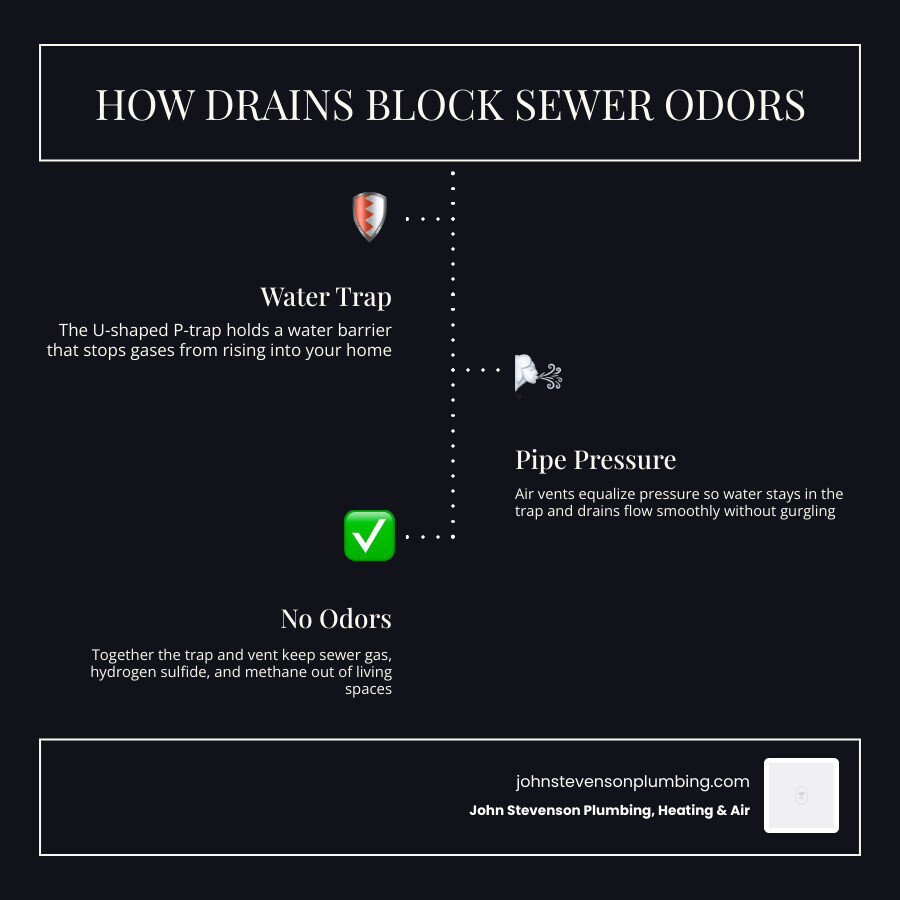
The P-trap is the curved section of pipe below a sink or built into a tub or shower drain. Its job is simple but important: it holds water. That water forms a seal that blocks sewer gases from drifting back into the house.
When a fixture sits unused, that water slowly evaporates. Guest bathrooms, basement sinks, laundry room drains, and floor drains are especially prone to this. Research shows dry P-traps are the leading cause in about 70% of smelly-drain cases involving infrequently used fixtures.
Common clues include:
- The smell appears after a trip or long stretch of non-use
- The odor is strongest first thing when entering the room
- Running water for a short time improves or solves it
Unused drains can dry out in as little as a few weeks, especially in warm weather or dry indoor conditions.
Why does my drain smell bad even after I clean it?
If you scrubbed the visible parts and the smell came back fast, the problem may be deeper than the drain opening.
Possible reasons include:
- Hidden biofilm coating the inside of the pipe
- Gunk in the sink overflow channel
- Buildup under a pop-up stopper
- A partially clogged P-trap
- A blocked or poorly functioning vent
- A sewer line issue farther down the system
- A corrugated drain pipe under the sink that traps debris in its ridges
This is why some homeowners clean the sink, congratulate themselves, and then get hit with the same odor two days later. If the source is inside the piping, surface cleaning alone will not solve it.
What different drain smells can tell you
Not every drain smell means the same thing.
| Smell type | Likely cause |
|---|---|
| Rotten eggs or sulfur | Hydrogen sulfide from bacteria, biofilm, or sewer gas from a dry trap |
| Sewage smell | Dry or failed trap, blocked vent, sewer backup, sewer line problem |
| Musty or damp smell | Mold, mildew, or organic buildup in overflow channels or around the drain |
| Sour or rotten food smell | Kitchen drain buildup, grease, food scraps, garbage disposal residue |
| Ammonia-like odor | Decomposing waste, concentrated biofilm, or sewer gas |
If the odor is strong, widespread, or truly smells like raw sewer gas, it is time to stop guessing and investigate the plumbing system more seriously.
Dry P-Traps and Sewer Gas: The Fastest Fix to Check First
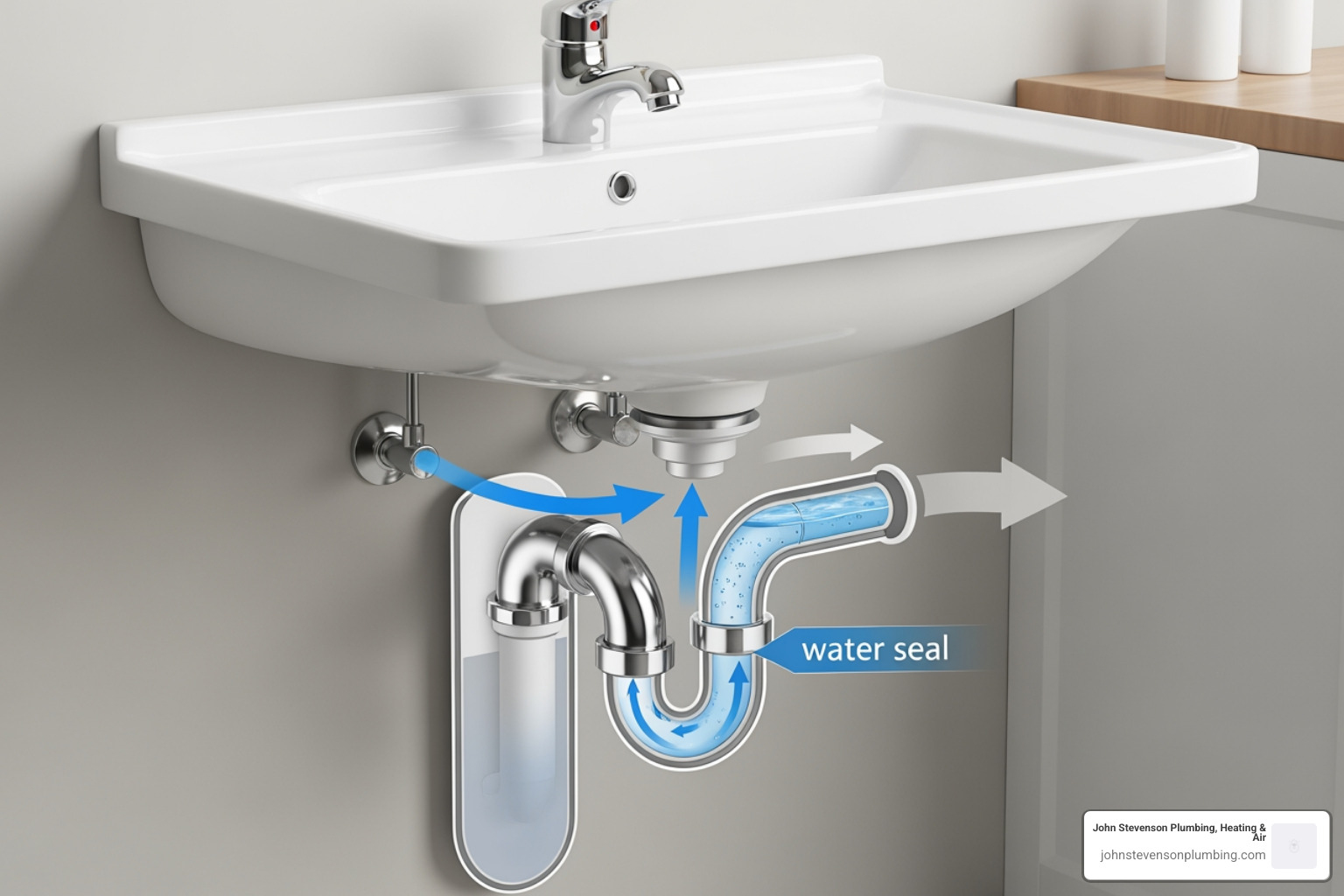
A dry P-trap is the quickest thing to check because it is common, simple, and often fixable in minutes.
Why a dry P-trap causes sewer smells
A working trap holds a small amount of water in the bend of the pipe. That trapped water creates a barrier between your home and the sewer system.
When the trap dries out, sewer gases can travel back through the drain opening. Those gases can include hydrogen sulfide, methane, and ammonia. Hydrogen sulfide is the one that often gives you that unmistakable rotten egg smell.
Dry traps happen because of:
- Evaporation in unused drains
- Siphoning caused by vent problems
- Cracks or leaks in the trap
- Restriction from hair or soap scum that interferes with proper trap seal
How to refill and test a dry P-trap
Start here before trying anything complicated.
- Run water at the smelly sink for about 30 seconds.
- For a shower, tub, or floor drain, run water for 30 to 60 seconds.
- Flush an infrequently used toilet to refresh its built-in trap.
- Wait a few minutes and check whether the odor fades.
If the smell disappears, the trap was likely dry.
For rarely used drains, a simple maintenance habit helps:
- Run water monthly
- After refilling the trap, add a small amount of mineral oil to slow evaporation in floor drains or guest bath fixtures
If the smell returns quickly, the trap may be leaking, siphoning, or missing entirely.
When a P-trap is damaged, clogged, or missing
Not every trap problem is just dryness.
A trap can also be:
- Clogged with hair and soap scum
- Cracked or loose
- Improperly installed
- Missing after an old DIY remodel
A restricted trap can sometimes act like a siphon, pulling water out of itself and allowing sewer odors back in. If you can access the trap under a sink, you may be able to clean it. If not, or if the issue involves a tub or shower, it is smart to bring in a professional.
If you need help diagnosing trap problems or other fixture issues, our plumbing services team can inspect the setup and find the real source of the odor.
Biofilm, Bacteria, and Clogs Inside the Pipe
If the drain is used often and still smells bad, biofilm is a top suspect.
How bacteria buildup creates bad drain odors
Biofilm is that slimy coating that forms inside drains from soap, skin cells, toothpaste, hair, grease, oils, and food waste. Once it builds up, bacteria feed on the trapped organic material and release foul-smelling gases as they break it down.
In bathroom drains, biofilm usually comes from:
- Hair
- Soap scum
- Shaving cream
- Toothpaste
- Skin oils
In kitchen drains, it usually comes from:
- Grease
- Food scraps
- Oils
- Garbage disposal residue
Anaerobic bacteria inside that gunk can produce hydrogen sulfide, which smells like sulfur or rotten eggs. Research suggests biofilm is behind odor problems in more than 60% of frequently used kitchen and bathroom sinks.
DIY steps to clean a smelly drain safely
For a mild, localized smell, a careful DIY cleaning may help.
Try this process:
- Remove and clean the stopper or drain cover.
- Pull out visible hair or debris with a plastic drain tool.
- Flush with hot water if your piping can safely handle it.
- Pour baking soda into the drain, followed by vinegar.
- Let it fizz briefly, then flush again with hot water.
- Use an enzyme cleaner for ongoing organic buildup.
- Clean the sink overflow opening if your sink has one.
- For a garbage disposal, clean under the rubber splash guard.
A few safety notes:
- Avoid mixing household chemicals
- Be cautious with very hot or boiling water on some pipe materials
- Skip harsh chemical drain cleaners for routine odor problems when possible
- Never put your hand into a garbage disposal
If the odor returns within days, the buildup may be deeper in the line. That is when professional drain cleaning becomes the better next step. Research shows professional drain cleaning resolves recurring odor issues in about 85% of homes where simple DIY methods fail quickly.
Kitchen vs bathroom vs shower drain smells
Different drains smell for different reasons.
Kitchen drains:
- Usually smell from grease, food particles, and disposal residue
- Tend to develop sour, rotten, or sulfur-like odors
- May also smell under the sink if debris is stuck in a corrugated pipe or disposal connection
Bathroom sink drains:
- Commonly smell from toothpaste, shaving residue, soap scum, and biofilm
- Can also smell from stagnant water in the overflow channel
- Pop-up stoppers often collect surprisingly gross buildup
Shower and tub drains:
- Usually smell from hair, soap residue, body oils, and mold growth
- Often produce musty or sewage-like odors if the trap is partially clogged or venting is poor
- A shower drain that smells after use may have hidden buildup just below the strainer
So if your kitchen drain smells worse than your bathroom drain, that is not unusual. Kitchen waste decomposes fast and tends to create stronger odors.
Vent Problems, Sewer Line Issues, and Other Serious Warning Signs
When odors are not isolated to one drain, we start looking beyond the fixture itself.
What plumbing vents do and how they affect drain odors
Plumbing vents let air move through the drain system. They usually exit through the roof and serve two major purposes:
- They release sewer gases safely outside
- They balance pressure so water can drain properly without siphoning traps dry
If a vent becomes blocked by debris, leaves, or nests, the system may struggle to breathe. That can lead to:
- Gurgling drains
- Slow drainage
- Bubbling toilets
- Trap siphoning
- Sewer smells inside the home
A blocked vent is one reason a drain may smell bad even though the drain itself seems clean.
Signs the smell may be coming from a bigger sewer problem
A few red flags suggest the issue is not just local buildup:
- Multiple drains smell at the same time
- The odor is strong and sewage-like
- You hear gurgling from sinks, tubs, or toilets
- Fixtures drain slowly throughout the house
- You have backups or water rising unexpectedly
- There is a bad smell outside near the yard or foundation
- Wet patches appear outside without another explanation
These symptoms can point to a blocked or damaged sewer line, root intrusion, or a venting problem affecting the whole system. If that sounds familiar, it may be time for sewer line repair.
When professional drain cleaning or hydro jetting makes sense
DIY works best for light buildup near the drain opening. It is less effective for heavy sludge, grease, or deep clogs farther down the line.
Professional service makes sense when:
- Odors keep returning
- You have repeated clogs
- The drain is slow and smelly
- More than one fixture is involved
- You want the line thoroughly cleaned, not just temporarily freshened
Our drain services can help identify whether the problem is buildup, venting, or a sewer issue. In stubborn cases, hydro jetting can scour the inside of the pipe and remove grease, sludge, and biofilm more completely than surface-level cleaning.
When to Try DIY Fixes vs Call a Plumber
The goal is not to turn every odor into an emergency. But we also do not want to ignore a warning sign.
DIY is usually enough when the odor is mild and localized
You can often start with DIY if:
- Only one drain smells
- The fixture has not been used in a while
- You can see hair or debris near the drain opening
- Drain flow is still mostly normal
- The smell improves after running water or cleaning the stopper
Good first steps include:
- Refill the trap
- Remove visible debris
- Clean the stopper and overflow
- Use an enzyme cleaner
- Flush the drain with hot water if appropriate
Call a plumber when the smell is strong, widespread, or keeps coming back
It is time to call for help when:
- The smell is strong and sewage-like
- Several drains smell at once
- Odors return again and again
- You hear gurgling or see slow drainage in multiple fixtures
- There are backups, leaks, or wet spots
- You suspect a blocked vent, broken pipe, or sewer problem
If you are dealing with recurring or stubborn odor issues, our team can investigate blocked lines and deeper buildup through services for blocked drains.
Are there health risks from persistent sewer gas smells?
Occasional mild drain odor from simple buildup is usually more unpleasant than dangerous. Persistent sewer gas is different.
Sewer gas can contain hydrogen sulfide, methane, and ammonia. At low household levels, symptoms may include:
- Headaches
- Nausea
- Eye, nose, or throat irritation
- Dizziness in poorly ventilated areas
Methane is also flammable, which is one more reason not to ignore ongoing sewer odors. If the smell is strong, recurring, or paired with other plumbing symptoms, it is best to address it promptly rather than trying to out-candle it. Scented candles have many talents, but defeating a venting problem is not one of them.
How to Prevent Drain Smells From Coming Back
Once the smell is gone, a little routine maintenance goes a long way.
A simple maintenance routine for sinks, tubs, and showers
We recommend this basic schedule:
Monthly:
- Run water in every unused sink, tub, shower, and floor drain
- Use an enzyme treatment in drains prone to buildup
- Rinse sink overflow channels
Weekly or as needed:
- Clean stoppers and strainers
- Remove visible hair
- Flush frequently used drains with hot water if appropriate
Ongoing:
- Use drain screens to catch hair and debris
- Keep soap scum and residue from piling up
- Watch for odors returning quickly, which can signal a deeper issue
Best habits for kitchen drains and garbage disposals
Kitchen drains need a little extra discipline because they handle the messiest waste.
Best habits include:
- Do not pour grease or oil down the drain
- Scrape plates before rinsing
- Avoid feeding the disposal fibrous or problematic waste
- Run cold water when using the garbage disposal
- Clean under the rubber splash guard regularly
- Flush the kitchen drain after heavy use
These habits reduce the organic material that bacteria love to feast on.
Keep your home odor-free with expert help in Carlsbad, CA
If you have tried the easy fixes and the smell keeps coming back, we are here to help. At John Stevenson Plumbing, Heating & Air Conditioning, we help homeowners across Carlsbad and surrounding San Diego County and Orange County communities get to the source of drain odors with thorough diagnostics, upfront pricing, certified techs, and our 5-Star Service Guarantee.
Whether you need professional cleaning, help with a sewer smell, or a deeper inspection of your plumbing system, our team can help restore a clean, odor-free home. Learn more about our Drain Services and contact us today to schedule a consultation and say goodbye to smelly drains for good.