
Mini Split vs Central Air: Which Is Better for Your Carlsbad Home?
When weighing mini split vs central air which is better, the short answer is: it depends on your home’s setup. Here’s a quick breakdown:
| Factor | Mini Split | Central Air |
|---|---|---|
| Best for | Zoned rooms, no ductwork, additions | Whole-home cooling, existing ducts |
| Energy efficiency | Higher (up to 35 SEER2) | Good (up to 26 SEER2) |
| Installation | Less invasive, no ducts needed | Easiest when ducts already exist |
| Air quality | Basic filtration per zone | Whole-home MERV filtration |
| Zoning control | Room-by-room | Single thermostat |
| Ideal home type | Older homes, additions, garages | Larger homes with existing ductwork |
Choosing the wrong cooling system can mean years of high energy bills, uneven temperatures, and unnecessary repairs. For homeowners in Carlsbad, CA, that’s a real problem — especially during warm Southern California summers when your comfort system works overtime.
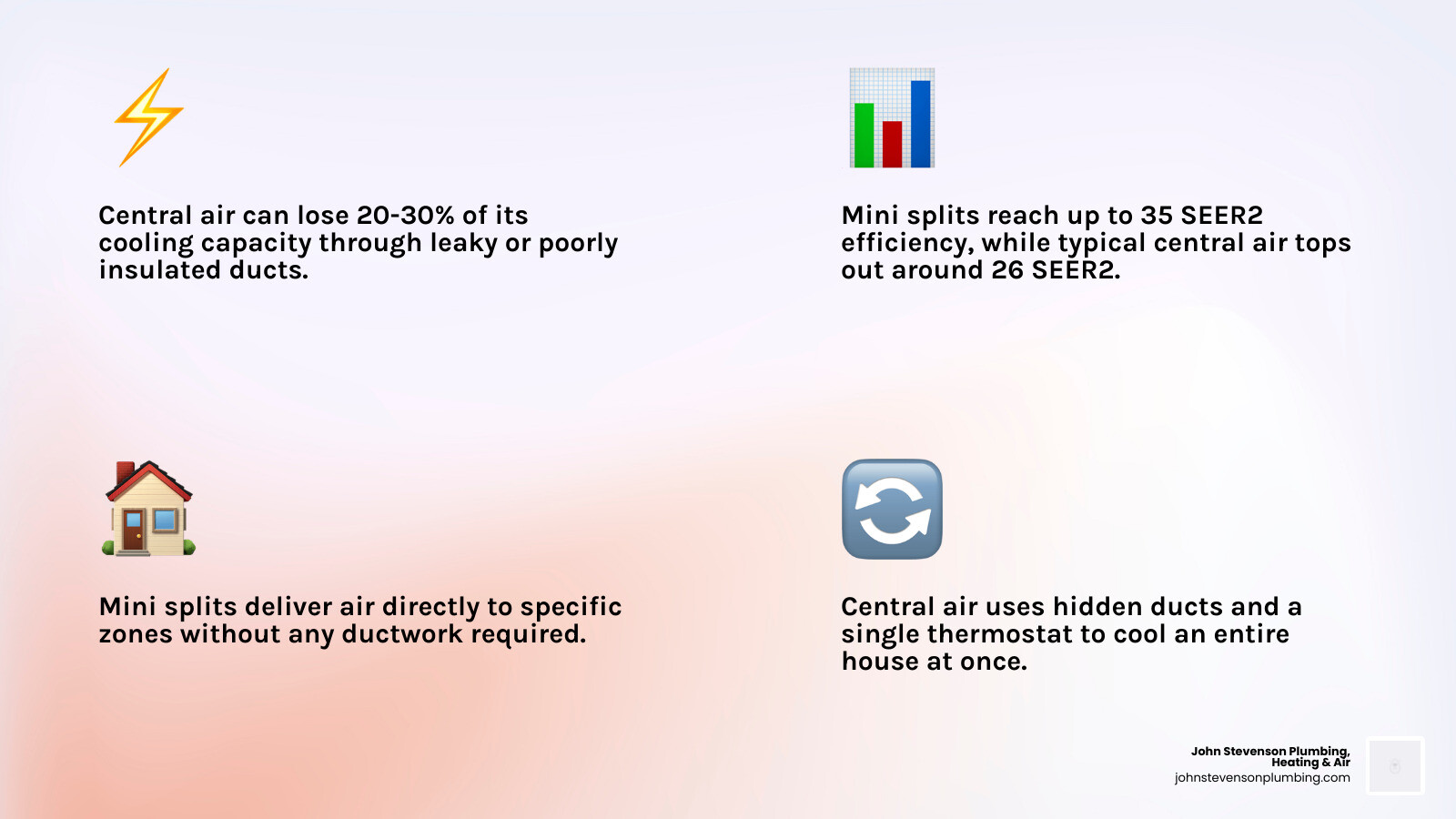
Central air has long been the go-to choice for whole-home cooling. But ductless mini splits have earned serious attention, thanks to higher efficiency ratings and flexible installation that works even in homes without any existing ductwork. According to the U.S. Department of Energy, central air systems can lose 20 to 30 percent of their cooling capacity through leaky or poorly insulated ducts — energy you’re paying for but never feeling.
Both systems have real strengths. The right choice comes down to your home’s layout, whether you have ductwork, how many rooms you need to cool, and what matters most to you — upfront simplicity or long-term efficiency.
This guide walks you through everything you need to know to make a confident decision.
What Is the Difference Between a Mini Split and Central Air?
At the most basic level, the difference lies in how air moves through your home. A central air conditioner is a “ducted” system. It uses one large indoor unit (usually in a closet or attic) and a network of hidden ducts to push air into every room. A mini split is “ductless.” It skips the big pipes and delivers air directly from small units mounted right on your walls or ceilings.
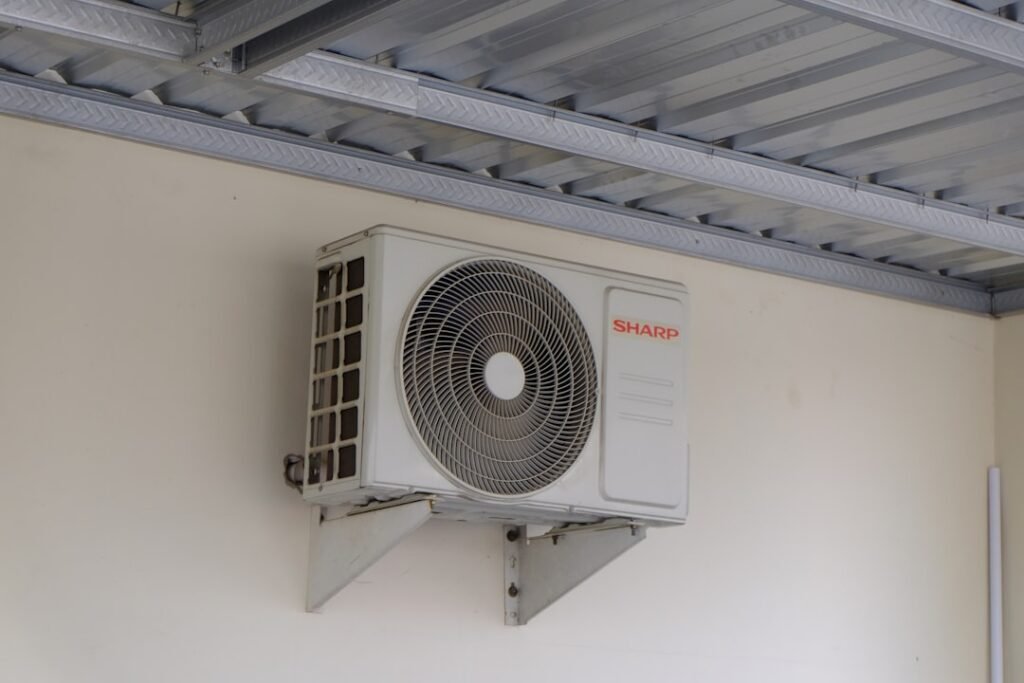
Both systems use an outdoor unit (a condenser) and refrigerant lines to move heat out of your house. However, while central air is designed to treat the whole house as one big block of air, a mini split focuses on specific “zones.”

Mini Split vs Central Air Which Is Better for How Air Gets Delivered
When we look at mini split vs central air which is better for delivery, it’s a battle between invisibility and precision. Central air is invisible; you only see the small grilles in the floor or ceiling. It’s a great choice if you want your HVAC system to be “seen but not heard.”
Mini splits, on the other hand, require an indoor air handler in every room you want to cool. These are typically white rectangular units mounted high on a wall, though ceiling cassettes and floor-mounted units are also options. While they are visible, they deliver air exactly where you need it, without the energy loss that happens when air travels through 50 feet of ductwork.
How Central Air Cools an Entire Home
Central air is the “set it and forget it” champion. Controlled by a single thermostat, it works to keep every corner of your home at the same temperature. It pulls warm air out through “return” vents, cools it over a coil, and pushes it back through “supply” vents.
This is often the most practical choice for larger, modern homes in areas like Pauma Valley or Yorba Linda that were built with ductwork already in place. It provides a consistent, balanced airflow that is hard to beat for a traditional floor plan. To learn more about how these systems are integrated into your home, check out our Air Conditioning services.
How Mini Splits Create Zoned Comfort
Mini splits are the masters of “zoning.” Each indoor head has its own remote or thermostat. This means you can keep your bedroom at a crisp 68 degrees while the guest room stays at 75 to save energy.
This flexibility makes them perfect for “problem areas.” Do you have a sunroom in San Marcos that feels like an oven? Or a garage in Oceanside you’re turning into a home gym? A mini split can handle those spaces without forcing your main AC to work harder. They are also a lifesaver for older homes in places like Leucadia where there simply isn’t room to install bulky ducts. For more details on these versatile systems, visit our Ductless Mini Splits page.
Energy Efficiency and Operating Performance
In 2026, energy efficiency is more than just a buzzword—it’s a major factor in your monthly budget. Air conditioning accounts for roughly 19% of all residential electricity use in the U.S. When comparing performance, we look at SEER2 (Seasonal Energy Efficiency Ratio 2) ratings. The higher the number, the more cooling you get for every dollar spent on power.
| Performance Metric | Mini Split | Central Air |
|---|---|---|
| Typical SEER2 Range | 20 to 35+ | 14 to 26 |
| Energy Loss | Near 0% (Ductless) | 20-30% (Duct Leakage) |
| Compressor Tech | Inverter (Variable Speed) | Single, Two-Stage, or Variable |
| Zoning Capability | Built-in | Requires extra dampers/hardware |
Mini Split vs Central Air Which Is Better for Energy Efficiency
If your goal is the lowest possible utility bill, the mini split usually wins. There are two main reasons for this:
- No Duct Loss: As mentioned, ducts can lose up to 30% of cooling capacity through leaks or heat transfer in a hot attic. Mini splits deliver 100% of the cold air directly into the room.
- Inverter Technology: Most mini splits use “inverter-driven” compressors. Think of it like a dimmer switch for a light. Instead of turning full-on and full-off (which wastes a lot of energy), the mini split slows down or speeds up to maintain a perfect temperature.
When Central Air Can Still Perform Well
Don’t count central air out. Modern high-efficiency central units can reach up to 26 SEER2. If your home has well-sealed, insulated ductwork, the efficiency gap narrows. For a large family home where every room is occupied all day, a single high-efficiency central system can be very effective. It’s all about maintaining that “envelope” of cool air throughout the entire structure.
Noise, Comfort, and Climate Performance
We’ve all heard an old central AC unit kick on with a loud “thump” and a roar. Modern systems are much quieter, but mini splits take the prize for silence. The indoor units often operate at 19 to 26 decibels—that’s quieter than a whisper.
Mini splits also excel at humidity control because they run for longer cycles at lower speeds, constantly pulling moisture out of the air. This is a huge plus for our coastal customers in Del Mar and Carlsbad. Furthermore, modern mini splits are often “heat pumps,” meaning they provide incredibly efficient heating during our cooler Southern California winters.
Installation and Best-Fit Use Cases
The “best” system often comes down to what is already behind your walls. We see a lot of different home styles across San Diego and Orange County, and each has a clear winner when it comes to installation.
Which System Is Better for Homes Without Existing Ductwork?
If you live in a historic home with plaster walls or a home built on a concrete slab without an attic, installing central air can be a nightmare. It often involves cutting into ceilings, building “soffits” (boxes to hide ducts), and significant construction.
In these cases, a mini split is much better. We only need to drill a small three-inch hole in the wall to connect the indoor and outdoor units. It’s less invasive, preserves your home’s architectural beauty, and usually takes just one day to install a single zone.
When Central Air Makes More Sense
If your home already has a duct system in good condition, replacing your old unit with a new central air system is usually the most straightforward path. It allows you to keep a clean, minimalist look inside your home without wall-mounted units. It’s the “gold standard” for whole-home comfort in larger residences. If you’re ready for a fresh setup, you can find more about our AC Installation services.
When a Hybrid Setup Is the Smartest Solution
You don’t always have to choose just one! We frequently install “hybrid” solutions. For example, you might have a central AC that works fine for the downstairs, but your upstairs primary suite is always five degrees too hot. Adding a single-zone mini split to that bedroom solves the comfort issue without requiring you to replace the entire whole-home system.
This is also a popular choice for home offices or “nuisance rooms” that are far away from the main thermostat. For those in Lake Forest, CA, we offer specialized Ductless Mini Split Installation to help bridge these comfort gaps.
Maintenance, Air Quality, and Long-Term Value
Both systems require love and attention to last their full 15 to 20-year lifespan. However, the type of maintenance differs quite a bit.
Mini Split vs Central Air Which Is Better for Maintenance?
Central air maintenance is mostly about the “big picture.” You change one or two large filters every few months and have a technician check the ducts for leaks or mold.
Mini splits require more “hands-on” work from the homeowner. Each indoor head has a small mesh filter that should be rinsed under a tap every 2 to 4 weeks. If you have five indoor units, that’s five filters to clean. However, because there are no ducts, you never have to worry about dust or allergens building up in hidden pipes.
Indoor Air Quality and Filtration Differences
Central air has a slight edge here. Because it uses a high-pressure fan, it can push air through thick, high-MERV (Minimum Efficiency Reporting Value) filters. These filters can catch tiny particles like smoke, pollen, and even some bacteria. You can also easily add whole-home air purifiers or humidifiers directly into the ductwork.
Mini splits provide good filtration, but because they rely on smaller fans, they can’t use those heavy-duty MERV filters. They are great for localized dust control, but they aren’t quite “whole-home” air cleaners in the same way a ducted system is.
Are Mini Splits Worth It Over Time?
While the initial setup for a whole-home mini split system can be a significant investment, the long-term ROI is often higher. You save money every month through lower electricity bills and the ability to turn off cooling in rooms you aren’t using. Plus, in 2026, many homeowners are eligible for federal tax credits and local utility rebates for installing high-efficiency heat pump technology. To see the full list of perks, read our Homeowner Guide to Ductless Mini Split Benefits.
How to Choose the Right System for Your Home
Choosing between mini split vs central air which is better for your specific situation requires a bit of homework. We always recommend a professional “Manual J” load calculation. This looks at your square footage, insulation levels, window placement, and even which way your house faces to determine exactly how much cooling power you need.
Best Choice for Whole-Home Cooling
If you have a large family, an open-concept floor plan, and existing ducts, Central Air is likely your winner. It provides that consistent “envelope” of cool air that keeps everyone comfortable without having to manage multiple remotes.
Best Choice for Zoned Rooms and Additions
If you are finishing a basement in Poway, adding a bedroom in Carlsbad, or just tired of fighting over the thermostat, Mini Splits are the way to go. They offer unmatched control and efficiency for specific spaces.
Questions to Ask Before You Decide
Before you sign on the dotted line, ask yourself:
- What is the condition of my ducts? If they are leaky or full of dust, central air might be more trouble than it’s worth.
- How do I use my home? If you spend 90% of your time in the home office and the kitchen, why cool the whole house?
- What are my long-term goals? Are you looking for the lowest monthly bill or the simplest installation?
For a deeper dive into what to check, see our guide on What to Look for When Buying a New AC Unit.
Frequently Asked Questions About Mini Split vs Central Air Which Is Better
Are mini splits cheaper to run than central air?
Generally, yes. Because they avoid duct losses and allow you to only cool the rooms you are actually using, mini splits typically use less electricity. Their inverter technology also makes them more efficient than standard central units.
Can a mini split cool a whole house?
Absolutely. We can install “multi-zone” systems where one outdoor unit powers up to eight indoor units. This allows for whole-home cooling with all the benefits of individual room control.
Can you use both central air and mini splits together?
Yes! This is a very popular “hybrid” approach. Many Carlsbad homeowners keep their central air for the main living areas and add a mini split for a converted garage, a primary bedroom, or a room addition.
Conclusion
At John Stevenson Plumbing, Heating & Air Conditioning, we know there is no such thing as a “one size fits all” HVAC system. Whether you are looking for the whole-home consistency of central air or the high-tech efficiency of a ductless mini split, the best choice is the one that fits your home’s unique layout and your family’s lifestyle.
If you’re still wondering mini split vs central air which is better for your Carlsbad or San Diego area home, we are here to help. Our 5-Star Service Guarantee means we provide thorough diagnostics and upfront information so you can make the right choice for your comfort.
Ready to find your perfect cooling solution? Explore our Cooling Services or Ductless Mini Splits today to schedule a consultation with our certified experts!