
What Happens If You Don’t Change Your Air Filter — And Why It Matters
What happens if you don’t change your air filter is something every homeowner should understand before it turns into an expensive repair. Here’s a quick summary:
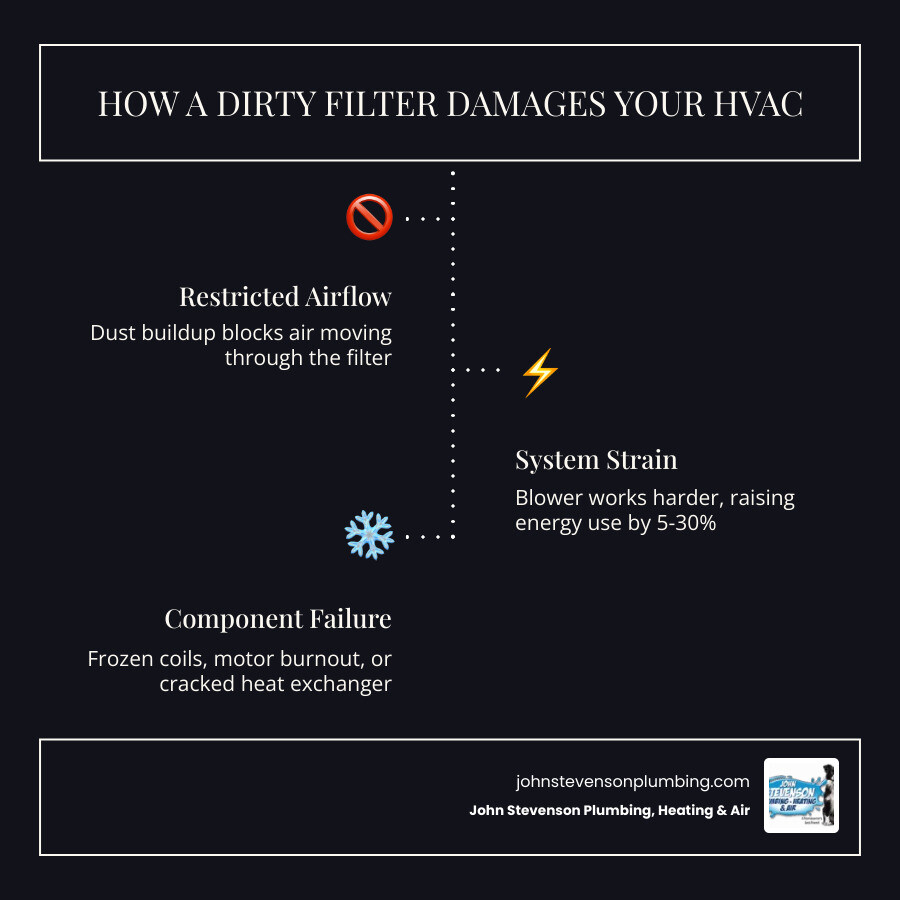
- Higher energy bills — A clogged filter forces your HVAC system to work harder, increasing energy use by 5% to 30%
- Poor indoor air quality — Dust, pet dander, mold spores, and other pollutants recirculate through your home
- Frozen evaporator coils — Restricted airflow causes coils to ice over, stopping your AC from cooling properly
- Overheating and system shutdowns — Your furnace can overheat and trigger safety shutdowns or worse, crack the heat exchanger
- Blower motor damage — Strain from restricted airflow can burn out the motor prematurely
- Shorter system lifespan — HVAC systems built to last 15 to 20 years can fail in 10 to 12 years without regular filter changes
Most homeowners don’t think about their air filter until something goes wrong. It’s tucked away out of sight, easy to forget — and that’s exactly what makes it such a common and costly mistake. In Carlsbad, CA, where HVAC systems run hard through warm summers and mild but persistent year-round use, a neglected filter doesn’t just reduce comfort. It quietly drives up your utility bills, degrades your indoor air quality, and puts real wear on components that are expensive to repair or replace.
The EPA estimates that indoor air is already two to five times more polluted than outdoor air on average — and in some homes, up to 100 times worse. A dirty filter only makes that number worse.
Terms related to what happens if you dont change your air filter:
- how dirty is too dirty for an air filter
- how often should you change your hvac air filter
- signs your hvac filter needs changing
The Primary Function of an HVAC Air Filter
Many homeowners assume the primary job of an air filter is to purify the air they breathe. While high-quality filters certainly help improve indoor air quality, their main design purpose is actually to protect the internal mechanical components of your heating and cooling system.
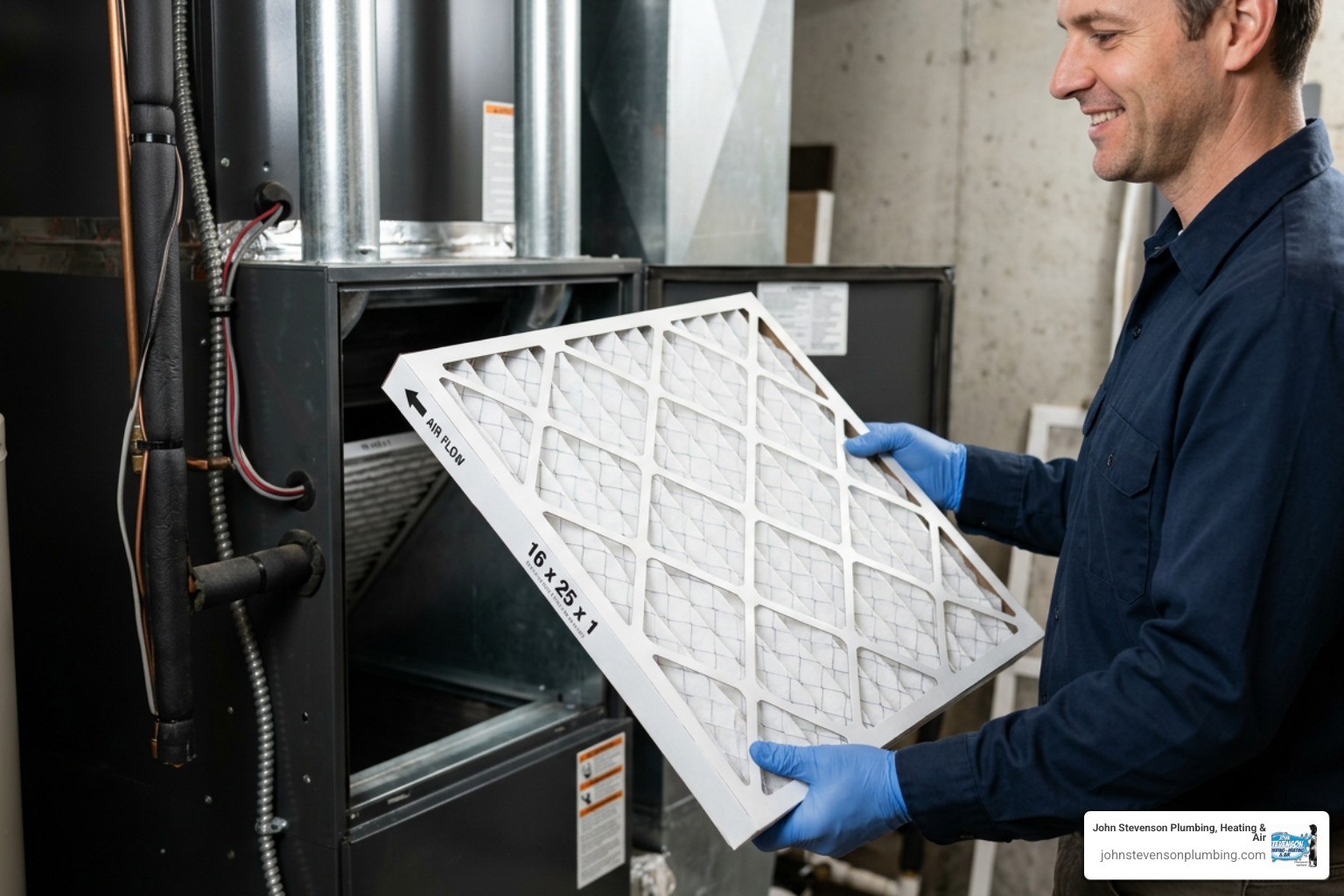
To understand why, we have to look at how air moves through your home. Your HVAC system functions like a closed-loop respiratory system. It pulls air from your living spaces through return vents, conditions it (either heating or cooling it), and pushes it back out through the supply registers.
Without a filter in place, every airborne particle in your home—including fine dust, pet hair, lint, and carpet fibers—would be sucked directly into the dark, damp, and sensitive interior of your HVAC unit.
Here are the key components your filter is designed to protect:
- The Blower Motor: This fan is responsible for circulating air throughout your home. If dust bypasses a filter, it settles on the fan blades and inside the motor housing. Over time, this dust buildup acts as an insulator, trapping heat inside the motor, drying out essential lubricants, and leading to electrical failure or burnout.
- The Evaporator Coils (for AC): In the summer, your air conditioner’s evaporator coils are cold and covered in condensation. If dust and dirt hit these wet coils, they form a thick, muddy layer of grime. This grime acts as a barrier, preventing the refrigerant inside the coils from absorbing heat from your home’s air.
- The Heat Exchanger (for Furnaces): In the winter, the heat exchanger gets incredibly hot to warm the air. Dust accumulation on this component can burn off, causing unpleasant odors, or worse, create a thermal barrier that causes the metal to overheat and crack.
Understanding MERV Ratings
To choose the right level of protection for your system, you need to understand MERV (Minimum Efficiency Reporting Value) ratings. This scale ranges from 1 to 16 for residential systems:
- MERV 1 to 4: Typically basic fiberglass filters. They block large particles like lint and carpet fibers to protect the equipment, but do almost nothing to clean the air you breathe.
- MERV 5 to 8: Medium-efficiency pleated filters. These are the sweet spot for most standard homes. They capture pollen, mold spores, and dust mites without restricting airflow too severely.
- MERV 9 to 12: High-efficiency filters. They capture finer particles, including pet dander and auto emissions. These are excellent for households with moderate allergies.
- MERV 13 to 16: Maximum filtration. These capture bacteria, smoke, and virus-carrying droplets. However, they are highly restrictive and should only be used in HVAC systems engineered to handle the increased resistance.
Choosing the right filter is a delicate balancing act. While you want to protect your family and your system, choosing a MERV rating that is too high for your system’s blower motor can restrict airflow just as badly as a clogged filter. If you’re preparing your home for the changing seasons, checking your filter rating is a great place to start. For a deeper look at seasonal preparation, read our guide on Why You Need to Swap Your Air Filter This Spring.
What Happens If You Dont Change Your Air Filter
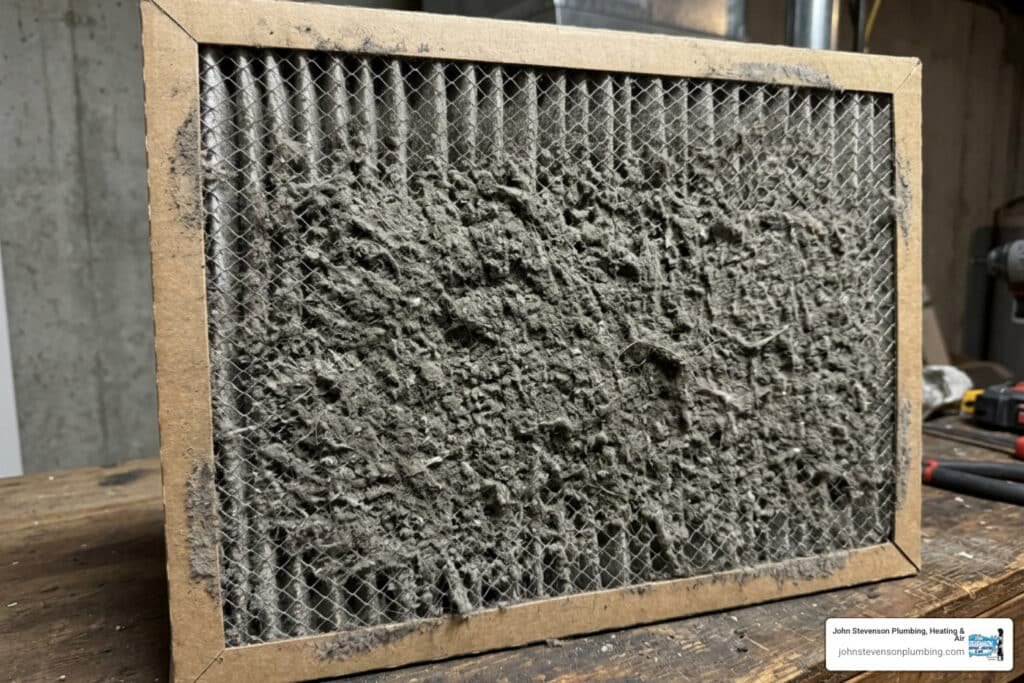
When you neglect to change your air filter, it undergoes a physical transformation. What starts as a white, porous screen of paper or synthetic fibers slowly turns gray, then black, as it fills up with trapped particles. Once every microscopic gap in the filter media is saturated with dirt, the filter stops acting like a sieve and starts acting like a solid wall.
This blockage creates a phenomenon known as static pressure. Think of static pressure as the resistance your HVAC system faces when trying to push air through your ductwork. When a filter is clean, the static pressure is low, and air flows freely. When the filter is clogged, static pressure spikes.
The immediate consequence of high static pressure is restricted airflow. Your blower motor has to spin faster and work significantly harder to force air through the clogged barrier. This extra effort has a direct, negative impact on your home’s energy consumption and your monthly utility bills.
According to industry data, a dirty air filter can increase your HVAC system’s energy consumption by 5% to 15%. In peak summer or winter months, when your system is running for hours at a time, a clogged filter can cause your monthly utility bills to jump by 20% to 30%.
To help visualize the difference, here is a comparison of how a clean filter versus a clogged filter impacts your entire system:
| Performance Metric | Clean Filter | Clogged Filter |
|---|---|---|
| Airflow Volume | Maximum, unrestricted | Weak, restricted, uneven |
| Blower Motor Strain | Low (runs at designed speed) | High (runs hotter and longer) |
| Energy Consumption | Standard / Baseline | 5% to 15% higher |
| Utility Bill Impact | Normal | 20% to 30% increase |
| Temperature Consistency | Even cooling/heating | Hot or cold spots in distant rooms |
| Indoor Air Quality | High (pollutants trapped) | Low (pollutants recirculated) |
| Risk of System Failure | Minimal | High (frozen coils / furnace overheating) |
Signs Your Filter Needs to Be Replaced
You don’t always have to pull the filter out of the wall or ceiling to know it’s time for a change. Your home and your HVAC system will drop several hints that they are struggling.
Common warning signs include:
- Weak Airflow from Vents: If you hold your hand up to a supply register and the breeze feels more like a gentle whisper than a strong gust, your system is likely choking behind a dirty filter.
- Rapid Dust Buildup: If you find yourself dusting your coffee table and shelves every few days only to see a fresh layer of gray powder settle immediately, your filter is saturated. Once a filter is completely full, it can no longer hold new particles, causing them to bypass the filter entirely and blow back into your living spaces.
- Musty Odors: When a filter is loaded with organic matter like pet dander, skin flakes, and dust, it can absorb moisture from the air. This creates a perfect breeding ground for mold and bacteria, resulting in a stale, musty smell every time your heating or cooling kicks on.
- Uneven Home Temperatures: Rooms that are located furthest from your indoor HVAC unit may suddenly feel too hot in the summer or too cold in the winter because the system lacks the airflow velocity to push conditioned air all the way down the duct line.
If you notice any of these symptoms in your Carlsbad home, it is time to inspect your system. For a comprehensive checklist on physical signs of a dirty filter, check out Signs Your HVAC Filter Needs Changing Know When to Change Filter. If you are unsure whether your filter is ready for the trash bin, you can also read our step-by-step guide on How to Know When to Replace a Dirty Air Filter.
Mechanical Damage and Indoor Air Quality Risks
While higher energy bills are frustrating, the true financial danger of neglecting your air filter lies in the mechanical damage it inflicts on your HVAC system. These systems are engineered to last between 15 and 20 years with proper care. However, running a system with a chronically dirty filter can easily cut that lifespan in half, leading to premature system failure and thousands of dollars in avoidable replacement expenses.
The Domino Effect of Restricted Airflow
When airflow is restricted, it triggers a chain reaction of mechanical failures inside your system:
- Frozen Evaporator Coils: In cooling mode, your air conditioner relies on a steady stream of warm indoor air passing over the cold evaporator coils. The refrigerant inside the coils absorbs this heat. If a dirty filter blocks the warm air, the temperature of the coils drops rapidly. Any moisture condensing on the coils will instantly freeze. Once a layer of ice forms, it insulates the coils even further, causing the system to freeze solid.
- Liquid Slugging and Compressor Failure: When evaporator coils freeze, the liquid refrigerant inside them cannot absorb enough heat to turn back into a gas. This cold, liquid refrigerant can travel back down the line to your outdoor compressor unit. Compressors are designed to compress gas, not liquid. This phenomenon, known as “liquid slugging,” can instantly destroy the compressor’s internal valves, leading to a complete system breakdown.
- Blower Motor Burnout: To fight against the high static pressure of a clogged filter, the blower motor must draw more electrical current and run for much longer cycles. This extra strain causes the motor to overheat, breaking down the insulation on its internal wiring and eventually burning out the motor entirely.
- Short Cycling and Cracked Heat Exchangers: In the winter, a clogged filter prevents air from carrying heat away from your furnace’s heat exchanger. The heat exchanger quickly overheats, triggering a safety limit switch that shuts the system down. Once the system cools, it turns back on, overheats again, and shuts down. This rapid on-and-off cycle is called “short cycling.” The constant, extreme temperature swings cause the metal of the heat exchanger to expand and contract violently, eventually leading to cracks.
Indoor Air Quality and Health Risks
Beyond mechanical damage, a dirty filter poses a direct threat to your family’s health. Modern Southern California homes are built with tight, energy-efficient seals. While this is great for keeping your conditioned air inside, it also means that indoor pollutants have nowhere to escape.
When your air filter is dirty, it can no longer capture airborne contaminants. Instead, your HVAC system acts as a giant fan that continuously recirculates dust, pet dander, dust mites, pollen, and mold spores throughout your home.
For healthy individuals, this can lead to minor symptoms like dry eyes, scratchy throats, and frequent headaches. However, for those living with asthma, severe allergies, or respiratory conditions, the impact can be debilitating. Recirculating allergens can trigger frequent asthma attacks, sinus infections, and chronic fatigue.
The best way to prevent these mechanical and health risks is through regular, professional preventative maintenance. To learn more about what goes into keeping your system safe, explore Everything You Need to Know About Annual HVAC Maintenance. If you want to make sure your air conditioner is ready for the intense Southern California summer heat, read about how The Secret to a Stress-Free Summer is a Spring HVAC Tune-Up.
Best Practices for Air Filter Maintenance and Replacement
Taking care of your air filter is one of the easiest and most cost-effective DIY home maintenance tasks you can perform. By establishing a simple routine, you can protect your wallet, your health, and your peace of mind.
Fiberglass vs. Pleated Filters
When shopping for filters, you will generally run into two main options:
- Fiberglass Filters: These are thin, flat, and usually green or blue. They are designed to capture only the largest particles to protect your equipment. They must be replaced every 30 days without fail.
- Pleated Filters: These are made of folded paper or synthetic material, which vastly increases their surface area. Because they have more surface area, they can trap much smaller particles (like pollen and dander) and can hold more dust before becoming restricted. Standard pleated filters typically last 60 to 90 days.
How Often Should You Change Your Filter?
While “every three months” is a common rule of thumb, the ideal replacement frequency depends heavily on your unique household factors. In June 2026, modern filtration standards emphasize a personalized maintenance schedule:
- Standard Suburban Home (No Pets): Every 90 days is usually sufficient for a typical home with a pleated filter.
- Homes with One Pet: Cats and dogs shed hair and dander continuously. If you have one pet, plan to change your filter every 60 days.
- Homes with Multiple Pets or Allergy Sufferers: If you have multiple pets, or if anyone in your home struggles with asthma or severe allergies, you should replace your filter every 30 to 45 days.
- During Renovations or High-Pollution Events: If you are remodeling your Carlsbad home, or if there is nearby construction, check your filter every 20 to 30 days, as drywall dust and sawdust will clog a filter almost instantly.
To help you calculate the perfect schedule for your specific living situation, read our detailed guide on How to Determine How Often to Change HVAC Air Filter.
Frequently Asked Questions About Air Filter Neglect
What happens if you dont change your air filter in your furnace?
If you don’t change your air filter in your furnace, the restricted airflow will cause the heat inside the system to rise to dangerous levels. To prevent a fire, your furnace’s safety limit switch will automatically shut the system down. This leads to “short cycling,” where the furnace constantly turns on and off without warming your home.
Over time, this intense heat buildup can cause the metal of your heat exchanger to crack. A cracked heat exchanger is incredibly dangerous because it can allow deadly carbon monoxide gas to leak directly into your home’s breathing air.
What happens if you dont change your air filter in your air conditioner?
When you neglect your air conditioner’s filter, the lack of warm air flowing over the evaporator coils causes them to drop below freezing. Condensation on the coils turns to ice, completely blocking heat transfer. Your air conditioner will stop blowing cold air and may start blowing warm air instead.
If left running, the frozen coils can cause liquid refrigerant to flood back into your outdoor compressor. This leads to “liquid slugging,” which can permanently destroy your compressor—one of the most expensive components in your entire AC system.
Can I run my HVAC system without a filter temporarily?
You should never run your HVAC system without an air filter, even for a single day. Operating without a filter allows unfiltered, dusty air to blow directly into the internal components of your system.
Dust will quickly coat the wet evaporator coils, forming a layer of grime that is incredibly difficult to clean and can lead to mold growth. Additionally, dust will settle inside your blower motor, risking immediate electrical damage or motor burnout. If you don’t have a replacement filter on hand, it is safer to leave the system turned off until you can get one.
Conclusion
Understanding what happens if you dont change your air filter is the first step toward protecting your home’s comfort and your financial well-being. What seems like a minor, easily forgotten chore can quickly spiral into astronomical utility bills, poor family health, and catastrophic system failures that leave you stranded in the middle of a Southern California heatwave.
At John Stevenson Plumbing, Heating & Air Conditioning, we are dedicated to helping our neighbors throughout Carlsbad, San Diego County, and Orange County enjoy safe, reliable, and highly efficient home comfort. With our 5-Star Service Guarantee, you can count on our certified technicians to provide thorough diagnostics, upfront pricing, and a 24-hour satisfaction check-in on every single visit.
Regular maintenance is the absolute best way to ensure your heating and cooling systems are running exactly as they should. To learn more about how we keep your home running smoothly, read A Comprehensive Guide to What Does an HVAC Maintenance Visit Include.
Don’t wait for your system to start blowing warm air or driving up your energy bills. Protect your home and extend the life of your equipment by scheduling your professional service today. Schedule professional HVAC maintenance today with the trusted team at John Stevenson Plumbing, Heating & Air Conditioning!