
When Your AC Stops Cooling in Carlsbad, the Compressor Is Often Why
Knowing how to tell if your ac compressor is failing can save you from a full breakdown on the hottest day of the year — and in Carlsbad, CA, that’s not a risk worth taking. The compressor is the heart of your entire cooling system. When it starts to go, your home stops getting comfortable fast.
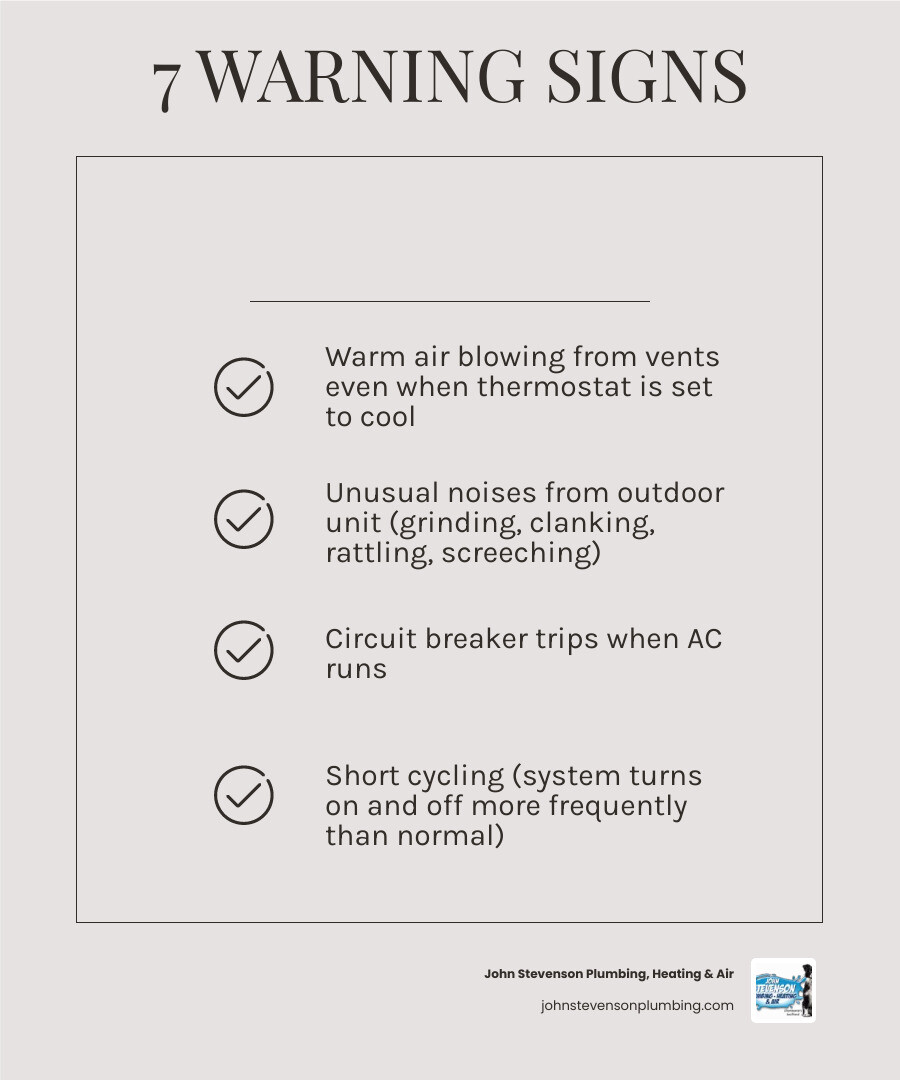
Here are the most common signs your AC compressor is failing:
- Warm air blowing from vents even when the thermostat is set to cool
- Unusual noises from the outdoor unit — grinding, clanking, rattling, or screeching
- The circuit breaker keeps tripping when the AC runs
- Shaking or hard starting when the system first kicks on
- The outdoor unit is silent while the fan still runs
- Short cycling — the system turns on and off more frequently than normal
- Rising energy bills without a change in usage habits
Any one of these symptoms is worth taking seriously. Several of them together almost always point to a compressor that’s struggling — or on its way out.
The AC compressor is the only major moving part in your outdoor unit, and it runs under constant mechanical and electrical stress every time your system cycles. When it starts to fail, it rarely gets better on its own. Catching the warning signs early means the difference between a manageable repair and a full system replacement.
Quick how to tell if your ac compressor is failing terms:
- ac making strange noises what they mean
- signs your ac needs repair before it gets worse
- why is my ac blowing warm air
What Does an AC Compressor Do?
To truly understand why a failing compressor is such a big deal, it helps to know what this component actually does. Often called the “heart” of your air conditioning system, the compressor acts exactly like a mechanical pump. Just as your heart pumps blood to keep your body functioning, the compressor pumps refrigerant throughout the entire system to keep your home cool.
The refrigeration cycle relies on thermodynamics—specifically, transferring heat from inside your home and releasing it outdoors. The compressor is the driving force behind this entire process. Here is how it works:
- Refrigerant Intake: The compressor pulls in low-pressure, cool refrigerant gas from the indoor evaporator coil.
- Pressurization: It compresses this gas, which dramatically raises both its pressure and its temperature.
- Heat Release: The high-pressure, hot gas is pushed into the outdoor condenser coil. Here, the outdoor fan blows air across the coils, releasing the heat into the outside air.
- Expansion and Cooling: As the refrigerant loses heat, it condenses into a liquid, travels through an expansion valve to cool down significantly, and heads back to the indoor evaporator coil to absorb more household heat.
Without a functioning compressor, the refrigerant cannot circulate, and pressure cannot be generated. This means your air conditioner is essentially reduced to a giant, expensive fan that simply recirculates warm air. If you notice your system running continuously without actually lowering the indoor temperature, you should read our guide on What to Check First When Your AC Runs Constantly Without Cooling to help narrow down the root cause.
How to Tell If Your AC Compressor Is Failing: 6 Key Signs
Recognizing the early warning signs of a failing compressor can prevent minor issues from turning into catastrophic failures. Because the compressor works under intense pressure, mechanical wear or electrical issues will make themselves known through very specific symptoms.
Warm Air and How to Tell If Your AC Compressor Is Failing
One of the first and most obvious signs of a failing compressor is warm air blowing from your home’s vents. When you set your thermostat to “cool,” your system should deliver a crisp, cold breeze. A properly functioning air conditioner should achieve a temperature drop of 15 to 20 degrees Fahrenheit between the return air and the supply air.
If the air coming out of your registers feels lukewarm or matches the room’s current temperature, the compressor may not be pressurizing the refrigerant. Before jumping to conclusions, double-check your thermostat settings to ensure it hasn’t been accidentally set to “fan only.” If the settings are correct and you are still greeted by a lukewarm breeze, it is time to investigate further. For a deeper dive into early warning signs before the summer heat peaks, check out our guide on How to Know If Your AC Is Going Bad Before the Heatwave Hits.
Loud Noises and How to Tell If Your AC Compressor Is Failing
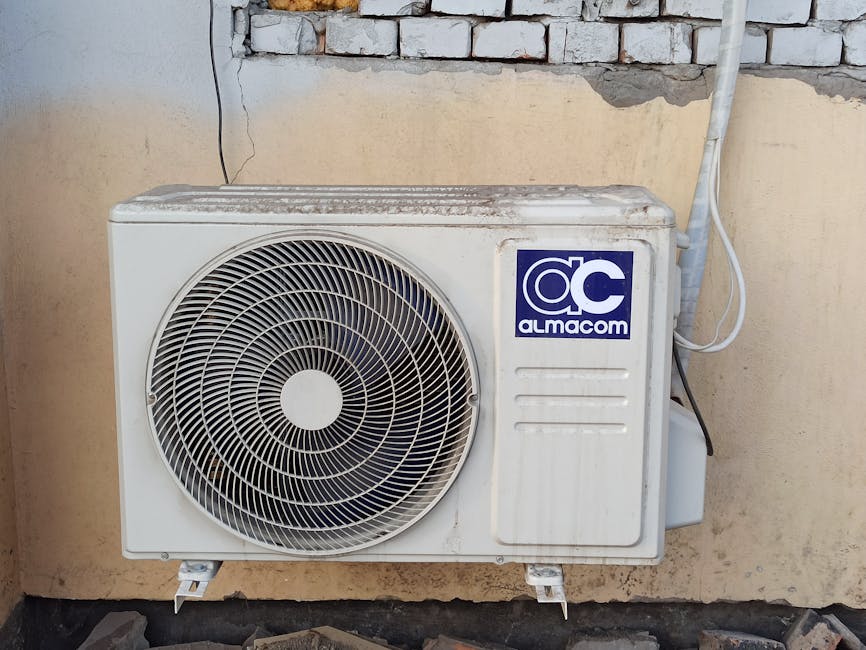
A healthy AC compressor operates with a steady, low-pitched hum. If your outdoor unit begins sounding like a dryer filled with loose change, your compressor is likely in trouble.
Keep an ear out for these specific sounds:
- Grinding or Screeching: This typically indicates that the internal bearings or pistons are wearing down, causing metal-on-metal friction.
- Clanking or Rattling: These noises often point to loose internal mounts, a failing compressor clutch, or broken internal hardware.
- Loud Clicking or Humming: If you hear a loud click followed by a persistent hum when the system tries to start, the compressor motor may be locked up or struggling to turn on.
If you hear any of these disruptive sounds, it is highly recommended to shut down your system immediately to prevent further internal damage. For a complete translation of what these system noises mean, refer to our Stop the Screeching With This AC Noise Translation Guide.
Distinguishing Compressor Failure from Other AC Issues
Because many air conditioning components work closely together, a failing compressor can easily be misdiagnosed. The most common mix-up occurs between a failed compressor and a bad capacitor.
A capacitor is like a temporary battery that delivers the high-voltage electrical boost required to start the compressor and fan motors. If the capacitor fails, the compressor will not start, which can lead a homeowner (or an inexperienced technician) to assume the entire compressor is dead. However, replacing a capacitor is a quick, straightforward electrical repair, whereas replacing a compressor is a major system overhaul.
To help you understand the differences, here is a quick comparison:
| Symptom / Test | Failing AC Compressor | Bad AC Capacitor |
|---|---|---|
| Outdoor Unit Sound | Loud grinding, clanking, or a seized hum | A clicking sound followed by a faint hum; fan may not spin |
| Circuit Breaker | Frequently trips the main breaker instantly on startup | Rarely trips the breaker unless it completely shorts out |
| Visual Inspection | Oily residue or refrigerant leaks around the compressor | Capacitor is swollen, bulging at the top, or leaking oil |
| Electrical Readings | Winding resistance tests show open circuits or shorts to ground | Microfarad (µF) readings are significantly below rated capacity |
| Startup Behavior | Shakes or vibrates violently (“hard starting”) | Motor struggles to turn over; may start if fan blade is gently pushed |
Professional diagnostic testing is the only way to confirm a diagnosis. A certified technician will use a multimeter to measure the resistance (in ohms) across the compressor’s electrical terminals (Common, Start, and Run). If the resistance readings are infinite, zero, or show a connection to the compressor’s outer metal casing, the motor windings are damaged, confirming compressor failure.
What Causes Premature AC Compressor Failure?
While compressors are built to be incredibly durable, certain environmental and mechanical factors can cut their service life short. Understanding these causes can help you protect your system:
- Dirty Condenser Coils: When the outdoor coils are coated in dirt, dust, or pet hair, the system cannot release heat effectively. This forces the compressor to work twice as hard and run much hotter, eventually leading to thermal overload and motor burnout.
- Refrigerant Leaks: Running an AC system that is low on refrigerant forces the compressor to work harder to cool your home. Because refrigerant also carries the oil that lubricates the compressor’s moving parts, low refrigerant levels directly cause lubrication loss and mechanical seizure.
- Acid Burnout and Contaminants: If moisture or air enters the refrigerant lines (usually due to improper installation or service), it reacts with the refrigerant oil to create highly corrosive acid. This acid eats away at the motor windings, causing a catastrophic electrical burnout.
- Liquid Slugging: Compressors are designed to compress gas, not liquid. If a dirty air filter or bad indoor fan motor prevents heat absorption, liquid refrigerant can travel back up the suction line and enter the compressor, causing instant mechanical destruction.
- Coastal Salt Air: For homes in Carlsbad, Oceanside, and Encinitas, the salt-heavy coastal air accelerates corrosion on the outdoor unit’s coils and electrical connections. This environmental stress can significantly reduce a system’s overall lifespan. To learn more about how long your system should last under various conditions, read our guide on Will Your AC Survive the Decade Average Lifespans Explained.
Repair vs. Replacement: Making the Right Choice
When faced with a failing compressor, homeowners must make a crucial decision: should you replace just the compressor, or is it time for a full system upgrade?
Because residential AC compressors are hermetically sealed units (welded shut at the factory), they cannot be opened up and repaired internally. If the motor windings burn out or the internal valves fail, the entire compressor must be replaced.
Here are the key factors to consider when making your decision:
- System Age: If your air conditioner is under 8 to 10 years old and still covered by a manufacturer’s parts warranty, replacing just the compressor is often the most logical choice. However, if your system is over 10 to 12 years old, the rest of the components (like the condenser fan, contactor, and indoor evaporator coil) are also nearing the end of their useful lives.
- Refrigerant Type: Older systems run on R-22 refrigerant, which has been phased out due to environmental regulations. If your R-22 compressor fails, replacing it is rarely practical, as refrigerant for repairs is scarce and highly restricted.
- Energy Efficiency: Modern, high-efficiency cooling systems consume significantly less electricity than older models. Upgrading a failing, inefficient system to a new unit can lower your monthly energy bills by 20% to 30%.
To help you run the numbers for your specific situation, explore our helpful guides on Doing the Math on Old AC Repair vs Buying a New System and The Cold Hard Truth About Fixing Your Ancient Air Conditioner. If you are still on the fence about whether your system is ready to retire, check out How to Decide If Your AC Needs a Tune-Up or a Retirement Party and Signs Your AC System Is Reaching End of Life 7 Key Indicators.
Frequently Asked Questions About AC Compressor Failure
Is it safe to run my AC with a failing compressor?
No, it is highly recommended to shut down your air conditioner immediately if you suspect the compressor is failing. Continuing to run a struggling compressor can cause a severe electrical short or “acid burnout.” This releases highly corrosive acid and soot throughout your entire refrigerant line, contaminating the system. If this contamination occurs, a simple compressor replacement is no longer possible without an extensive, expensive system flush—and it may require you to replace the indoor coils and refrigerant lines as well.
How long does a typical AC compressor last in coastal climates?
While the national average lifespan for an AC compressor is 10 to 15 years, homes in coastal Southern California areas like Carlsbad, Del Mar, and Newport Beach face unique challenges. The moisture and salt in the marine air accelerate corrosion on the condenser coils and compressor housing. In these coastal environments, a compressor’s lifespan can be reduced to 8 to 12 years. Regular preventative maintenance, including gently rinsing the outdoor coils with fresh water, is essential to maximize its lifespan.
Can a homeowner troubleshoot a bad compressor at home?
While a definitive diagnosis requires specialized electrical tools and refrigerant gauges, you can perform a few safe troubleshooting steps at home:
- Check the Air Filter: A completely clogged filter can mimic compressor issues by restricting airflow and causing the system to blow warm air or freeze up.
- Inspect the Circuit Breaker: Check your main electrical panel to see if the AC circuit breaker has tripped. If it trips again immediately after being reset, do not try to reset it a second time—this indicates a direct electrical short.
- Perform a Visual Inspection: Look at the outdoor unit to see if the fan is spinning and check for any oily pooling around the base of the compressor, which indicates a refrigerant and lubricant leak.
If these basic checks do not resolve the issue, it is time to call in a professional diagnostic team.
Conclusion
Detecting a failing AC compressor early can mean the difference between a simple electrical fix and a complete system breakdown. If you have noticed warm air blowing from your vents, strange rattling noises, or a repeatedly tripping circuit breaker, do not wait for the system to stop working entirely.
At John Stevenson Plumbing, Heating & Air Conditioning, we provide reliable, expert HVAC services throughout Carlsbad, CA, and the surrounding Southern California communities. Our team of certified technicians is committed to delivering thorough diagnostics and upfront pricing, all backed by our signature 5-Star Service Guarantee and 24-hour satisfaction check-ins. We will help you accurately diagnose your system and determine the most reliable, cost-effective path forward to keep your home cool and comfortable.
Schedule professional AC repair in Carlsbad today to restore your home’s comfort.