
Why That Drain Smell in Your Carlsbad Home Isn’t Something to Ignore
Knowing how to get rid of drain odor quickly can save you from a foul-smelling home and a potentially bigger plumbing problem down the road. Here is the short answer:
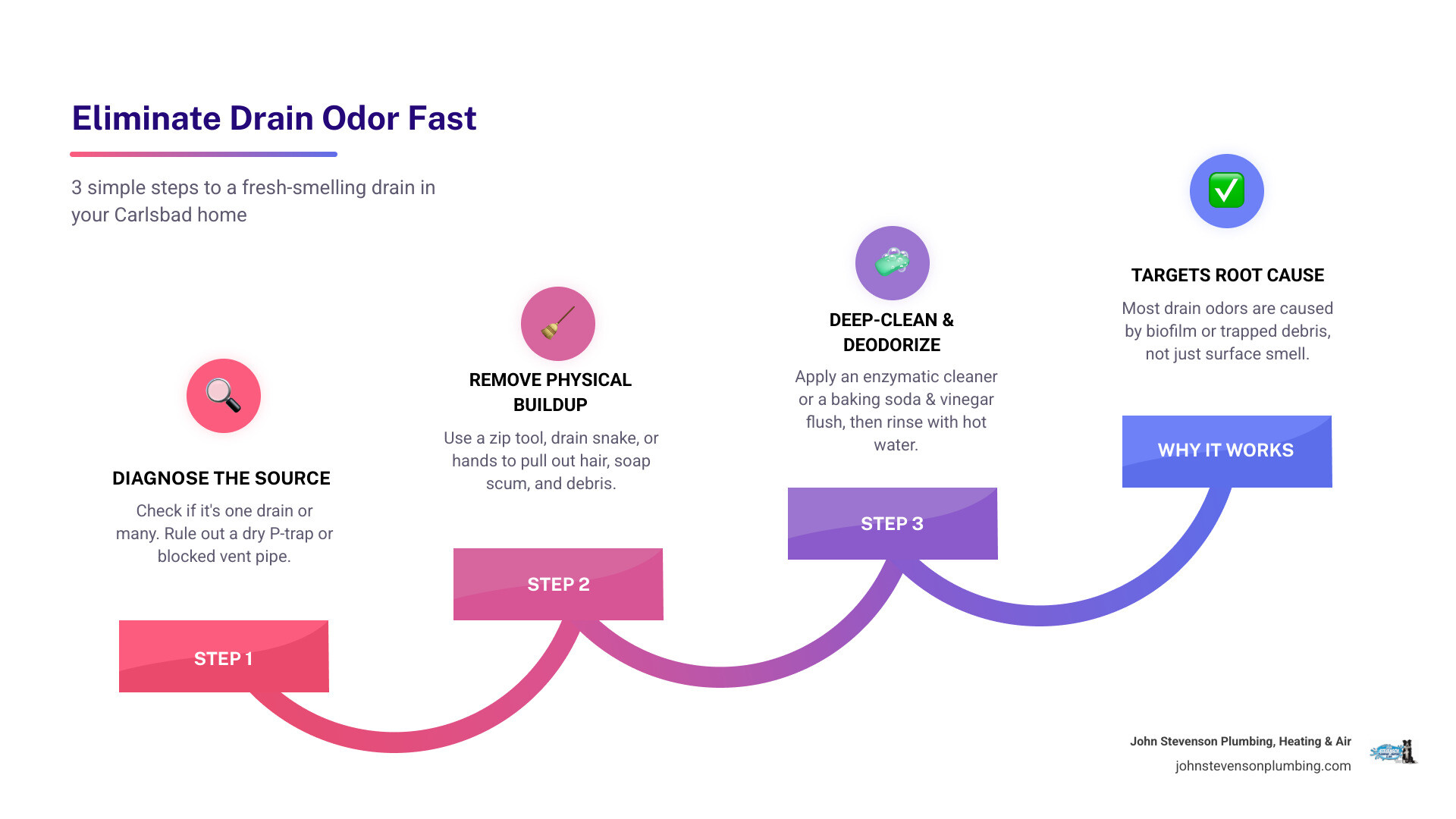
3 Steps to Eliminate Drain Odor Fast:
- Diagnose the source — Check whether it is one drain or multiple, and rule out a dry P-trap or blocked vent pipe.
- Remove the physical buildup — Use a zip tool, drain snake, or your hands to pull out hair, soap scum, and debris before applying any cleaner.
- Deep-clean and deodorize the line — Apply an enzymatic cleaner (for best results) or a baking soda and vinegar flush, then rinse thoroughly with hot water.
That unpleasant sewer-like smell coming from your kitchen or bathroom drain is your plumbing’s way of telling you something isn’t right. It could be something as simple as a buildup of hair and soap scum, or something less obvious like a dry P-trap letting sewer gas into your living space. Either way, the smell rarely goes away on its own — and the longer you wait, the worse it tends to get.
The good news is that most drain odors can be fixed at home without any special tools or professional help. In this guide, I’m John Stevenson, and I’ll walk you through exactly what’s causing that smell and how to get rid of it for good.
How to Get Rid of Drain Odor by Diagnosing the Source First
Before pouring any solutions down the sink, we need to play detective. Blindly treating a drain without knowing the root cause is like spraying air freshener over a pile of dirty laundry—it only masks the issue temporarily.
To determine the exact cause of your smelly plumbing, we recommend starting with two simple diagnostic checks:
- The One Drain vs. Many Test: Sniff around your home. Is the foul odor localized to a single fixture (like your master bathroom shower or the kitchen sink), or is the smell coming from multiple drains across your home? If it is just one drain, the issue is almost certainly local buildup or a dried-out trap. If multiple drains smell, you are likely dealing with a deeper sewer line clog or a plumbing vent issue.
- The Water Supply vs. Drain Test (The Glass Test): Sometimes, what smells like a stinky drain is actually a water quality issue. To find out, fill a clean glass with tap water from the smelly sink, step completely out of the room, and take a sniff. If the water in the glass smells like sulfur, your water supply or water heater anode rod is the culprit. If the water smells completely clean, the odor is localized to the drain itself.
If you suspect a leak under the sink is contributing to the damp, musty smell, check out our guide on How To Find Hidden Water Leaks The Right Way to rule out hidden moisture issues. Ignoring these subtle signs can lead to structural issues over time, which we cover in Dont Ignore These Warning Signs Hidden Water Damage 101.
Is the Odor Coming from a Dry P-Trap?
The P-trap is the U-shaped pipe located directly beneath your sink, shower, or tub. It has one primary, critical job: to hold a small amount of water at all times. This standing water acts as a continuous, airtight seal that blocks sewer gases from traveling up from the city sewer lines and into your home.
However, if a bathroom, guest suite, or wet bar sink goes unused for several weeks or months, that protective water barrier will eventually evaporate. Once the trap dries out, sewer gas escapes freely into your living space, creating a distinct rotten-egg smell.
Fortunately, this is the easiest plumbing fix in the book. Simply run the faucet for 30 to 60 seconds to refill the trap seal. To prevent this from happening in the future, make it a habit during your weekly home maintenance routine to run the water in all rarely used sinks, showers, and floor drains for at least 30 seconds.
Identifying Blocked Plumbing Vents and Sewer Line Issues
If refilling your P-traps does not solve the issue, the problem might lie on your roof or deep underground.
Your plumbing system relies on a network of vent stacks—pipes that exit through your roof—to equalize air pressure within the drain lines. Think of it like punching a second hole in a juice can to make it pour smoothly. When your plumbing vents are clear, wastewater flows freely and air pressure remains balanced.
If leaves, bird nests, or debris block your roof vent stack, a vacuum is created inside your pipes. Every time you flush a toilet or drain a large tub, the rushing water will suck (or siphon) the protective water right out of nearby P-traps, leaving them dry and allowing sewer gas to back up. A classic sign of a blocked plumbing vent is a gurgling or bubbling sound coming from your bathroom sink when you flush the adjacent toilet.
For persistent, widespread sewer smells that DIY methods cannot shake, the issue could be a cracked sewer line, a main-line backup, or a collapsed pipe. In these situations, a professional inspection is required. You can learn more about how we pinpoint these hidden issues by reading Everything You Need To Know About Sewer Camera Inspections.
Step 2: Clear the Physical Gunk and Debris
Once you have isolated the smell to a specific drain, your next step is physical extraction. Many homeowners make the mistake of pouring chemical cleaners or natural mixtures directly onto a heavy clog. However, tests show that mechanical removal of debris alone achieves a 41% odor reduction, while chemical or natural flushes are severely limited if they cannot physically reach the pipe walls due to a massive hair mat.
In bathroom drains, the primary cause of odor is a slimy combination of hair, soap scum, toothpaste, and organic biofilm. This sticky mixture clings to the drain stopper and the upper portions of the pipe, creating a perfect breeding ground for sulfur-producing bacteria.
To prevent these blockages from forming in the first place, check out our best practices in Stop The Clog Before It Starts.
Using Mechanical Tools to Remove Hair and Biofilm
Before you try to wash the smell away, you need to pull the source of the smell out. Here are the best tools for the job:
- Plastic Zip Tool (Barbed Drain Tool): This is a flexible, inexpensive plastic strip with backward-facing barbs. Simply feed it down into the drain grate, twist it slightly, and pull it back up. It will catch and retrieve hair clumps and slimy biofilm instantly.
- Drain Snake (Hand Auger): For clogs sitting further down the pipe, a manual hand snake can reach several feet deep to break up and pull out stubborn organic blockages.
- Plunger: If the drain is running slow, a standard cup plunger can help dislodge loose debris. Be sure to seal the overflow drain on your sink with a damp rag first to maintain proper pressure.
To choose the safest and most effective method for your specific pipe setup, take a look at our comparison guide, Snake Or Spray Choosing The Best Way To Clear Your Clogs.
How to Get Rid of Drain Odor by Cleaning the P-Trap Manually
If the smell persists after cleaning the drain opening, the offending sludge is likely sitting in the curve of your P-trap. Cleaning the P-trap manually is a highly effective way to remove trapped debris. Here is how to do it safely:
- Prepare your workspace: Place a small bucket or shallow pan directly beneath the P-trap to catch any wastewater and sludge. Put on nitrile gloves.
- Loosen the slip nuts: Use channel locks or slip-joint pliers to loosen the metal or plastic slip nuts on both ends of the U-shaped trap. If you have plastic pipes, you can often unscrew them by hand.
- Remove the trap: Carefully pull the trap piece straight down, emptying its contents into the bucket.
- Scrub and clean: Take the disassembled pipe to another working sink and scrub the inside thoroughly using an old toothbrush, a bottle brush, and warm, soapy water.
- Reassemble: Reinstall the P-trap, ensuring the rubber washers are seated correctly to prevent leaks. Hand-tighten the slip nuts, then give them an extra quarter-turn with your pliers. Run the water to verify there are no leaks.
Step 3: Deep-Clean and Deodorize the Line
Now that the physical blockages have been removed, you can focus on sanitizing the pipe walls. Over time, a thin layer of organic biofilm can remain on the inner surfaces of your pipes.
To help you choose the right approach for your home, here is a quick look at how different cleaning methods compare based on real-world testing data:
| Cleaning Method | Dwell Time | Odor Reduction % | Best Used For |
|---|---|---|---|
| Hot Water Flush Alone | 2 Minutes | 18% | Minor grease buildup |
| Baking Soda & White Vinegar | 20 Minutes | 35% | Mild grime and light maintenance |
| Mechanical Removal Only | 15 Minutes | 41% | Hair mats and heavy soap scum |
| Enzymatic Cleaner Alone | 8 Hours | 78% | Ongoing sludge and biofilm prevention |
| Enzymatic Cleaner + Hot Flush | 6–8 Hours | 86% | Maximum sanitization and complete odor removal |
Because we live in Southern California, mineral deposits from hard water can build up inside our plumbing, creating a rough surface where biofilm can easily latch on. To learn more about how local water affects your home’s pipes, read our article on Dont Get Drained By Southern Californias Complex Water Quality Issues.
How to Get Rid of Drain Odor with Natural DIY Methods
If you prefer a natural, household solution, the classic combination of baking soda and vinegar is a great starting point for light maintenance:
- Pour 1/2 cup of baking soda directly down the drain.
- Follow it with 1/2 to 1 cup of white cleaning vinegar.
- Let the fizzing chemical reaction sit for 20 minutes to help loosen light grime.
- Flush the drain thoroughly with hot water.
An Important Safety Warning on PVC Pipes: Never pour boiling water directly down your drains if your home has PVC (plastic) pipes. Extreme heat can soften, warp, or weaken the plastic joints, leading to leaks. Instead, use hot tap water for flushing.
For kitchen drains with grease buildup, a hot vinegar flush is highly effective. Boil 4 cups of white vinegar, pour 2 cups down the drain, wait 1 minute, rinse with warm water, and pour the remaining 2 cups down to dissolve lingering grease rings.
When to Choose Enzymatic Cleaners Over Harsh Chemicals
While baking soda and vinegar are popular DIY remedies, tests show they only achieve a 35% odor reduction on their own. For complete, long-lasting elimination of stubborn biofilm, we recommend using a high-quality enzymatic drain cleaner.
Enzymatic cleaners utilize natural, non-pathogenic bacteria and enzymes to digest organic matter, grease, and soap scum. They are completely non-caustic, meaning they will not damage your pipes, and they are incredibly safe for both your plumbing and the environment.
Our testing shows that an enzymatic cleaner left to dwell for 8 hours achieves a 78% odor reduction. When combined with a hot-water flush afterward, it reaches an impressive 86% effectiveness.
To understand when heavy-duty professional cleaning is required versus when DIY enzymatic treatments are sufficient, read our Ultimate Checklist For When Hydro Jetting Is Overkill.
Cleaning and Deodorizing a Smelly Garbage Disposal
Your kitchen garbage disposal is a frequent source of sour odors. Food particles often get trapped underneath the rubber splash guard and on the grinding blades, where they slowly rot.
To clean your disposal quickly and naturally, try the ice and salt method:
- Turn off the disposal and inspect the chamber for any large, solid objects.
- Fill the disposal with 1 cup of ice cubes and 2 tablespoons of rock salt or table salt.
- Run cold water and turn on the disposal. The abrasive action of the ice and salt physically knocks food residue and slimy film off the blades.
- To leave a fresh scent, drop a few fresh citrus peels (lemon, lime, or orange) into the disposal and grind them for 30 seconds with cold water running.
- Finally, scrub the underside of the rubber splash guard with an old toothbrush and soapy water, as this hidden area is a major breeding ground for bacteria.
Long-Term Prevention and Maintenance for Fresh Drains
The secret to a fresh-smelling home is consistent, preventative care. By adopting a few simple habits, you can keep drain odors from returning:
- Use Drain Strainers: Install mesh strainers or hair catchers in all shower and sink drains to catch debris before it enters your plumbing system.
- Dispose of Grease Properly: Never pour fats, cooking oils, or grease down your kitchen drain. They solidify on the cold pipe walls, trapping food particles and causing foul odors. Instead, let grease cool and dispose of it in your trash can.
- Run Unused Fixtures Weekly: Keep your P-trap seals intact by running water in guest bathrooms, laundry tubs, and wet bars once a week.
For a comprehensive approach to keeping your entire plumbing system running smoothly, check out our Spring Cleaning For Your Pipes And Vents A Comprehensive Checklist. Routine checkups are also vital to catch minor issues before they turn into major headaches, which we discuss in Stop The Drip With These Spring Plumbing Inspection Tips.
Frequently Asked Questions about Drain Odors
Why does my drain smell like rotten eggs when I run the water?
If you notice a rotten-egg smell specifically when running hot water, the culprit is likely sulfur-producing bacteria reacting with the magnesium anode rod inside your water heater.
To confirm this, run the “glass test” mentioned in Section 1. If the smell is indeed coming from your water supply, replacing your old magnesium anode rod with an aluminum-zinc rod will resolve the sulfur smell. If you are dealing with mineral buildup or municipal water quality issues, you might want to look into Choosing Between A Water Softener And Filtration System to protect your pipes and improve your home’s water quality.
Is it safe to use bleach to eliminate drain smells?
While bleach is an excellent disinfectant, we do not recommend using it regularly to clean your drains. Frequent use of bleach can corrode metal pipes, damage plastic joints, and kill the beneficial bacteria in your home’s drainage system.
Furthermore, never mix bleach with vinegar or ammonia. This chemical reaction produces highly toxic chlorine gas, which can cause severe respiratory issues. Stick to safe, non-caustic enzymatic cleaners instead.
When should I call a professional plumber for a smelly drain?
Most single-drain odors can be resolved using the DIY steps outlined above. However, you should call in a professional plumber if:
- Multiple drains throughout your home smell like sewage.
- The sewer gas odor persists even after you have cleaned the P-trap and flushed the lines.
- You hear constant gurgling sounds from your toilets or sinks.
- Wastewater is backing up into your tubs or showers.
To understand how professional plumbers locate hidden pipe damage or sewer line breaks without tearing up your walls, read A Comprehensive Guide To How Leak Detection Technology Works.
Conclusion
Getting rid of drain odor doesn’t have to be a frustrating guessing game. By diagnosing the source, clearing out the physical gunk, and deep-cleaning your lines with safe, enzymatic solutions, you can enjoy a fresh, clean home once again.
If you have tried these steps and are still dealing with persistent sewer smells, slow drains, or suspect a deeper mainline issue, our team at John Stevenson Plumbing, Heating & Air is here to help. We proudly serve homeowners throughout Carlsbad, CA, and surrounding Southern California communities. With our 5-Star Service Guarantee, you can expect thorough diagnostics, upfront pricing, certified technicians, and a 24-hour satisfaction check-in to ensure the job was done right.
Don’t let a stinky drain ruin your home’s comfort. Visit our John Stevenson Drain Services Page to schedule an inspection with our local Carlsbad plumbing experts today!