
Keep Kitchen Scraps Out of Your Carlsbad Drain
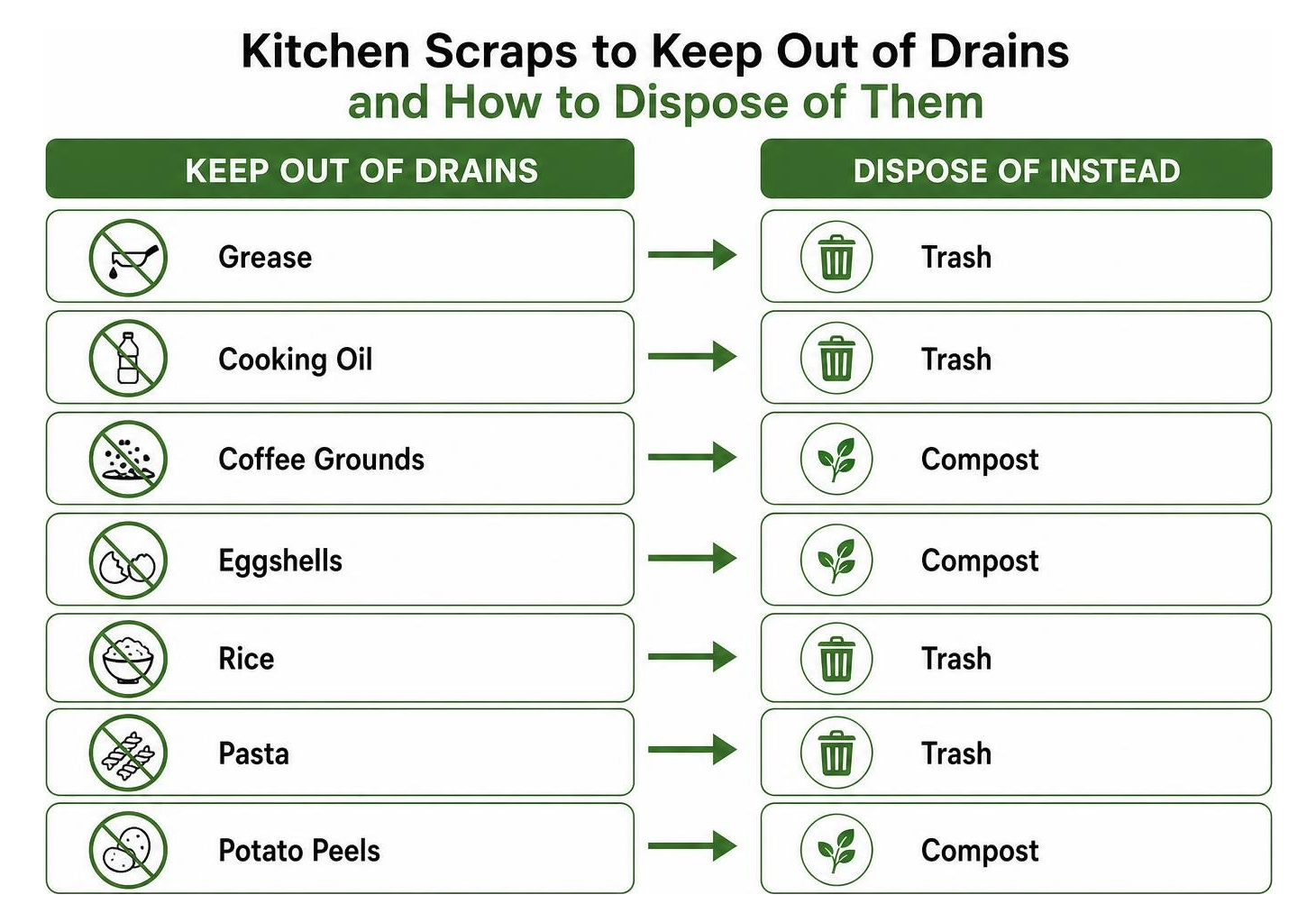
Grease, cooking oil, coffee grounds, eggshells, rice, pasta, and potato peels should go in the trash or compost, not your sink. Even a garbage disposal cannot keep these scraps from building up in pipes. If your kitchen sink is already draining slowly, drain cleaning in Carlsbad, CA, can remove a clog before wastewater backs up. Start by scraping plates and pans into a bin and using a sink strainer. These small habits can help keep food waste out of your drain.
Learn more about preventing drain clogs or get help with professional drain cleaning.
I’m John Stevenson, and I’ll show you which common scraps to keep out of your pipes.
If your sink stays slow, schedule drain cleaning.
The Most Damaging Things You Should Never Put Down a Drain
It is easy to treat a kitchen sink like an all-consuming magic portal. You turn on the faucet, flip the garbage disposal switch, watch everything vanish, and assume the problem is solved. In reality, modern residential plumbing relies on gravity, smooth interior pipe walls, and clean water flow to carry waste away from your home.
When you introduce foreign substances, you start a slow process of pipe buildup and plumbing obstruction. What disappears from your sink basin often coats the interior walls of your drain line just feet beneath your floorboards. Over time, that coating thickens, effectively shrinking the diameter of your pipes until wastewater has nowhere left to go. To keep your system flowing freely, it helps to learn the primary things you should never put down a drain and adopt proactive habits that protect your plumbing infrastructure.
Fats, Oils, and Grease: Top Kitchen Things You Should Never Put Down a Drain
Fats, oils, and grease (commonly referred to in the plumbing industry as FOG) represent the single biggest threat to residential and municipal drainage networks. In fact, fats, oils, and grease alone are estimated to cause 47% of clogged drains across the United States.
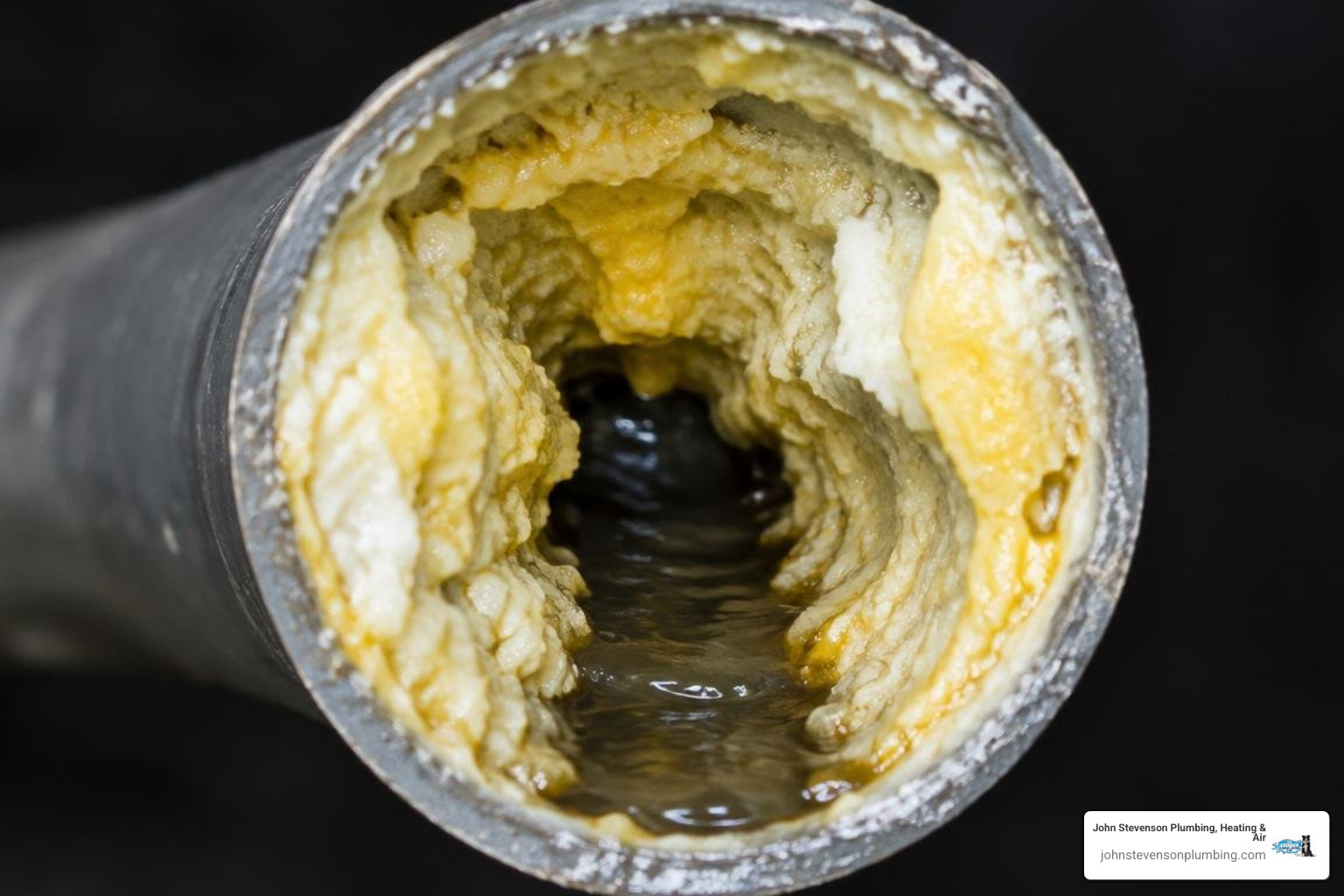
Whether it is warm bacon fat, leftover olive oil from a sauté pan, melted butter, or meat drippings, liquid fats seem harmless when hot. However, the moment they hit the cooler ambient temperature of your underground drain lines, they rapidly congeal.

As grease solidifies, it adheres to the interior lining of the pipe, creating a sticky, tacky foundation. Every subsequent particle of food, hair, or mineral sediment that washes down gets trapped in this greasy lining. In public sewer mains, this compounding cycle produces massive, rock-hard obstructions known as “fatbergs.” In 2017, municipal workers in Whitechapel, London, had to excavate a 750-foot monster fatberg that weighed as much as 11 double-decker buses. The very same chemical reaction happens on a smaller scale inside residential drain lines whenever cooking oils go down the sink.
Starchy, Fibrous, and Granular Food Scraps That Choke Pipes
Many homeowners assume that if an item fits down the garbage disposal, the disposal will grind it into liquid. Disposals have motorized shredder rings that break food into smaller particles, but they do not dissolve matter or alter its basic physical properties.
- Coffee Grounds: Fine coffee grounds behave like heavy silt or sediment. Because they do not break down in water, they settle into the low dips of your P-trap and horizontal pipe runs, compacting over time into a dense, muddy wall.
- Eggshell Granules: Ground eggshells do not sharpen disposal blades (a persistent myth). Instead, their hard, granular fragments combine with congealed grease and cling to the P-trap, creating an abrasive paste that snags passing debris.
- Expanding Pasta and Rice: Starches are designed to absorb moisture and expand. Even after they have been cooked, leftover pasta, rice, and oats swell significantly when submerged in standing drain water, forming a gelatinous, impassable clump.
- Flour and Baking Mixes: Mixing flour with water creates a thick, sticky paste that cures inside plumbing pipes, acting more like wet cement than organic waste.
- Fibrous Produce Scraps: Stringy vegetables like celery, corn husks, artichoke leaves, and asparagus contain tough cellulose fibers. These strands wrap around disposal impellers, jamming the motor and creating a web downstream that snares other waste.
- Potato Peels: The day after Thanksgiving is consistently one of the busiest plumbing crisis days of the year, driven largely by holiday cooks washing mounds of starchy potato peels down the sink. When mashed by disposal blades, potato skins turn into a thick, sticky mash that instantly chokes the drain outlet.
| Food Scrap | Why It Damages Drains | Safe Disposal Method |
|---|---|---|
| Bacon Grease & Cooking Oil | Solidifies as it cools, lining pipe walls and trapping debris | Let cool in a can/jar, scrape into trash |
| Coffee Grounds | Settles like heavy sediment in pipe bends and traps | Add to compost pile or general waste bin |
| Eggshells | Granular particles bind with grease in the P-trap | Compost or discard in kitchen trash |
| Pasta, Rice & Oats | Expands in water to create dense, gummy blockages | Scrape leftovers into trash or compost |
| Potato Peels & Celery | Starch paste and fibrous strings jam blades and traps | Place in municipal organics bin or trash |
| Produce Stickers | Non-biodegradable plastic glues itself to pipe walls | Peel off before washing and toss in trash |
Bathroom and Non-Food Hazards That Threaten Home Plumbing
Kitchen sinks are not the only drains susceptible to improper disposal habits. Bathroom sinks, shower drains, and toilets face their own unique lineup of hazards that cause structural pipe corrosion, water contamination, and stubborn sewer blockages.
Chemicals, Paint, and Wipes: Non-Food Things You Should Never Put Down a Drain
Toilets and bathroom drains are engineered exclusively for human waste and standard toilet paper. Introducing other household products quickly leads to plumbing emergencies and environmental hazards.
- “Flushable” Wipes: Despite marketing claims on packaging, wet wipes do not disintegrate like toilet paper. Standard toilet paper breaks apart in water within seconds; wet wipes are reinforced with synthetic fibers that stay intact for months. When flushed, they snag on minor pipe imperfections, bundle together, and create deep sewer line jams.
- Paper Towels and Cotton Products: Cotton balls, cosmetic rounds, swabs, and heavy paper towels are designed to absorb water and maintain structural strength while wet. In a pipe, they swell, creating an instant barrier.
- Leftover Paint and Solvents: Washing latex or oil-based paint down household drains coats pipe walls with rubbery or chemical residues that cure in place. Paint is classified as household hazardous waste and introduces volatile organic compounds directly into local waterways.
- Corrosive Bleach and Harsh Cleaners: While small amounts of household cleaner used during routine cleaning are common, pouring straight bleach, strong solvents, or repeated bottles of caustic chemical drain openers into your plumbing can corrode older cast-iron lines, soften PVC joints, and kill the beneficial bacteria needed in municipal treatment systems.
- Pharmaceuticals and Expired Medications: Wastewater treatment plants are not engineered to remove complex pharmaceutical compounds from the water supply. Flushing pills or pouring liquid medications down the sink allows antibiotics, hormones, and pain medications to reach local rivers and marine ecosystems.
Hair and Soap Scum Accumulation in Southern California Pipes
Bathroom drain clogs in Southern California are exacerbated by natural water conditions. Throughout San Diego County and Orange County, municipal tap water carries moderate-to-high levels of dissolved calcium and magnesium minerals.
When dissolved minerals combine with standard bar soaps and body washes, they produce a sticky, insoluble residue known as soap scum. As loose human hair and pet fur wash down shower and tub drains, the hair strands catch on mechanical pop-up stoppers and drain crosses. The sticky soap scum then binds these hair strands together, forming a durable, rope-like net that traps mineral scale and halts drainage completely.
Safe Alternatives and Disposal Habits for Carlsbad Homeowners
Protecting your plumbing requires only a few simple, daily adjustments to how you manage household waste:
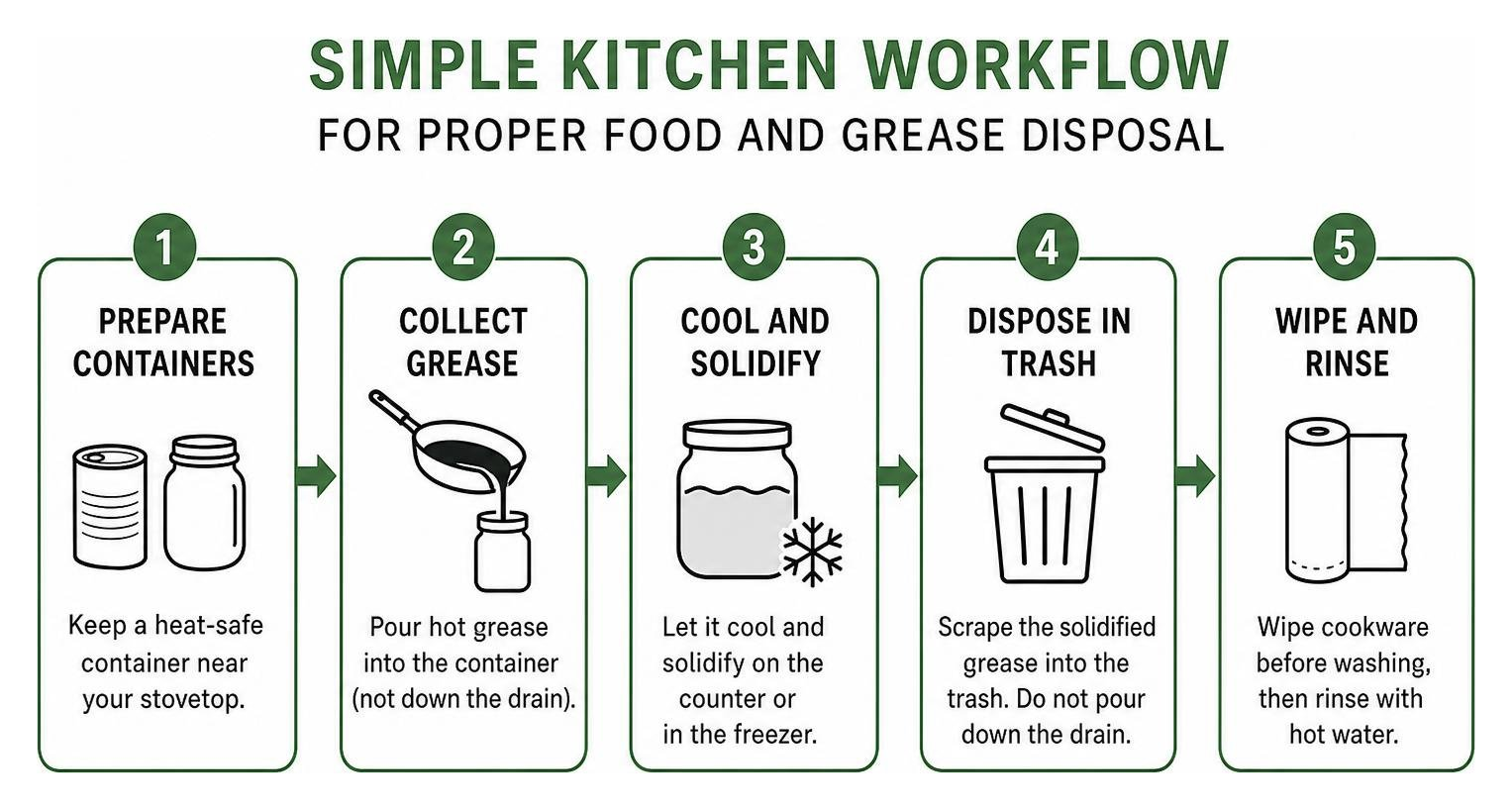
- Use the “Can and Cool” Grease Method: Keep an empty metal soup can, heat-safe glass jar, or disposable container near your stovetop. Pour hot grease into the container, let it cool and solidify on the counter or in the freezer, and scrape it directly into your household trash.
- Wipe Cookware Before Washing: Use a dry paper towel to wipe residual oil and sauces from skillets, roasting pans, and plates before rinsing them in the sink.
- Embrace Backyard or Curbside Composting: Food scraps like coffee grounds, eggshells, vegetable trimmings, and fruit rinds make excellent nutrient-rich compost. If you do not maintain a backyard pile, use your municipal green waste bin.
- Install Fine-Mesh Strainers: Inexpensive mesh strainers placed over your kitchen sink, bathroom sink, and shower drains catch stray food scraps and hair before they enter the plumbing. Clean them into the trash daily.
- Use Take-Back Programs for Chemicals and Meds: Take unused prescription drugs to designated pharmacy drop boxes or local drug take-back days. Keep leftover paint, automotive fluids, and harsh solvents in their original containers and transport them to your local household hazardous waste collection facility.
- Freshen Drains Naturally: Instead of relying on harsh, pipe-degrading chemical cleaners, maintain freshness and tackle mild odors by reviewing methods for eliminating foul drain odors using hot water, baking soda, and vinegar.
When to Call a Plumber for Stubborn Pipe Clogs
While basic plunger work and drain strainers can resolve minor surface clogs, certain plumbing symptoms indicate a deeper, more severe issue in your main drainage system:
- Multiple plumbing fixtures draining slowly at the same time (e.g., both the shower and the toilet gurgling when the washing machine runs).
- Persistent sewage odors rising from sink drains or floor traps despite thorough cleaning.
- Standing wastewater backing up into tubs or low-lying shower pans when another appliance drains.
- Recurring clogs that return days after using a mechanical hand snake or plunger.
When home remedies fail, our team performs a high-resolution sewer camera inspection to view the interior condition of your lines in real time, pinpointing grease buildups, root intrusions, or physical pipe damage without destructive digging.
Depending on the diagnosis, we clear lines using targeted mechanical snaking or restore full internal pipe diameter by scouring pipes with hydro jetting, which uses high-pressure water streams to strip away years of congealed grease and scale buildup. If your pipes have suffered structural cracking or collapse from age, our technicians provide complete drain repair and replacement solutions to restore your home’s wastewater system.
Frequently Asked Questions About Drain Safety
Can I wash grease down the sink if I run hot water and dish soap?
No. Running hot water and dish soap while pouring grease down the drain only temporarily suspends the oil molecules. Dish soap acts as a surfactant, breaking the fat into smaller droplets, but this effect dissipates as the mixture travels deeper into your plumbing. As soon as the wastewater encounters cold, underground pipes several yards past your kitchen, the water cools, the soap dilutes, and the grease separates and solidifies against the pipe walls, creating blockages far out of reach of standard sink plungers.
Are flushable wipes truly safe for residential plumbing systems?
No. Wet wipes labeled “flushable” are made from woven synthetic fibers that do not break down in water like standard cellulose-based toilet paper. While they may clear the toilet bowl trap, they frequently snag on interior pipe rough spots, root intrusions, or directional fittings in the lateral line. In a municipal or residential sewer pipe, these wipes bind with grease and other solids, creating massive blockages that require mechanical augers or hydro jetting to remove.
Is it safe to put small amounts of coffee grounds down the garbage disposal?
No. Coffee grounds are completely insoluble in water and do not break down when processed by garbage disposal blades. Because they are dense and granular, they quickly settle at the bottom of the disposal trap and horizontal drainage runs. Over time, coffee grounds accumulate like riverbed silt, mixing with stray cooking oils and soap residues to form an impermeable, clay-like clog. Coffee grounds should always be added to compost piles or discarded in the trash.
Conclusion
Your home’s plumbing system works hard every day to maintain a clean, comfortable, and sanitary living environment. By keeping grease, starchy food scraps, fibrous produce, flushable wipes, and harsh chemicals out of your sinks and toilets, you can prevent inconvenient backups and protect your pipes for decades to come.
When stubborn blockages, slow drains, or sewer backups do occur, John Stevenson Plumbing, Heating & Air Conditioning is here to help. Based in Carlsbad, CA, and serving homeowners across Carlsbad, San Diego County, and Orange County, our licensed technicians provide comprehensive plumbing repairs, drain cleaning, hydro jetting, and sewer line inspections backed by our 5-Star Service Guarantee.
If you are dealing with a slow or blocked sink, contact our team today for expert blocked drain solutions and enjoy reliable, long-lasting plumbing performance.