
How to Tell If You Have Hard Water: Quick Signs Every Carlsbad Homeowner Should Know
How to tell if you have hard water is simpler than most people think — and the clues are probably already hiding in plain sight around your home.
Here are the most common signs:
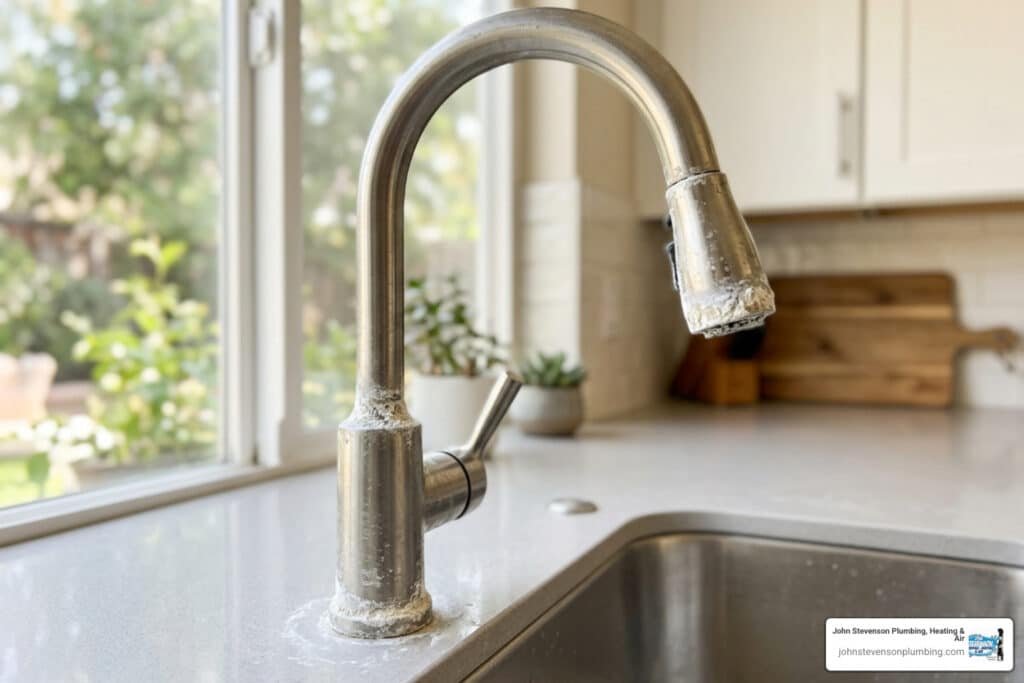
- White, chalky buildup on faucets, showerheads, and around drains
- Spots or cloudy film on glasses and dishes straight out of the dishwasher
- Soap scum that clings to tubs, shower doors, and tile
- Dry, itchy skin or dull hair after showering
- Stiff, rough laundry even after a full wash cycle
- Weak water pressure caused by mineral scale narrowing your pipes
- Appliances wearing out faster than they should
If two or more of those sound familiar, there is a strong chance your home has hard water. You are far from alone — over 85% of homes across the United States deal with it to some degree.
Hard water is not a health hazard, but it is a real problem for your plumbing, your appliances, and your daily comfort. Southern California — including Carlsbad — is one of the harder-hit regions in the country, thanks to the mineral-rich groundwater that flows through the area.
This guide walks you through exactly how to confirm whether hard water is your issue, what damage it can cause if left untreated, and what your best options are for fixing it.
What is Hard Water and What Causes It?
At its core, water hardness is a chemistry problem, not a cleaning problem. Hard water is simply water that contains a high concentration of dissolved minerals, primarily calcium and magnesium.
This mineral accumulation happens naturally through the water cycle. As rainwater falls, it is naturally soft and slightly acidic. However, as it filters through the ground and flows through underground aquifers, it dissolves and picks up minerals from surrounding rock formations like limestone, chalk, gypsum, and ancient seabeds. By the time this groundwater is pumped up by municipal water systems or private wells, it is heavily loaded with these dissolved mineral ions.
In Southern California, our water travels a long way before it ever reaches your tap. Much of our municipal water is sourced from the Colorado River and the State Water Project, flowing over mineral-rich soils and through hundreds of miles of rock channels. This makes our regional water some of the hardest in the nation. To understand how local geological factors shape the water coming out of your faucets, you can read about how to Don’t Get Drained by Southern California’s Complex Water Quality Issues.
How to Tell If You Have Hard Water: Common Signs in Your Home
If you are wondering how to tell if you have hard water without a chemistry degree, you can start by looking for a few telltale signs around your household. Because calcium and magnesium react strongly with household soaps and heat, they leave behind highly visible clues.
Here is what to look out for in your day-to-day routine:
1. Crusty White Limescale Buildup
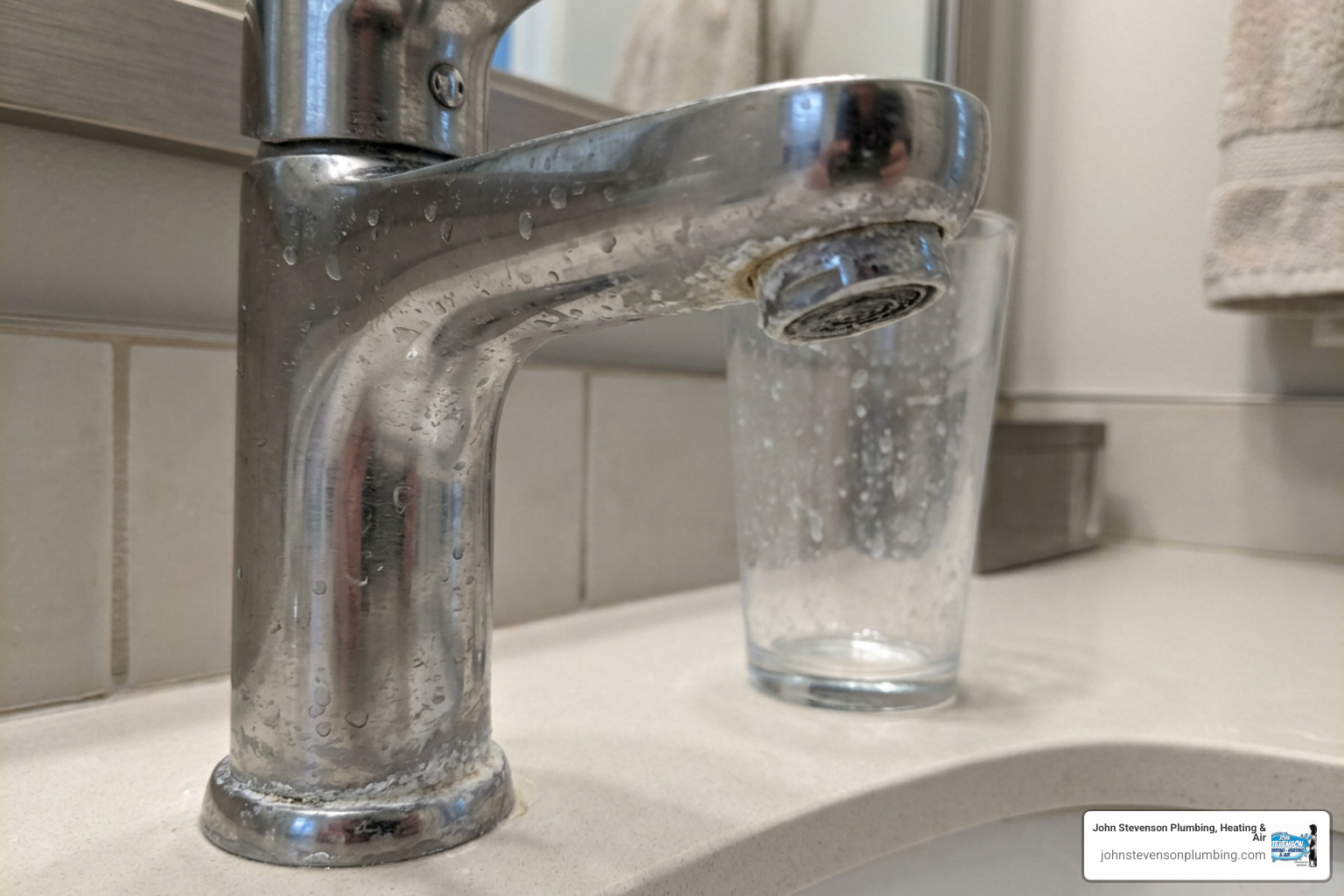
The most obvious sign of hard water is a chalky, white, or grey crusty substance on your plumbing fixtures. This is calcium carbonate, commonly known as limescale. It forms when hard water evaporates, leaving behind solid mineral deposits. You will typically find it around the base of faucets, on the nozzles of your showerhead, and around drain openings. If left unchecked, this buildup can restrict water flow, leading to clogged aerators. To keep your plumbing running smoothly, check out our guide on how to Stop the Clog Before It Starts.
2. Stubborn Soap Scum and Tub Rings
When calcium and magnesium meet soap, they form a sticky, insoluble residue instead of a clean lather. This residue is what we call soap scum. It clings to shower tile, grout, fiberglass tubs, and glass shower doors, forming a stubborn, cloudy layer that is incredibly difficult to scrub away.
3. Cloudy, Spotted Glassware
Have you ever run a load of dishes only to find your clean glasses looking cloudy, milky, or covered in tiny white spots? This is not leftover food; it is mineral film left behind by hard water. The high heat of the dishwasher dries the water quickly, leaving the calcium and magnesium bonded to your glassware.
4. Dry, Itchy Skin and Dull, Frizzy Hair
Hard water minerals do not rinse cleanly from your body. Instead, they react with your soaps and body washes to leave a microscopic, sticky residue on your skin and hair. This residue clogs pores, strips away your skin’s natural moisture barrier, and can worsen conditions like eczema or dandruff. If your hair feels limp, straw-like, or frizzy, and your skin feels tight and itchy right after a shower, hard water is the likely culprit.
5. Stiff, Dingy, and Faded Laundry
If your bath towels feel scratchy and stiff like cardboard, or your favorite clothes are fading prematurely, hard water is working against your washing machine. The minerals trap laundry detergent within the fabric fibers, preventing a proper rinse. Over time, this mineral buildup weakens fabric fibers, causing clothes to wear out faster and look dingy or grey.
6. Reduced Water Flow and Pressure
As minerals build up inside your plumbing pipes over years of use, they form a rock-hard layer of scale that narrows the path for water to flow. If you notice a gradual drop in water pressure throughout your home, it could be a sign that your pipes are slowly choking on mineral scale.
The Damage Hard Water Causes to Plumbing and Appliances
While the daily hassles of spotted dishes and dry skin are annoying, the real danger of hard water lies hidden inside your plumbing system and water-using appliances. Over time, untreated hard water can cause severe, costly damage.
The Toll on Your Water Heater
Your water heater is the most vulnerable appliance in a hard water environment. When hard water is heated, the calcium and magnesium minerals rapidly precipitate out of the water and settle to the bottom of the tank (or onto the heat exchangers of a tankless system) as a thick layer of rock-like scale.
- Efficiency Loss: Just a tiny 1/16-inch layer of scale inside your water heater can reduce its heating efficiency by up to 12%. This means your system has to run longer and work much harder to heat your water, driving up your monthly energy bills.
- Premature Failure: In traditional tank heaters, this sediment layer acts as a barrier between the burner and the water, overheating the bottom of the tank and weakening the steel, eventually leading to a tank rupture. In tankless systems, scale clogs the compact heat exchanger, causing the unit to overheat and fail. To protect your system, learn How to Diagnose a Failing Water Heater before it leaves you with a cold shower.
Reduced Lifespan for Household Appliances
Your washing machine and dishwasher suffer a similar fate. Hard water scale builds up on heating elements, pumps, and internal valves, forcing these appliances to work harder and fail years ahead of their time.
By upgrading to soft water, you can see a 50% increase in the useful life of your dishwasher and washing machine, and a 33% increase in the lifespan of your water heater. It is a simple change that saves you thousands of dollars in premature replacement costs.
Clogged and Corroded Pipes
Scale does not just stay in your appliances; it lines the inside of your home’s water pipes. Over the years, this scale thickens, severely restricting water flow and increasing pressure on pipe joints, which can lead to pinhole leaks. To keep your home’s hidden systems in top shape, incorporate pipe inspections into your regular home maintenance routine, as detailed in our Spring Cleaning for Your Pipes and Vents: A Comprehensive Checklist.
How to Test for Hard Water at Home
If you suspect your Southern California home is affected by hard water, you do not have to guess. There are several simple, reliable ways to test your water quality directly from your kitchen or bathroom tap.
The DIY Soap Bottle Test: How to Tell If You Have Hard Water
This classic, zero-cost home test is a fantastic first step to confirm your suspicions. It relies on the chemical reaction between pure soap and hard water minerals.
Note: Do not use standard dish soaps (like Dawn) or liquid body washes for this test. These products contain synthetic detergents and foaming agents formulated to lather regardless of water hardness, which will skew your results. Instead, use pure liquid Castile soap.
How to perform the Soap Bottle Test:
- Find a clean, clear plastic or glass bottle (a 12 oz water bottle works perfectly).
- Fill the bottle about one-third full with cold water straight from your tap.
- Add 10 drops of pure liquid Castile soap.
- Cap the bottle tightly and shake it vigorously for 10 to 15 seconds.
- Observe the results immediately.
What to look for:
- If you have soft water: The bottle will quickly fill with a thick, fluffy layer of clear bubbles and suds that rest on top of crystal-clear water.
- If you have hard water: You will see very few bubbles, and the lather will collapse quickly. The water below the surface will look cloudy, milky, or grey, indicating that the soap has reacted with the minerals to form soap scum instead of suds.
Using Test Strips and Reports: How to Tell If You Have Hard Water
While the soap bottle test is a great visual indicator, it will not tell you exactly how hard your water is. For precise measurements, you have two excellent options:
1. Read Your Local Consumer Confidence Report (CCR)
By federal law, municipal water providers are required to publish an annual water quality report (known as a Consumer Confidence Report) by July 1st of each year. You can easily find Carlsbad’s or your local water district’s report online. Look for sections labeled “Hardness,” “Calcium,” or “Magnesium.”
That municipal reports show the average hardness level at the treatment plant or water source. Due to seasonal changes and the specific path water takes through local pipes to your home, your actual tap water hardness may vary.
2. Use a DIY Water Hardness Test Strip
For an accurate, real-time reading of your home’s water, you can purchase a pack of water hardness test strips online or at a local hardware store.
- How to use them: Fill a clean glass with cold tap water from a bathroom sink (using a still cup of water rather than a running tap prevents the active chemical agents from washing off the strip). Dip the test strip into the water for 1 to 3 seconds, remove it, and do not shake it. Wait about 30 to 60 seconds, then compare the color change on the strip to the chart on the packaging.
- Best Practice: Always read the strip under bright, natural light for the most accurate color match, and close the strip container immediately after opening to protect the remaining strips from humidity.
Understanding Your Hardness Number
Water hardness is typically measured in either Parts Per Million (PPM), Milligrams per Liter (mg/L), or Grains Per Gallon (GPG). To convert PPM to GPG, simply divide the PPM number by 17.1.
Use this handy classification table to interpret your test results:
| Hardness Classification | Grains Per Gallon (GPG) | Parts Per Million (PPM) / mg/L | Recommended Action |
|---|---|---|---|
| Soft | 0 to 3.5 GPG | 0 to 60 PPM | No treatment needed. |
| Moderately Hard | 3.5 to 7.0 GPG | 61 to 120 PPM | Minor spots on dishes; treatment optional but helpful. |
| Hard | 7.0 to 10.5 GPG | 121 to 180 PPM | Water softener recommended to prevent appliance scale. |
| Very Hard | 10.5+ GPG | 180+ PPM | Treatment strongly recommended to protect plumbing. |
If your water test results show levels above 7 GPG (120 PPM), your home is in the “Hard” range, and installing a water treatment system will make a noticeable difference in your daily life and the longevity of your plumbing.
Solutions for Treating Hard Water in Southern California
If your tests confirm that you have hard water, there is no need to worry. Modern water treatment technologies make it easy to protect your home. The two primary whole-house solutions are:
1. Salt-Based Water Softeners (Ion Exchange)
This is the gold standard for water softening. Salt-based systems physically remove calcium and magnesium ions from your water supply. Inside the softener’s tank, hard water passes over a bed of negatively charged resin beads. The positively charged calcium and magnesium minerals stick to the beads, while a tiny, harmless amount of sodium or potassium is released in their place.
During a periodic regeneration cycle, the system flushes the mineral buildup off the resin beads using a salt brine solution, sending the hard minerals down the drain. This process completely eliminates hard water, meaning you will immediately enjoy fluffy soap lather, spot-free dishes, and soft skin and hair.
2. Salt-Free Water Conditioners (Template-Assisted Crystallization)
If you prefer a system that does not use salt or require wastewater discharge, a salt-free water conditioner is an alternative. These systems use a process called Template-Assisted Crystallization (TAC). Instead of removing the minerals, the conditioner alters their physical structure, transforming them into microscopic crystals that cannot stick to pipes, fixtures, or heating elements.
While salt-free conditioners are incredibly effective at preventing scale buildup in your pipes and water heater, they do not physically soften the water. Because the minerals are still present, you may still experience some soap scum, dry skin, and minor water spots on glassware.
Frequently Asked Questions About Hard Water
Is hard water harmful to my health?
No, hard water is completely safe to drink. In fact, drinking water rich in calcium and magnesium can contribute a small amount to your daily dietary mineral intake.
However, hard water is not friendly to your skin and hair. The mineral residue it leaves behind can damage your skin barrier, clog pores, and strip away natural oils, which can trigger or worsen dry skin, dandruff, and dermatological conditions like eczema, especially in young children.
What is the difference between a water softener and a water conditioner?
The main difference is that a water softener physically removes hard minerals (calcium and magnesium) from your water through ion exchange, replacing them with sodium or potassium.
A water conditioner does not remove the minerals; instead, it neutralizes them so they cannot stick to surfaces and form hard scale. If your goal is to eliminate soap scum, dry skin, and spotted dishes, a salt-based softener is your best option. If your goal is strictly to protect your pipes and appliances from scale without using salt, a conditioner is a great fit.
How do I choose the right water softener size for my home?
Sizing a water softener depends on your household’s water usage and the hardness level of your water. Softener capacity is measured in “grains.”
As a general guideline:
- 32,000 Grains: Ideal for small households of 1 to 3 people with 1 to 2 bathrooms.
- 48,000 Grains: Best for medium-sized families of 4 to 5 people with 3 to 4 bathrooms.
- 64,000 Grains: Recommended for larger households of 5 to 7 people with 4 to 6 bathrooms, or homes with extremely high water hardness.
Working with a certified plumbing professional is the best way to calculate your exact daily grain capacity and ensure your system is perfectly sized for your home.
Conclusion
Now that you know how to tell if you have hard water, you can take the first step toward protecting your Carlsbad home. From saving your water heater from premature failure to enjoying softer skin, cleaner laundry, and spotless dishes, the benefits of high-quality water are felt every single day.
At John Stevenson Plumbing, Heating & Air Conditioning, Inc., we believe you deserve water that works for you, not against you. Serving Carlsbad, San Diego County, and Orange County, our team of certified, friendly technicians is ready to help you find the perfect water quality solutions for your household.
With our 5-Star Service Guarantee, you can expect thorough diagnostics, upfront and clear pricing, and a 24-hour satisfaction check-in to ensure you are absolutely thrilled with your new system. Ready to say goodbye to limescale and hello to pure, soft water? Give us a call today!