
Kitchen Drain Clog Prevention Tips for Carlsbad Homeowners
The best kitchen drain clog prevention tips are simple: scrape food into the trash, catch scraps with a sink strainer, and never pour grease or oil down the drain. Wipe greasy pans before washing them, then empty the strainer after each use. If you have a garbage disposal, run cold water while it works and briefly afterward. These daily habits help keep food and grease from building up in your pipes. If your Carlsbad, CA, sink already drains slowly, drain cleaning may be needed to clear the blockage.
Explore drain cleaning services or get help with a blocked drain.
I’m John Stevenson, and if your sink keeps backing up, schedule drain cleaning before the problem grows.
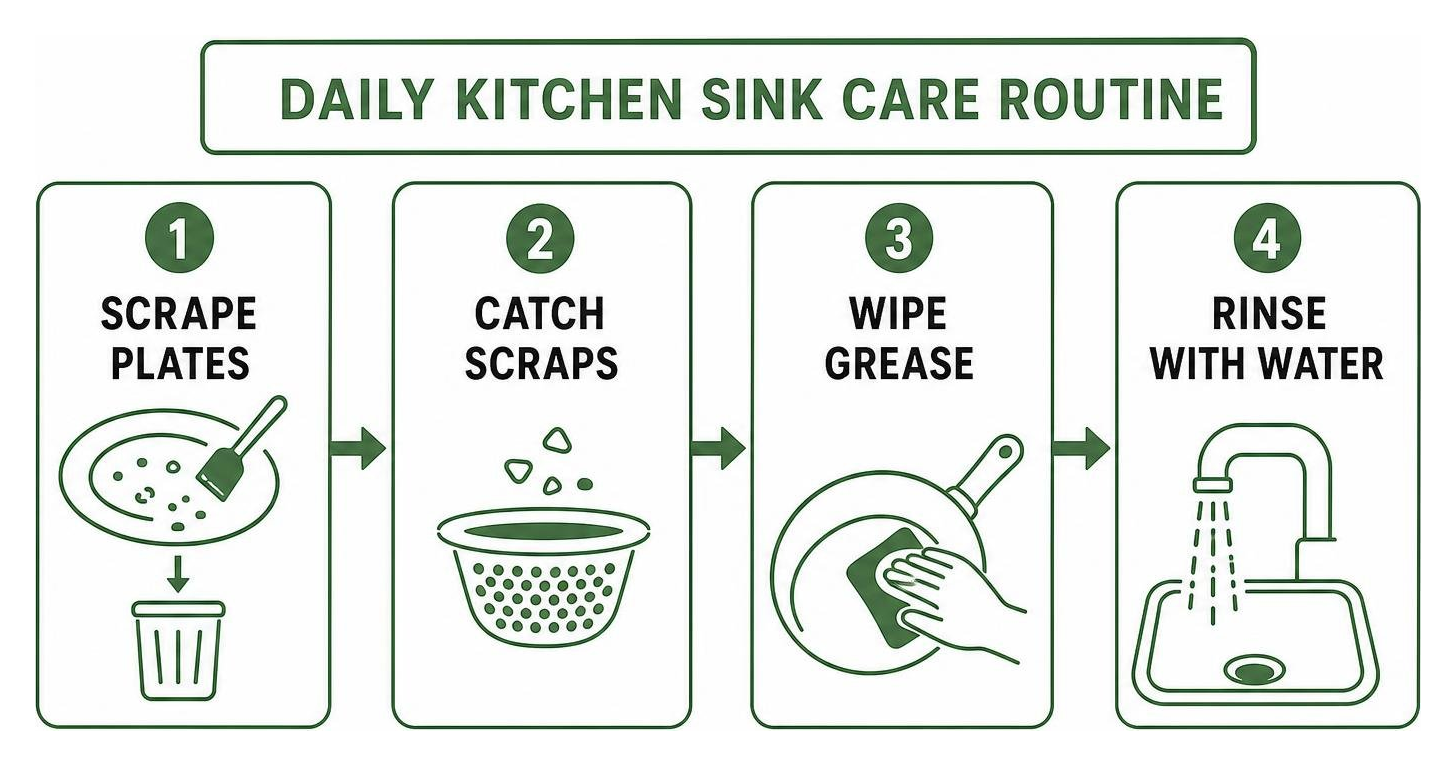
Basic kitchen drain clog prevention tips terms:
Understanding Common Causes of Kitchen Sink Clogs
Kitchen drains are among the hardest-working fixtures in any home. Over time, daily meal preparation, dishwashing, and quick rinses introduce various substances into your plumbing lines. While water flows away effortlessly when pipes are clear, microscopic layers of organic waste gradually adhere to the interior walls of your drainage system.
The primary culprits behind kitchen blockages are fats, oils, and grease, closely followed by stray food particles and municipal mineral scale. In Southern California communities such as Carlsbad, Encinitas, and Irvine, hard water contains dissolved calcium and magnesium. When these minerals settle inside your waste lines, they create a rough, textured surface. This mineral scale acts like Velcro for passing food particles and sticky fats, gradually narrowing the pipe diameter and restricting drainage. To protect your plumbing, it helps to understand what clogs drains most often so you can modify daily kitchen habits accordingly.
Safe Management and Disposal of Cooking Grease
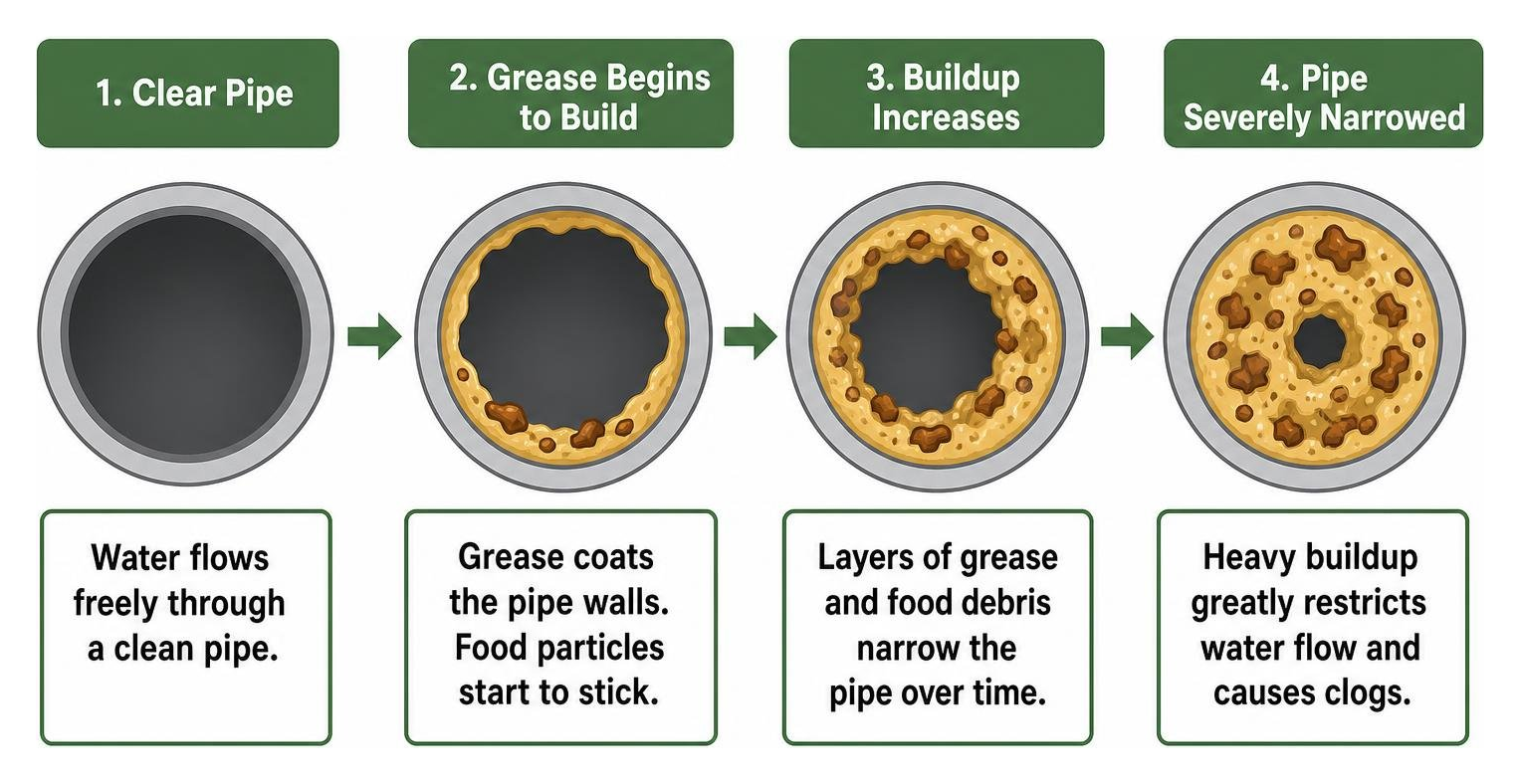
Fats, oils, and grease—frequently abbreviated as FOG in the plumbing industry—represent the single greatest hazard to residential kitchen drains. When hot, cooking oil and animal fats appear as harmless liquids that glide smoothly down the sink. However, as soon as these substances enter your cool subterranean pipes, they rapidly cool and solidify into a thick, waxy coating.
Over weeks and months, subsequent layers of grease accumulate, trapping stray food debris and forming dense, stubborn blockages known in municipal networks as fatbergs. Dish soap and hot water do not dissolve these fats permanently; detergents merely break oil into smaller globules that re-congeal deeper inside the plumbing run or municipal sewer main.
To practice proactive care and stop clogs before they start, follow these safe grease disposal steps:
- Let it cool: Allow cooking oils, bacon grease, and pan drippings to cool down safely after cooking.
- Collect in a dedicated container: Pour liquid oils into a sealable container, such as an empty coffee can, glass jar, or used milk carton.
- Wipe before washing: Use a dry paper towel to wipe residual grease from frying pans, baking sheets, and plates before rinsing them in the sink.
- Dispose in the trash: Once the grease solidifies in your container, place it directly into your household trash bin or drop it off at a local municipal recycling collection point.
Problematic Food Waste to Keep Out of the Drain
Even homes equipped with powerful garbage disposals face blockages when challenging food items are forced down the drain. Garbage disposals are designed to grind soft, incidental food scraps—they are not industrial trash compactors. Certain food items behave unpredictably when exposed to water and mechanical blades.
- Coffee grounds: While fine and powdery, grounds do not dissolve in water. Instead, they settle in the low curve of the P-trap, blending with residual grease to create a dense, sediment-like paste.
- Expandable starches: Pasta, rice, oatmeal, and potato peels absorb water and swell inside plumbing lines. They transform into a thick, gelatinous sludge that easily traps other waste.
- Fibrous vegetables: Celery, corn husks, artichoke leaves, onion skins, and asparagus contain stringy cellulose fibers that wrap around disposal impellers and tangle inside drainage junctions.
- Eggshells: The fragile shells grind into tiny, sand-like grit, while the stringy inner membrane can snag on disposal components and pipe joints.
| Kitchen Scrap Item | Drain Status | Impact on Plumbing System | Recommended Disposal Method |
|---|---|---|---|
| Cooking Oils & Animal Fats | Never Drain | Solidifies on pipe walls, causing severe FOG blockages | Seal in a container and discard in trash |
| Coffee Grounds | Never Drain | Settles in P-trap; creates heavy, dense sediment | Add to compost or household trash |
| Pasta, Rice & Grains | Never Drain | Expands with moisture; creates thick glue-like paste | Green waste compost or trash bin |
| Celery, Corn Husks & Onion Skins | Never Drain | Fibers tangle around disposal blades and trap debris | Compost or organic waste bin |
| Soft Fruit & Veggie Scraps | Incidental Only | Washes through easily when processed with cold water | Scrape bulk into trash; grind light scraps |
| Ice Cubes | Safe for Disposal | Helps dislodge organic buildup from disposal blades | Grind with cold running water |
Essential Kitchen Drain Clog Prevention Tips for Every Homeowner

Preventing plumbing emergencies in communities across San Diego County and Orange County requires consistent, everyday mindfulness. Roughly four out of five emergency plumbing callouts could be prevented entirely through simple daily habits. Implementing a few reliable physical barriers and operational routines will keep your wastewater moving freely.
Kitchen Drain Clog Prevention Tips for Every Sink
Whether your kitchen features a high-end continuous-feed disposal unit or a simple direct-drain setup, physical strainers are your first line of defense. A simple stainless steel fine-mesh strainer catches the microscopic food particles that bypass standard sink stoppers.
- Install fine-mesh strainers: Place drop-in mesh baskets over all kitchen sink basins to catch crumbs, seeds, and vegetable peelings before they enter the plumbing.
- Scrape plates thoroughly: Always scrape leftover food, sauces, and solid morsels into the trash or compost bin prior to loading dishes into the sink or dishwasher.
- Clean strainers daily: Invert and tap your drain screens into the waste bin after every dishwashing session rather than rinsing trapped particles down the drain.
- Inspect stoppers regularly: Periodically remove pop-up stoppers and clean away accumulated food sludge or soap scum.
Proper Kitchen Sink Drain Care
Proper water flow during and after cleanup is essential for clear pipes. If you operate a garbage disposal, always run a steady stream of cold water before switching on the unit, throughout the grinding process, and for roughly 20 to 30 seconds after turning off the motor. Cold water keeps trace fats in a solid, particulate state so the disposal can chop them up and flush them completely out to the main line, rather than allowing melted grease to coat the pipe walls.
For sinks without disposals, running warm tap water for 15 seconds after washing dishes helps carry soap residue through the P-trap. If neglected organic matter begins to decay in your drain line, you can eliminate unpleasant odors by learning the right steps for fixing a smelly drain fast.
Routine Maintenance and Safe Pipe Cleaning Methods
Integrating gentle, periodic maintenance into your monthly cleaning calendar prevents organic films from hardening into stubborn obstructions. You do not need harsh chemicals to keep your pipes fresh and functional; simple household pantry staples provide safe, reliable results.
Natural Kitchen Drain Clog Prevention Tips and DIY Maintenance
A gentle, eco-friendly maintenance flush using sodium bicarbonate (baking soda) and distilled white vinegar helps break down light organic residue, grease films, and soap buildup without degrading pipe materials or harming home septic systems.
- Clear standing water: Ensure the sink basin is empty and clean.
- Apply baking soda: Pour one-half cup of baking soda directly down the kitchen drain opening.
- Add vinegar: Follow immediately with one cup of distilled white vinegar. Place a drain stopper or washcloth over the opening to contain the effervescent reaction within the pipe.
- Let it work: Allow the bubbling carbon dioxide and mild acetic acid to break down organic slime for 15 to 20 minutes.
- Flush with hot tap water: Uncover the drain and flush thoroughly with hot tap water for 30 to 60 seconds to sweep dislodged debris through the trap.
This natural routine eliminates mild organic buildup while banishing stale odors. If your plumbing produces strong, persistent sewer gas odors, consult our guide on addressing kitchen sinks smelling like rotten eggs to identify issues with dry traps or vent stacks.
Why Chemical Cleaners Should Be Avoided
When kitchen sinks slow down, many homeowners reflexively reach for commercial chemical drain openers. While these caustic products promise instant clearing, professional plumbers strongly advise against their use in residential systems.
Chemical drain cleaners rely on high concentrations of sulfuric acid or sodium hydroxide (lye). These substances generate intense chemical heat inside the line. In modern homes with PVC or ABS plastic pipes, this thermal reaction can soften, warp, or crack pipe walls and compromise the solvent-welded joints. In older residences featuring cast iron or galvanized steel lines, acidic cleaners accelerate metal corrosion, creating pitted internal surfaces that catch future debris.
Furthermore, harsh chemicals emit toxic fumes, endanger technicians who may need to disassemble the piping later, and disrupt the beneficial bacterial balance necessary for healthy municipal and septic waste processing.
Knowing When to Call a Professional Plumber
Even with careful daily maintenance, years of cooking and hard water minerals can eventually create deep restrictions within your home’s main drainage runs. Recognizing the early warning signs of an advancing blockage allows you to schedule professional service before dirty wastewater backs up into your home.
Contact a certified plumbing technician if you observe:
- Recurring slow drainage: The sink drains slowly despite regular baking soda flushes and physical P-trap cleanouts.
- Gurgling noises: Bubbling or glugging sounds coming from the drain or adjoining appliances indicate trapped air caused by a downstream restriction.
- Multi-fixture backups: Water backing up into an adjacent sink basin, dishwasher, or nearby laundry line points to a stoppage deep in the secondary branch line.
- Foul sewer odors: Lingering, unpleasant smells that persist despite surface sanitizing suggest decaying waste trapped deep in the system.
Professional plumbers utilize specialized diagnostic and clearing equipment to resolve stubborn clogs safely. Depending on the density and location of the obstruction, technicians assess mechanical drain snaking versus hydro jetting to determine the ideal solution. Motorized drain augers clear localized physical blockages, while high-pressure hydro jetting scours away accumulated grease films and hard water scale, restoring your pipe’s full internal diameter.
Scheduling routine professional drain cleaning services safeguards your home’s plumbing infrastructure and ensures reliable wastewater disposal year-round.
Frequently Asked Questions About Kitchen Drain Maintenance
How often should I flush my kitchen drain with hot water?
We recommend performing a preventative hot water flush once a week. Running hot tap water (between 120°F and 140°F) for approximately 30 to 60 seconds helps soften minor grease films, wash away lingering soap scum, and push incidental food particles past the P-trap before they have a chance to settle and harden.
Is boiling water safe for all kitchen drain pipes?
No, boiling water is not safe for every plumbing system. Boiling water reaches 212°F, which easily exceeds the maximum heat tolerance of residential PVC and ABS plastic waste pipes (typically rated for temperatures up to 140°F to 160°F). Repeated exposure to boiling water can soften plastic fittings and weaken the adhesive seal at pipe joints, leading to hidden leaks under your cabinets. Stick to hot tap water directly from your household water heater for routine drain maintenance.
How can I maintain my kitchen drain without chemical drain openers?
You can maintain pristine kitchen drains naturally by combining physical prevention with gentle home remedies. Use fine-mesh sink strainers to catch food particles, scrape grease and sauces into the garbage, run cold water while using your garbage disposal, and perform a monthly baking soda and vinegar flush followed by hot tap water. If a deep obstruction forms, mechanical clearing with a sink plunger or manual drain auger is far safer for your pipes than caustic liquid chemicals.
Conclusion
A clean, fast-draining kitchen sink is the cornerstone of a functional, hygienic home. By adopting daily preventative habits—such as collecting cooking oils in separate containers, scraping dishes thoroughly, and utilizing fine-mesh sink strainers—you eliminate the underlying causes of kitchen plumbing backups before they start.
When stubborn buildup or deep branch-line blockages slow down your daily routine in Carlsbad, San Diego County, or Orange County, John Stevenson Plumbing, Heating & Air Conditioning is here to help. Our certified, licensed plumbers back every service with our signature 5-Star Service Guarantee, delivering thorough diagnostics. Explore our expert blocked drain solutions in Orange County to restore fast, reliable flow to your home’s plumbing today.