
Which Cooling System Is Right for Your Carlsbad Home?
When making a central AC vs ductless mini split comparison, the single most important factor is whether your home already has ductwork — and how well that ductwork is actually performing.
Here’s a quick breakdown to help you decide at a glance:
| Factor | Central AC | Ductless Mini Split |
|---|---|---|
| Requires ductwork | Yes | No |
| Best for | Homes with existing ducts | Homes without ducts, additions, problem rooms |
| Energy efficiency (SEER2) | Up to ~21+ SEER2 | Up to 38+ SEER2 |
| Zoning control | Limited (one thermostat) | Yes (room by room) |
| Installation disruption | High if ducts are needed | Low (small wall penetration) |
| Heating capability | Needs separate furnace | Built-in heat pump |
| Duct energy loss | 25–30% average | None |
| Typical lifespan | 15–20 years | 20–30 years |
| Filter maintenance | Replace every 30–90 days | Rinse every 2–4 weeks |
Both systems use refrigerant to move heat out of your home. Both can keep you comfortable through a Southern California summer. But how they deliver that comfort — and what they cost to run over time — can be very different depending on your home’s layout and your comfort goals.
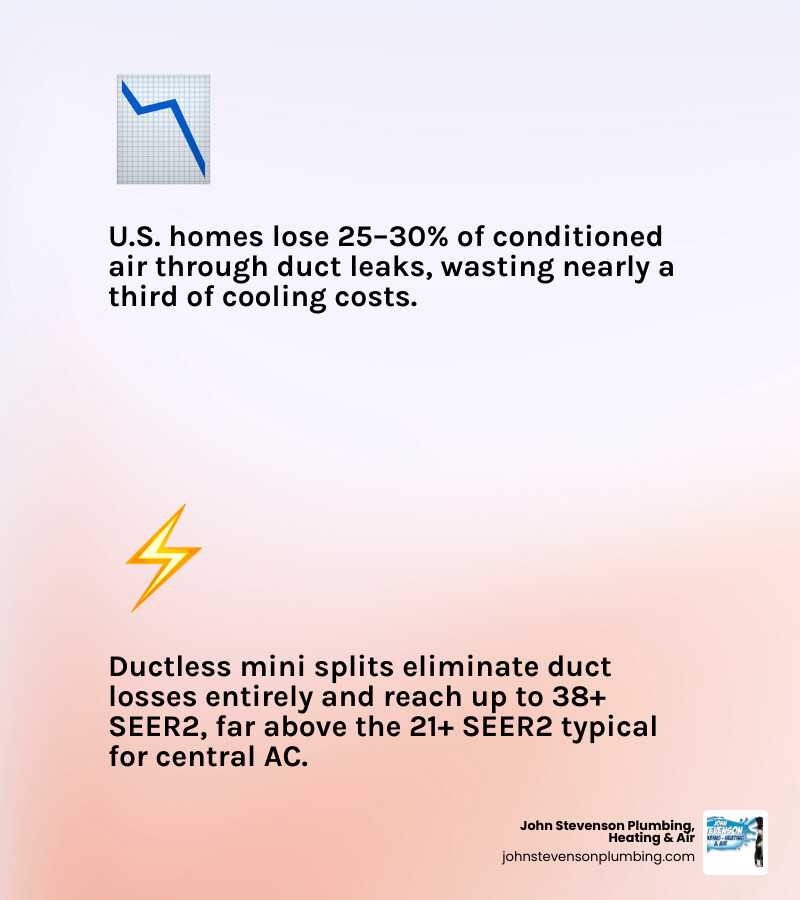
For Carlsbad homeowners, the stakes are real. Cooling accounts for a significant share of your electricity bill, and a system that isn’t matched to your home’s infrastructure can quietly waste energy every single day. Duct systems in U.S. homes lose an average of 25–30% of conditioned air through leaks and poor insulation — meaning nearly a third of what you pay to cool your home may never reach the rooms you’re trying to cool.
This guide walks through every key difference so you can make a confident, informed decision.
Understanding the Central AC vs Ductless Mini Split Comparison

To make an educated choice, we first need to look at how these systems handle heat transfer. At their core, both systems rely on the same fundamental refrigeration cycle: they absorb heat from inside your home and release it outdoors. However, the physical footprint, the equipment location, and the method of air delivery are vastly different.
If you are dealing with an older property in Carlsbad or nearby coastal communities, finding space for massive metal ducts can be a major structural headache. In A Practical Guide to Central Air vs Mini Split for Older Homes, we explore how home age and architectural layout dictate which system will integrate best into your living space.
| Component / Feature | Traditional Central AC | Ductless Mini Split System |
|---|---|---|
| Indoor Unit Location | Hidden in an attic, basement, or closet | Mounted directly on walls, ceilings, or floors |
| Air Delivery Method | Network of hidden sheet-metal or flexible ducts | Direct, localized air handlers (heads) |
| Compressor Technology | Often single-stage or two-stage cycling | Inverter-driven, variable-speed operation |
| Number of Thermostats | Usually one central control for the whole house | Individual remote or smart control per indoor head |
How Central Air Conditioning Works
A traditional central system relies on a split-system design. It features a single, large outdoor condenser unit connected via copper refrigerant lines to an indoor evaporator coil, which is typically housed in an attic, basement, or dedicated utility closet.
When your thermostat calls for cooling, the system turns on. Warm indoor air is pulled through return vents, filtered, and passed over the freezing-cold evaporator coil. The refrigerant absorbs the heat from the air, and a heavy-duty blower fan pushes the newly cooled air through a complex network of supply ducts to every room in your home. The absorbed heat is then pumped outside to the condenser, where it is exhausted into the outdoor air.
To keep this system running smoothly, regular attention to your Air Conditioning system’s airflow and duct integrity is absolutely critical.
How Ductless Mini Splits Work
Unlike central systems, ductless mini split systems completely bypass the need for ductwork. A mini split also has an outdoor condenser unit, but instead of routing conditioned air through ducts, it pumps pressurized liquid refrigerant directly through small, insulated lines to individual indoor air handlers (often called “heads”) mounted in specific rooms.
Each indoor unit contains its own quiet fan and evaporator coil. As warm air in the room is drawn into the unit, the refrigerant absorbs the heat, and the cooled air is immediately blown back into that exact space.
Because there are no ducts, mini splits are incredibly flexible. They utilize advanced inverter-driven compressors that can run at variable speeds—adjusting their output continuously to match the exact cooling demand of the room. If you want to learn more about how these sleek units operate, check out our dedicated guide to Ductless Mini Splits.
Energy Efficiency and Performance Differences
When we look at a central AC vs ductless mini split comparison through the lens of long-term energy consumption, ductless systems are the undisputed champions of raw efficiency. With Southern California electricity rates remaining some of the highest in the nation, choosing a highly efficient system is one of the smartest ways to keep your monthly utility bills manageable.
To understand why mini splits excel, we have to look at SEER2 (Seasonal Energy Efficiency Ratio 2) ratings and compressor technology. While a high-efficiency central air conditioner can achieve impressive ratings up to 21+ SEER2, high-end ductless mini split systems can comfortably exceed 30 to 38+ SEER2.
For a deeper dive into how these efficiency ratings translate into real-world utility savings, read The Homeowner Guide to Ductless Mini Split Benefits.
Duct Losses in a Central AC vs Ductless Mini Split Comparison
The single biggest efficiency drain in any central system is the ductwork itself. According to the U.S. Department of Energy, typical residential duct systems lose 25% to 30% of their cooling energy through leaks, unsealed joints, and poor insulation.
When ducts run through a scorching-hot attic or crawlspace, the cool air inside them is warmed up before it ever reaches your living room. This means a central AC unit with a 16 SEER2 rating might effectively perform like a 12 SEER2 unit in real-world conditions.
Because ductless mini splits deliver conditioned air directly into the room, they experience zero duct loss. Every bit of cooling you pay for is delivered straight to your living space. Keeping your cooling equipment running at peak efficiency requires professional care, which is why we offer comprehensive Cooling Services to keep your system optimized.
Zoning Control in a Central AC vs Ductless Mini Split Comparison
Traditional central systems are generally “all-on” or “all-off.” A single thermostat in the hallway dictates the temperature for the entire house. This often leads to the classic “upstairs-downstairs temperature battle,” where the second floor is uncomfortably hot while the downstairs feels like a refrigerator.
Ductless mini splits solve this problem with built-in zoning control. Each indoor head operates on its own independent thermostat. If you spend your day in a home office, you can cool only that room while leaving the rest of the house uncooled. This targeted cooling approach can reduce your daily energy consumption by 30% to 40% compared to running a whole-house central air system.
To see how these zoning features stack up against traditional systems, explore our detailed analysis of Mini Split vs Central Air: Which is Better?.
Installation and Home Suitability Factors
Choosing between these two systems often comes down to the current physical state of your home. The installation process for each system is vastly different, and the right choice depends heavily on your home’s architectural layout.
Whether you are preserving a historic home in Carlsbad, upgrading a property in Oceanside, or building a new room addition, the physical footprint of your HVAC system matters. To understand what goes into a professional system setup, check out our detailed overview of AC Installation.
Homes with Existing Ductwork
If your home already has a functional, well-sealed duct network in place, a traditional central air system is often the most straightforward and least visually intrusive option. Replacing an old, worn-out central unit with a modern, high-efficiency central AC allows you to maintain consistent, whole-home comfort without changing the look of your walls.
For homeowners in areas like Lake Forest, maintaining these ducted systems is a common priority. You can learn more about local cooling solutions by reading our page on Heating Air Conditioning Lake Forest CA.
Homes Without Ducts or with New Additions
For older homes built without central duct systems, or for modern room additions like converted garages, sunrooms, and finished attics, ductless mini splits are exceptionally convenient.
Installing new ductwork in an existing home is an invasive, messy process that often requires cutting into plaster walls, lowering ceilings, and sacrificing valuable closet space.
A mini split installation, by contrast, is incredibly non-invasive. The indoor and outdoor units are connected by a small bundle of lines (refrigerant tubing, electrical wiring, and a condensate drain line) that passes through a small hole in the exterior wall. Most single-zone installations can be completed in just a few hours with minimal disruption to your daily life.
Maintenance, Lifespan, and Air Quality
Investing in a new climate control system is a long-term commitment. To protect your investment, you need to understand the ongoing maintenance requirements and how they impact the overall lifespan of your equipment.
Filter Maintenance and Cleaning Schedules
Both systems require clean filters to maintain proper airflow and prevent system strain, but their upkeep schedules differ:
- Central AC Systems: These systems use replaceable pleated filters (often MERV-rated) located in return grilles or at the air handler. These filters must be replaced every 30 to 90 days, depending on whether you have pets or allergy sufferers in the home.
- Ductless Mini Splits: Mini splits use built-in, washable mesh filters located inside each indoor head. Because these units have smaller surface areas, these filters must be popped out and rinsed under warm water every 2 to 4 weeks. Ignoring this task can quickly restrict airflow, leading to reduced efficiency or frozen coils.
Expected Lifespan and Long-Term Durability
With consistent, professional maintenance, both systems are highly durable. However, their expected lifespans vary:
- Central AC Systems: Typically last 15 to 20 years. Because they cycle on and off completely, the compressor experiences higher start-stop wear over time.
- Ductless Mini Splits: Can last 20 to 30 years with proper care. Their variable-speed inverter compressors ramp up and down smoothly instead of cycling abruptly, which significantly reduces mechanical wear and tear.
Frequently Asked Questions About Home Cooling
Can ductless mini splits provide effective heating in winter?
Yes, absolutely. Most modern ductless mini splits are heat pumps. By utilizing a reversing valve, they can run the refrigeration cycle in reverse—absorbing heat from the outdoor air (even on chilly winter nights) and pumping it indoors.
Because Southern California winters are generally mild, a mini split heat pump is an exceptionally efficient way to heat your home without needing a separate gas furnace.
Which system is better for indoor air quality?
Both systems have unique air quality advantages:
- Central AC is excellent for whole-home filtration because its powerful blower can handle high-MERV filters, UV purifiers, and whole-home humidifiers or dehumidifiers.
- Ductless Mini Splits prevent the dust, pollen, and dander accumulation that naturally occurs inside duct networks. However, because their filters are smaller, they provide localized filtration rather than whole-home air purification.
Is it possible to combine both systems in a hybrid setup?
Yes, this is an increasingly popular comfort solution for Southern California homeowners. Many people choose to keep their central AC system to cool the main areas of the house, while adding a single-zone ductless mini split to address “problem rooms” like a hot upstairs master bedroom, a converted garage workshop, or a sunroom that struggles to stay cool.
Conclusion
A central ac vs ductless mini split comparison doesn’t have a single “correct” answer. The ideal system depends entirely on your home’s layout, whether you have functional ductwork, and how much you value independent room-by-room temperature control.
At John Stevenson Plumbing, Heating & Air, we have spent years helping homeowners across Carlsbad, San Diego County, and Orange County find the perfect comfort solutions for their unique spaces. Our certified technicians back every single job with our signature 5-Star Service Guarantee—which includes thorough diagnostics, upfront pricing, and a 24-hour satisfaction check-in to ensure your system is running flawlessly.
If you are ready to upgrade your home comfort, here are your next steps:
- Assess Your Infrastructure: Take note of whether your home has existing ductwork and what condition it is in.
- Identify Comfort Goals: Decide if you want uniform whole-home cooling or independent room-by-room temperature control.
- Consult the Experts: Schedule an in-home evaluation to have a certified technician perform a professional load calculation.
Ready to find the perfect cooling system for your Southern California home? Schedule professional HVAC services in Southern California today with the trusted team at John Stevenson Plumbing, Heating & Air.