
What to Check When Your AC Blows Warm Air After a Power Cut
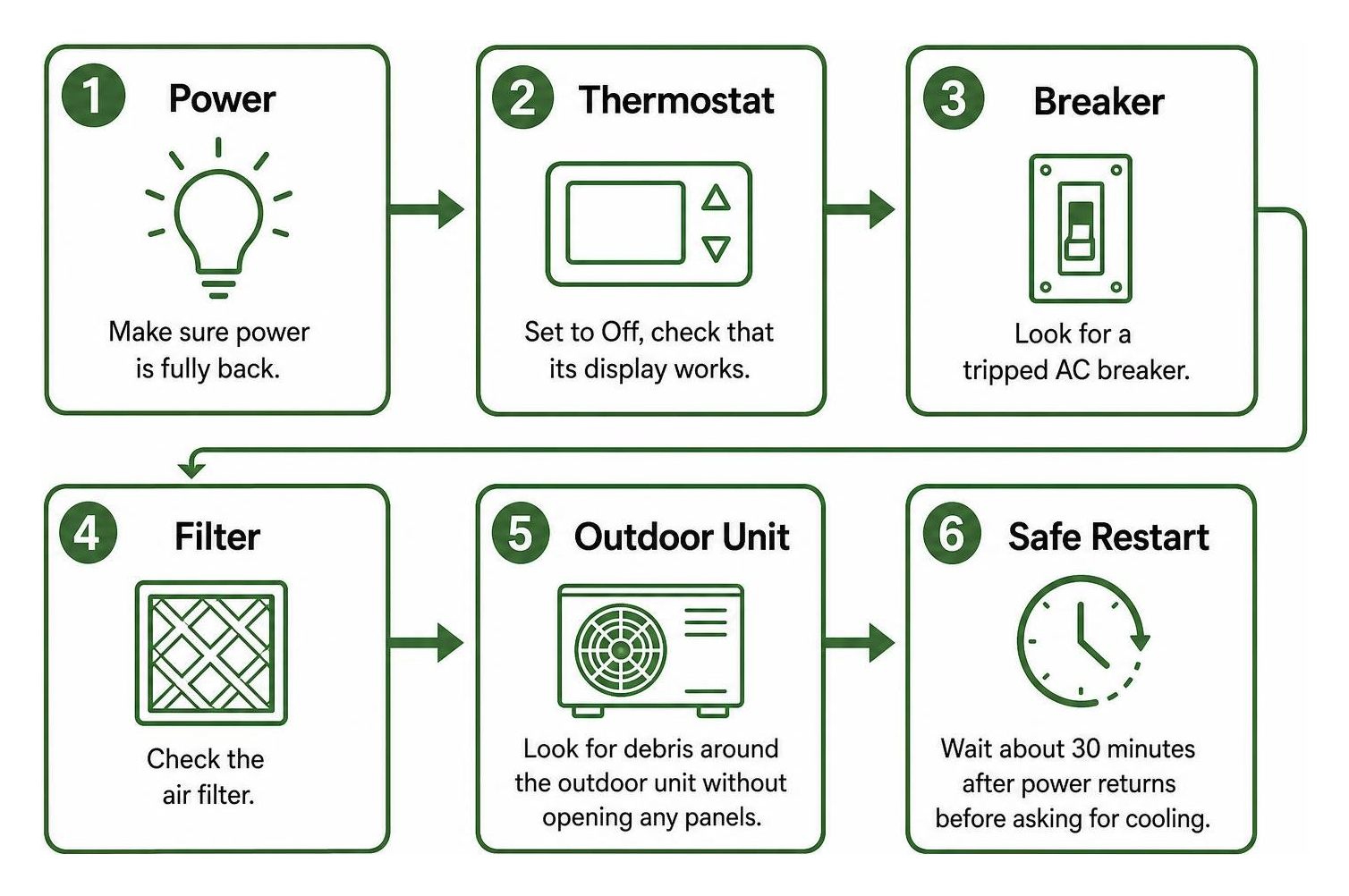
If your air conditioner blows warm air after a power cut in Orange County, CA, first make sure power is fully back. Set the thermostat to Off, check that its display works, and look for a tripped AC breaker. Check the air filter and look for debris around the outdoor unit without opening any panels. Wait about 30 minutes after power returns before asking for cooling. If the breaker trips again, you smell burning, or the unit was flooded, leave it off and seek air conditioning repair. These checks can help you spot a simple reset issue without risking further damage.
Explore our heating and air conditioning services or request air conditioning repair.
I’m John Stevenson, and if your AC still blows warm air after these checks, schedule an air conditioning repair visit.
For additional helpful storm recovery guides, see:
- plumbing problems after a storm what to look for
- post storm plumbing and hvac checklist
- protecting your water heater during power outages
The 30-Minute Rule: Why You Shouldn’t Restart Your AC Immediately
When electricity surges back into your home after a sudden blackout or rolling outage, the instinctive reaction is to crank down the thermostat right away. However, hitting the power immediately can cause severe mechanical strain on your cooling equipment.
Your air conditioning system relies on balanced internal pressures to operate safely. When an abrupt power interruption cuts electrical flow while the AC is actively running, high-pressure refrigerant remains trapped on the discharge side of your compressor. If you attempt an immediate restart, the motor must fight against extreme resistance. This phenomenon can cause electrical overcurrent, trip safety breakers, or trigger liquid slugging—where unevaporated liquid refrigerant enters the compressor pistons, causing mechanical breakdown. If you are worried about component wear, learning how to diagnose a failing AC compressor can help identify early warning signs before a total burnout occurs.
Waiting a full 30 minutes before calling for cooling provides two vital benefits:
- Refrigerant Pressure Equalization: It gives the high and low sides of your refrigerant lines enough time to balance out, allowing the compressor to start smoothly under low initial load.
- Lockout Timer Clearance: Most modern equipment and thermostats feature built-in microprocessor delay timers (usually 3 to 5 minutes, but sometimes extending up to 30 minutes in extreme safety modes). Giving the system a complete half-hour buffer ensures that all internal electronic safeties clear naturally.
Think of the 30-minute pause like letting your AC catch its breath before heading right back into a marathon.
What to Check on Your HVAC After a Power Outage
Once the utility grid has stabilized and your neighborhood streetlights are consistently illuminated, knowing what to check on your HVAC after a power outage allows you to safely troubleshoot your cooling equipment. Always observe clear safety boundaries: homeowners should limit their actions to external visual checks, filter inspections, and main electrical panel switches. Never remove service panels, touch high-voltage contactors, or reach inside electrical disconnect boxes.
If you reside in coastal or inland communities such as Laguna Niguel, Aliso Viejo, or Newport Beach, relying on local heating and air conditioning services ensures your cooling system is checked properly without exposing you to high-voltage hazards.
Thermostat and Breaker Box Inspection
Your thermostat and main breaker panel represent the control brain and power gateway for your entire comfort system.
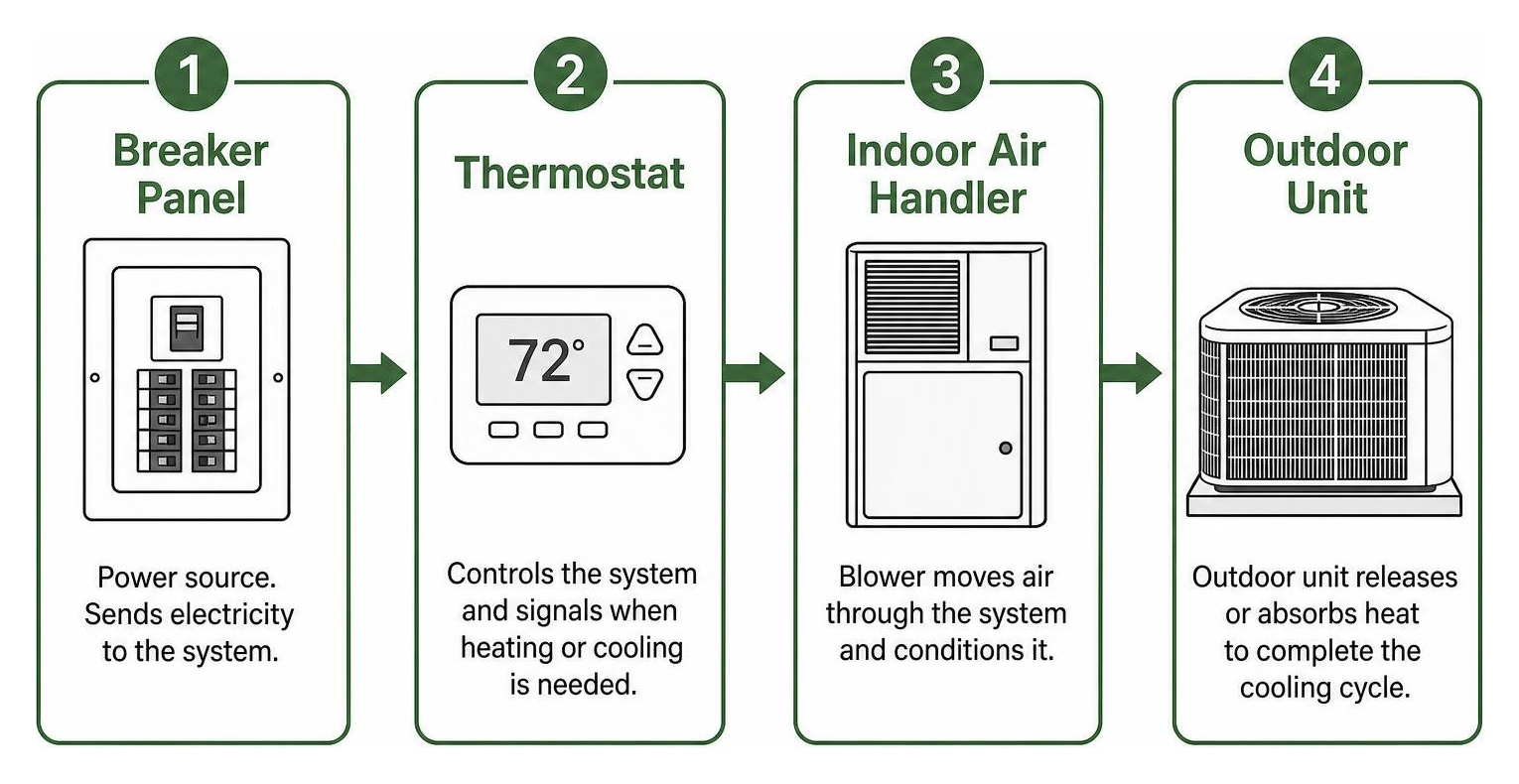
Begin by inspecting the following items:
- The Thermostat Screen: Is the screen completely blank? If your thermostat uses standalone batteries (usually AA or AAA alkaline), replace them immediately. A power surge can sometimes drain or disrupt weak batteries. If it is hardwired via a C-wire to your indoor air handler, a blank display often signals a blown low-voltage fuse on the indoor control board or a tripped safety switch.
- Thermostat Operating Mode: Ensure the setting hasn’t defaulted to “Heat” or “Off” due to an internal firmware reset. Re-verify your desired target temperature and schedule, adjusting for best thermostat settings for summer comfort so you do not overload the unit during peak heat hours.
- The Circuit Breaker Panel: Central air conditioners typically utilize two separate breakers: a double-pole 240-volt breaker for the outdoor condenser unit and a 120-volt or 240-volt breaker for the indoor blower / air handler. A power cut often causes an electrical surge upon restoration, snapping one or both breakers to the “Tripped” (middle) position. To reset, push the switch firmly to the “Off” position first, then switch it back to “On.”
Airflow and Outdoor Condenser Inspection
Even if power is restored and the breakers are engaged, restricted airflow will quickly cause the cooling cycle to fail or freeze the evaporator coils.
- Examine the Air Filter: A clogged, dirty filter dramatically restricts return air. When combined with the erratic cycling of an electrical outage, severe restrictions can trigger high-limit safety cutoffs. Understanding the consequences of a dirty air filter helps avoid frozen coils and overheating blower motors. Replace any disposable filter that shows heavy dust, pet hair, or discoloration.
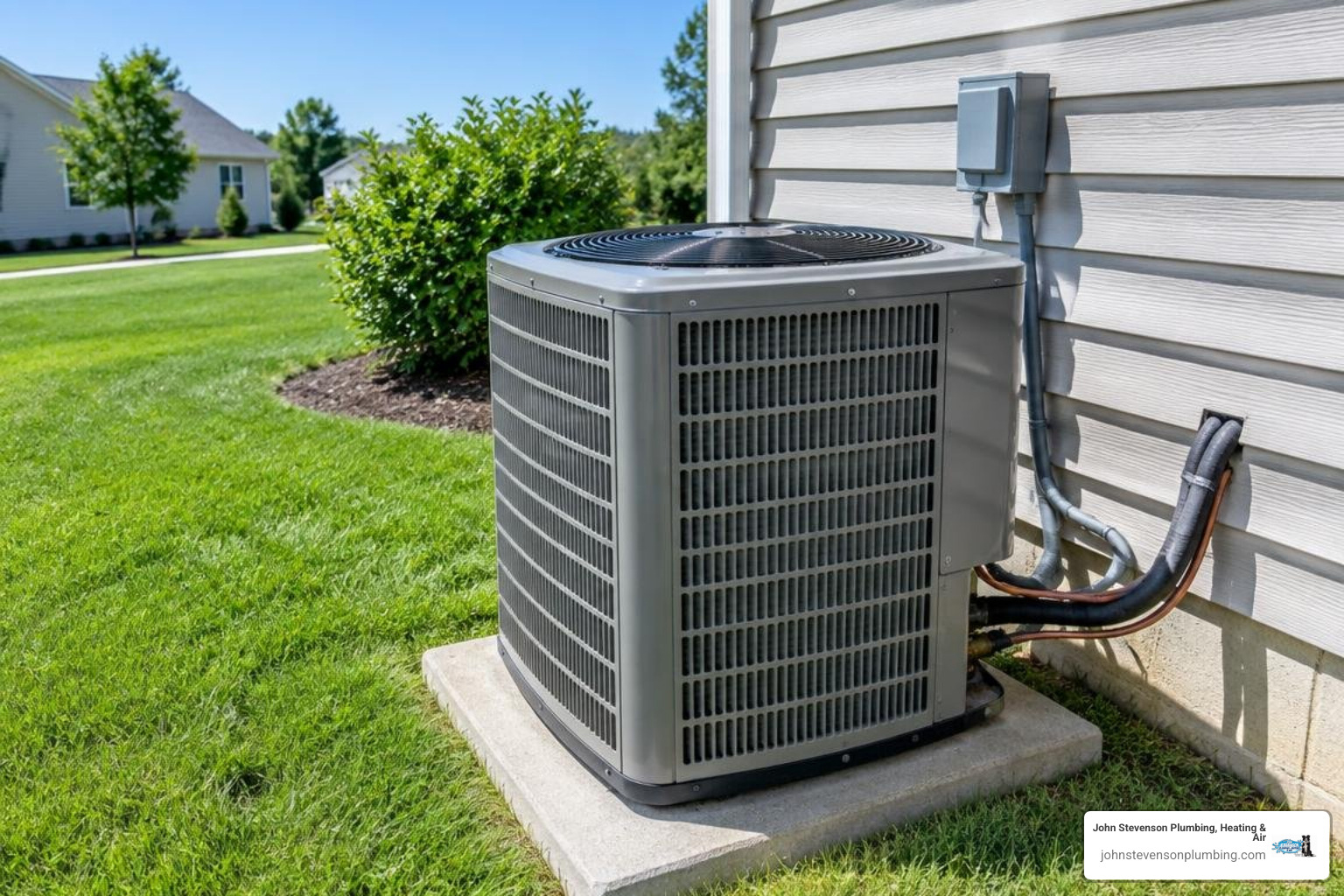
- Clear the Outdoor Condenser: Severe weather, windstorms, or fallen branches frequently accompany electrical blackouts. Inspect your outdoor condenser unit to ensure that palm fronds, leaves, trash, or lawn furniture have not blocked the top exhaust fan or wrapped around the delicate aluminum fins. Keep at least two feet of clear space around the entire perimeter of the outdoor cabinet.
Step-by-Step Safe Reset Procedures by System Type
Because different cooling setups handle electrical interruptions uniquely, follow the specific restart workflow tailored to your equipment:
1. Central Split Systems
- Walk over to your wall thermostat and switch the system mode to OFF.
- Locate your home’s electrical service panel. Locate the circuit breakers labeled “AC,” “Air Conditioner,” “Compressor,” or “Air Handler.”
- Switch both the indoor and outdoor AC breakers to the OFF position.
- Leave the breakers off for 1 full minute to allow all capacitors in the control circuitry to discharge.
- Flip both breakers firmly back to the ON position.
- Wait 30 minutes without touching the thermostat.
- Return to the thermostat, set the mode to COOL, and adjust the temperature setting at least 3 to 5 degrees below the current room temperature. Ensure the fan setting is on AUTO.
2. Ductless Mini-Split Systems
Ductless heat pumps utilize inverter boards and sensitive microprocessors located in each indoor wall head and outdoor unit. Homeowners who appreciate the energy efficiency and benefits of ductless mini-splits must handle electrical resets with care:
- Turn off the system using your handheld remote control or wall controller.
- Locate the dedicated mini-split circuit breaker or wall disconnect switch and switch it to OFF.
- Wait approximately 15 to 20 minutes to clear any error memory stored on the inverter board.
- Restore power at the breaker panel.
- Power on the indoor heads individually via the remote. If the louvers open and then immediately close with a blinking LED pattern, reference your manual for the fault flash code.
3. Smart Thermostats (Nest, Ecobee, Honeywell Home)
Smart thermostats often undergo a reboot cycle that outlasts standard hardware:
- Allow the thermostat to complete its boot sequence after power returns (the screen may show a gear icon, startup logo, or cloud connection indicator).
- If the thermostat displays a “Delayed for 5:00 minutes” notification, do not press buttons or adjust temperature targets; this is an automated safety compressor guard.
- Check your home Wi-Fi network. If the router has not finished booting, your smart thermostat may fail to pull schedule profiles or weather data. Re-link the Wi-Fi connection through the settings menu if needed.
| System Type | Primary Reset Method | Required Delay | Critical Post-Outage Safety Check |
|---|---|---|---|
| Central Air Conditioning | Thermostat to OFF; cycle 240V breaker off for 1 min, then on | 30 minutes before cooling demand | Ensure outdoor condenser fan spins and air from vents feels cold within 10 minutes |
| Ductless Mini-Split | Remote power OFF; cycle dedicated sub-panel breaker | 15–20 minutes | Monitor indoor head for blinking LED fault codes or stuck louvers |
| Smart Thermostat Setup | Allow digital boot; verify C-wire voltage connection | Built-in 5-min internal delay timer | Confirm Wi-Fi connectivity and verify delay icon clears on display |
| Window / Portable Unit | Unplug from wall; press RESET on LCDI plug | 5–10 minutes | Inspect power cord and outlet for discoloration or scorch marks |
Recognizing Power Surge Damage and Storm Hazards
Electrical outages rarely happen in total silence. High-voltage spikes occur when power lines snap, transformers blow, or utility grids switch transmission loads back on line. These sudden spikes can overwhelm electrical components in your HVAC system.
Watch for these warning signs that indicate internal electrical damage:
- Pungent Burning Odor: A sharp smell of melting plastic or burning electrical insulation near the indoor closet, attic blower, or outdoor condenser indicates a fried circuit board, overheated motor windings, or melted wire harnesses.
- Loud Buzzing or Humming Without Fan Rotation: If you hear an aggressive buzzing coming from the outdoor unit, but the fan blade is motionless, your dual-run capacitor has likely failed, or the compressor motor has seized.
- Immediate Breaker Re-Tripping: If you reset the HVAC breaker and it instantly snaps back to the middle position with a loud pop or spark, do not attempt to reset it again. A dead electrical short exists within the wiring, contactor, or compressor windings.
- Standing Water and Flood Inundation: If a heavy storm flooded your yard or basement and water levels reached above the base of your outdoor condenser or indoor furnace, never turn the power on. Water corrodes safety switches, ruins electrical insulation, and poses an immediate electrocution hazard. Review our post-storm recovery checklist and contact our team for emergency AC repair before re-energizing submerged equipment.
Protecting Your HVAC System from Future Power Surges
Taking proactive measures today will safeguard your heating and cooling investment against sudden blackouts, grid instability, and seasonal electrical storms across Southern California.
- Turn Off HVAC Equipment During Active Outages: When the power goes out, walk to your thermostat and set it to “Off” immediately. This ensures that when the utility grid is re-energized—which often brings an initial violent voltage spike—your AC compressor will not be caught in the line of fire.
- Install Dedicated HVAC Surge Protection: Whole-house surge arrestors installed at your main electrical service panel provide base protection, but installing a dedicated, inline surge protective device (SPD) directly on your outdoor AC disconnect box adds an essential layer of defense for delicate control boards and variable-speed inverters.
- Keep Up with Routine Maintenance: Loose electrical terminals, vibrating wire connections, and aged capacitors are far more vulnerable to electrical shocks. Scheduling regular cooling system maintenance allows a licensed technician to clean coils, tighten electrical lugs, and test capacitor microfarad ratings before severe weather arrives.
Frequently Asked Questions About HVAC Issues After Outages
Why is my AC running but blowing warm air after a power cut?
This classic symptom almost always points to a split-power mismatch. Your indoor blower motor (which runs on 120V) may have power and continue circulating air through your ductwork, while the outdoor compressor and fan (which run on 240V) remain dead due to a tripped outdoor breaker, blown disconnect cartridge fuse, or failed start capacitor. For a detailed breakdown of this specific failure, read our guide on what to check when your AC runs constantly without cooling.
How do I safely reset my HVAC system circuit breaker?
To safely reset the breaker:
- Turn your indoor thermostat to the “Off” position.
- Locate the main electrical breaker panel and open the access door.
- Identify the double-pole breaker controlling the air conditioner.
- If it has tripped into the middle position, push it firmly all the way into the OFF position until you feel and hear a distinct click.
- Wait 60 seconds, then push the switch firmly into the ON position.
- Allow the system’s internal safety delay to run for 30 minutes before adjusting the thermostat back to cooling mode.
What should I do if my outdoor unit was flooded during a storm outage?
Do not attempt to power on, reset, or touch an air conditioning unit that has been submerged in water. Silt, mud, and moisture penetrate the fan motor housing, contactor coils, and safety pressure switches. Keep the circuit breaker turned completely off and schedule an inspection for expert air conditioning repair. A certified technician must wash away debris, dry out connections, inspect refrigerant lines, and conduct electrical insulation tests to ensure the unit is safe to operate.
Conclusion
Power cuts are an inconvenient reality, but restoring indoor comfort shouldn’t turn into a stressful ordeal. By patiently waiting the recommended 30 minutes, checking your thermostat settings, resetting your breaker panel correctly, and keeping airflow passages clear, you can safely resolve most routine post-outage cooling issues.
When resetting the breaker does not restore cooling, or if you suspect power surge damage, trust the friendly professionals at John Stevenson Plumbing, Heating & Air Conditioning. Backed by our 5-Star Service Guarantee, our licensed, certified technicians provide thorough diagnostics and prompt, reliable solutions throughout Carlsbad, San Diego County, and Orange County communities like Mission Viejo, Irvine, Lake Forest, and Fountain Valley.
Don’t spend another minute sweating out the aftermath of a power cut—schedule professional HVAC services with our trusted local team today!