
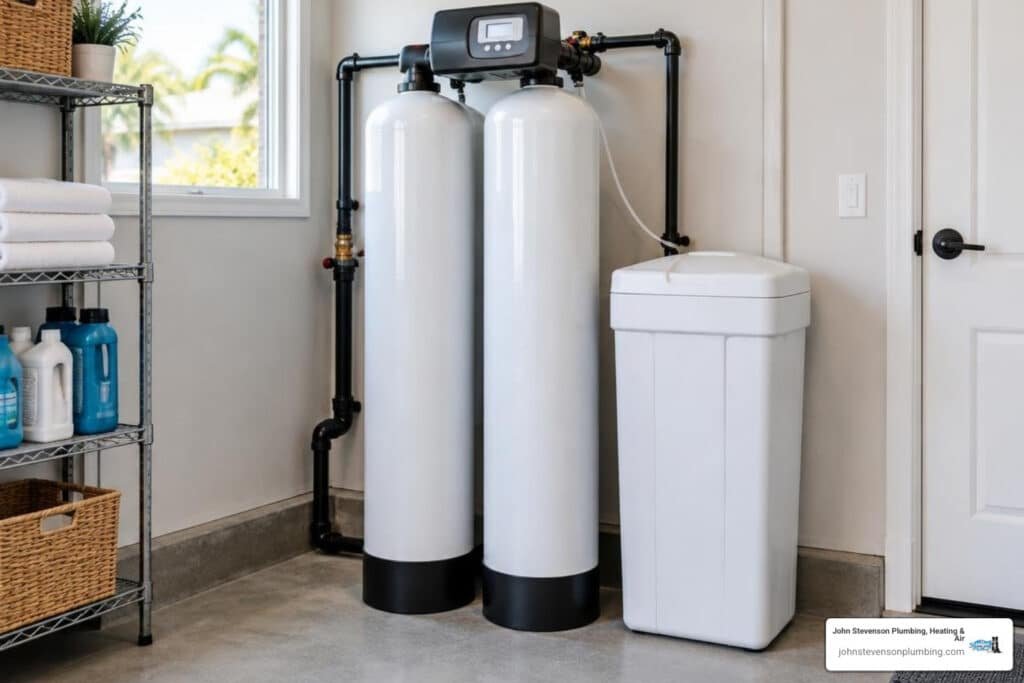
Understanding Water Hardness and Plumbing Risks in Southern California
The most effective hard water solutions for California homeowners are ion-exchange water softeners, which remove calcium and magnesium to protect plumbing throughout the home, and salt-free conditioners using template-assisted crystallization, which reduce scale formation without adding sodium. Choosing the right approach depends on your water hardness, plumbing configuration, and local requirements.
Southern California water is notoriously rich in dissolved minerals, primarily calcium carbonate and magnesium ions. As water journeys through regional aquifers, the Colorado River Aqueduct, and State Water Project channels, it dissolves mineral deposits from rock and soil. By the time it reaches your fixtures, it carries high concentrations of these dissolved rock particles, measured in grains per gallon (gpg).
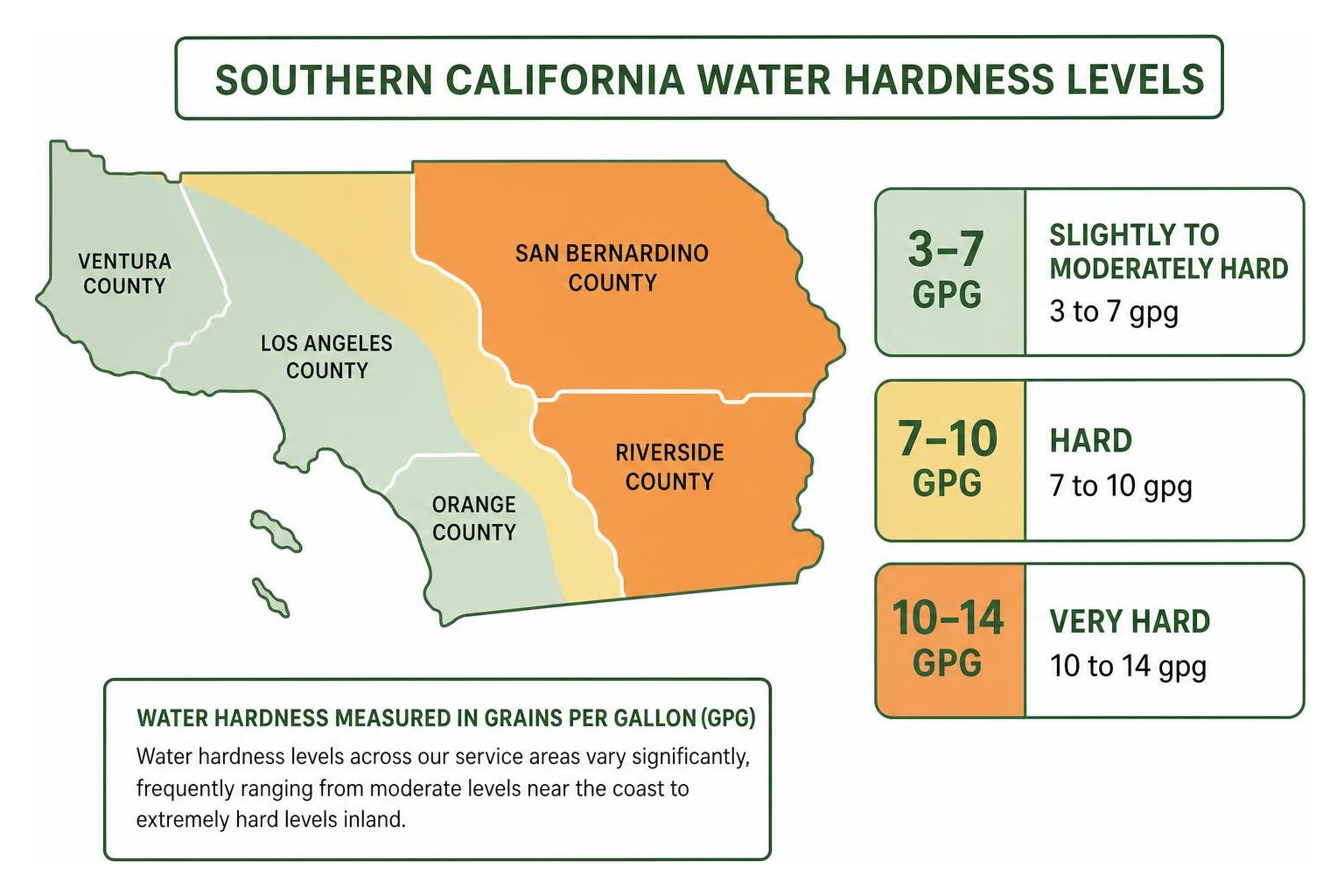
Water hardness levels across our service areas vary significantly, frequently ranging from moderate levels near the coast to extremely hard levels inland:
- Slightly to Moderately Hard: 3 to 7 gpg
- Hard: 7 to 10 gpg
- Very Hard: 10 to 14 gpg
- Extremely Hard: 15+ gpg
When hard water is heated or left to dry on fixtures, dissolved calcium and magnesium precipitate out of solution, forming tough crystalline crust known as limescale. This scale creates continuous problems throughout residential plumbing networks. Over time, internal pipe scaling restricts water flow and accelerates fixture corrosion.
The most devastating impact is on household appliances. Heating elements in dishwashers, washing machines, and water heaters become blanketed in a thermal insulating layer of rock. Hard water can destroy major appliances 30% to 50% faster than softened water, often causing traditional tank water heaters to fail at year 6 instead of reaching their expected 12-to-14-year lifespan. Reviewing the complete guide to hard water effects on plumbing and appliances reveals how unmanaged minerals degrade internal valves and seals.
Homeowners can spot early warning signs before major leaks develop. If you notice chalky white rings around aerators, persistent soap scum on shower glass, stiff laundry, or reduced water pressure, you can use our guide on how to tell if you have hard water signs to confirm the symptoms. Left unaddressed, Southern California’s complex water quality issues consistently lead to premature plumbing repairs and unexpected appliance replacements.
Top Hard Water Solutions for California Homeowners
When evaluating hard water solutions for California homeowners, understanding the distinction between mineral removal, physical conditioning, and point-of-use filtration is essential. Whole-home systems safeguard your pipes, fixtures, and water heaters, while point-of-use systems enhance drinking water quality at specific taps.
Our team provides comprehensive plumbing services for water quality to address mineral content, chlorine, and sediment across coastal and inland homes.
| System Type | Primary Mechanism | Mineral Removal | Scale Protection | Maintenance Required | Best Suited For |
|---|---|---|---|---|---|
| Ion-Exchange Softener | Ion Exchange (Sodium/Potassium) | Yes (<1 gpg) | 100% Comprehensive | Regular salt replenishment; resin service | High to extreme hardness; full home scale & fixture protection |
| Salt-Free Conditioner | Template-Assisted Crystallization (TAC) | No (Transforms minerals) | 90%+ Scale Reduction | Media replacement every 3 to 7 years | Moderate to hard water; areas with brine restrictions; low maintenance |
| Reverse Osmosis (Point-of-Use) | Semi-Permeable Membrane Filtration | Yes (Reduces TDS) | Localized at tap | Filter cartridge & membrane replacements | Drinking & cooking water purification at kitchen sink |
Evaluating Salt-Based Hard Water Solutions for California Homeowners
Traditional salt-based water softeners remain the gold standard for physically removing hardness minerals from incoming water. These systems operate using ion exchange. Inside the main mineral tank, millions of microscopic, negatively charged polystyrene resin beads hold sodium or potassium ions.
When hard water flows through the resin bed:
- The positively charged calcium and magnesium ions attach firmly to the resin beads.
- An equivalent amount of sodium or potassium ions is released into the water.
- The water leaves the tank with hardness reduced to consistently less than 1 gpg at every fixture.
Periodically, the system enters a regeneration cycle. Salty water from an adjacent brine tank flushes through the resin bed, detaching the collected calcium and magnesium and washing them down a dedicated drain line before recharging the resin with fresh sodium ions.
When choosing between a water softener and filtration system, consider that softeners require a 120V electrical outlet, a nearby drain connection, and regular salt replenishment. In return, they deliver true soft water that completely eliminates limescale, extends appliance longevity, and makes soaps and shampoos lather effortlessly.
Evaluating Salt-Free Hard Water Solutions for California Homeowners
Salt-free water conditioners do not remove calcium or magnesium from your water; instead, they alter the physical structure of these minerals through Template-Assisted Crystallization (TAC).
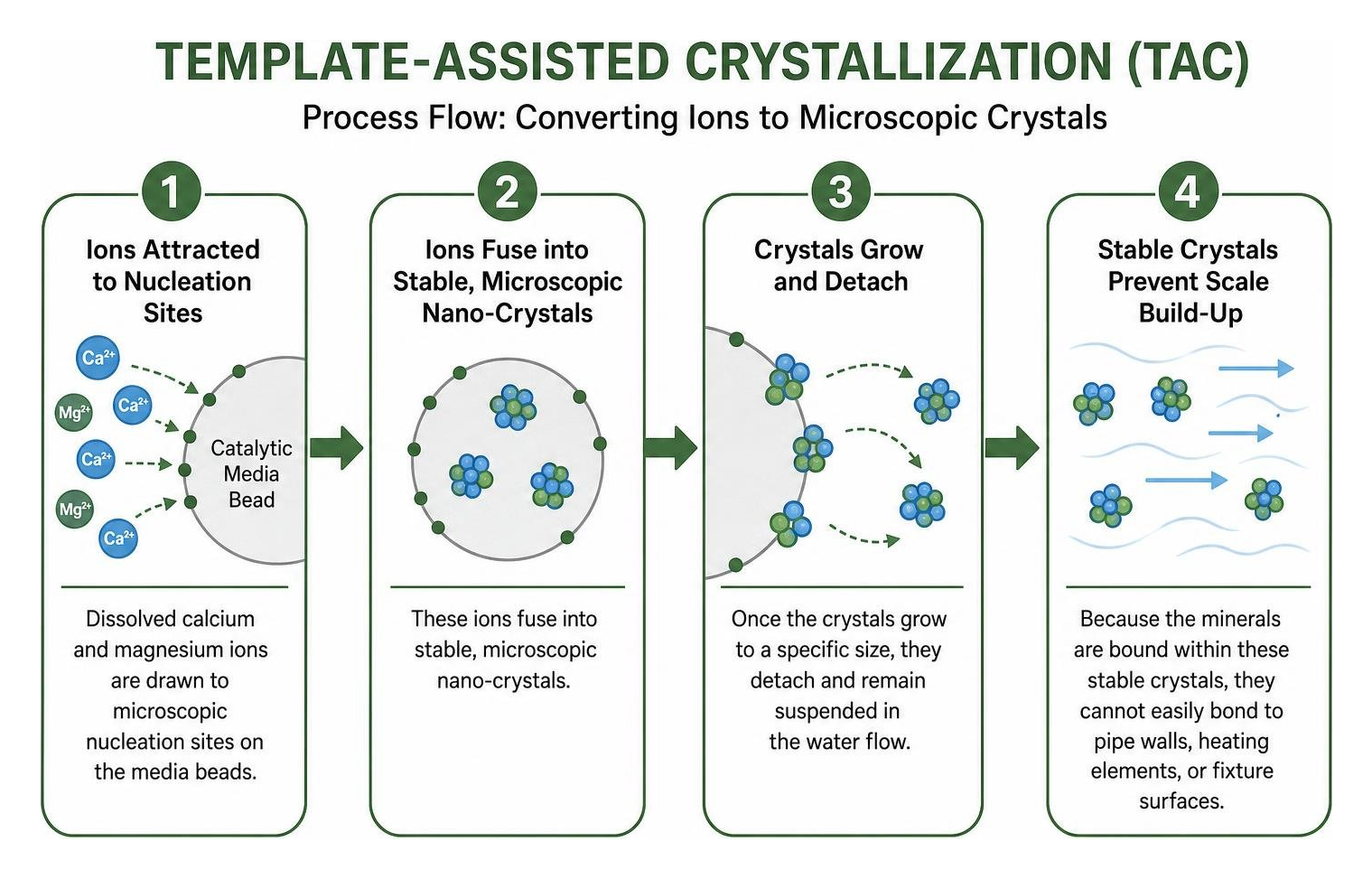
As water passes over specialized catalytic media:
- Dissolved calcium and magnesium ions are drawn to microscopic nucleation sites on the media beads.
- These ions fuse into stable, microscopic nano-crystals.
- Once the crystals grow to a specific size, they detach and remain suspended in the water flow.
- Because the minerals are bound within these stable crystals, they cannot easily bond to pipe walls, heating elements, or fixture surfaces.
TAC technology reduces hard-water scaling by over 90% without requiring salt, electricity, or backwash drain lines. These water descaling services offer an eco-friendly approach that preserves healthy drinking minerals, operates silently, and complies with regional environmental guidelines.
Combining Softening and Filtration Systems
While softeners and descalers handle dissolved minerals, municipal tap water also carries municipal disinfectants, such as chlorine or chloramines, along with fine sediment and volatile organic compounds (VOCs).
Many homeowners achieve the best results by pairing treatment methods. Combining water softeners with whole-house filtration provides comprehensive protection:
- Stage 1 (Pre-Filtration & Carbon Media): An activated carbon and sediment filter strips out chlorine, chloramines, bad odors, chemical residues, and rust particles. Protecting your downstream plumbing from chlorine also extends the lifespan of softener resin beads.
- Stage 2 (Conditioning or Softening): The descaler or softener treats dissolved minerals, ensuring plumbing lines and water heaters stay clear of scale.
Installing whole-house water filtration alongside your scale-reduction system ensures every tap delivers clean, clear water for bathing, cleaning, and cooking.
System Comparison: Water Softeners vs. Salt-Free Conditioners
Choosing between an ion-exchange softener and a salt-free conditioner depends on your household’s plumbing configuration, water hardness, and lifestyle preferences.
When reviewing our water softener vs descaler comparison, consider how these distinct technologies perform across practical categories:
Scale Prevention vs. Mineral Elimination
- Ion-Exchange Softeners: Remove 100% of hard minerals. You will experience zero scale buildup inside plumbing, no soap scum on shower tiles, and spot-free dishwashing.
- Salt-Free Descalers: Prevent over 90% of internal scale accumulation inside pipes and water heaters. However, because minerals remain in the water, you may still notice light, powdery mineral dust on glass or countertops when standing water evaporates. This residue wipes away easily without harsh chemical cleaners.
Water Feel and Soap Performance
- Ion-Exchange Softeners: Produce a distinctly smooth, slick water feel. Soaps, shampoos, and detergents lather quickly, allowing you to use up to 50% less soap per wash.
- Salt-Free Descalers: Do not alter the chemical lathering properties of soaps or create a silky bathing sensation, because mineral ions remain present in the water.
Plumbing Compatibility and Regulations
Understanding how pipe materials react to treated water is critical during system selection:
- Traditional softeners discharge a concentrated brine solution during regeneration cycles, which requires an accessible drain and is restricted in certain California communities to protect municipal recycled water programs.
- Salt-free systems produce zero wastewater, require no drain connection or electricity, and can be installed in tight garage spaces or outdoor utility areas where drain lines are unavailable.
Protecting Tankless Water Heaters Across North County Communities
Tankless water heaters are popular throughout Southern California for their endless hot water and compact footprint. However, their high-efficiency copper and stainless steel heat exchangers are vulnerable to hard water damage.
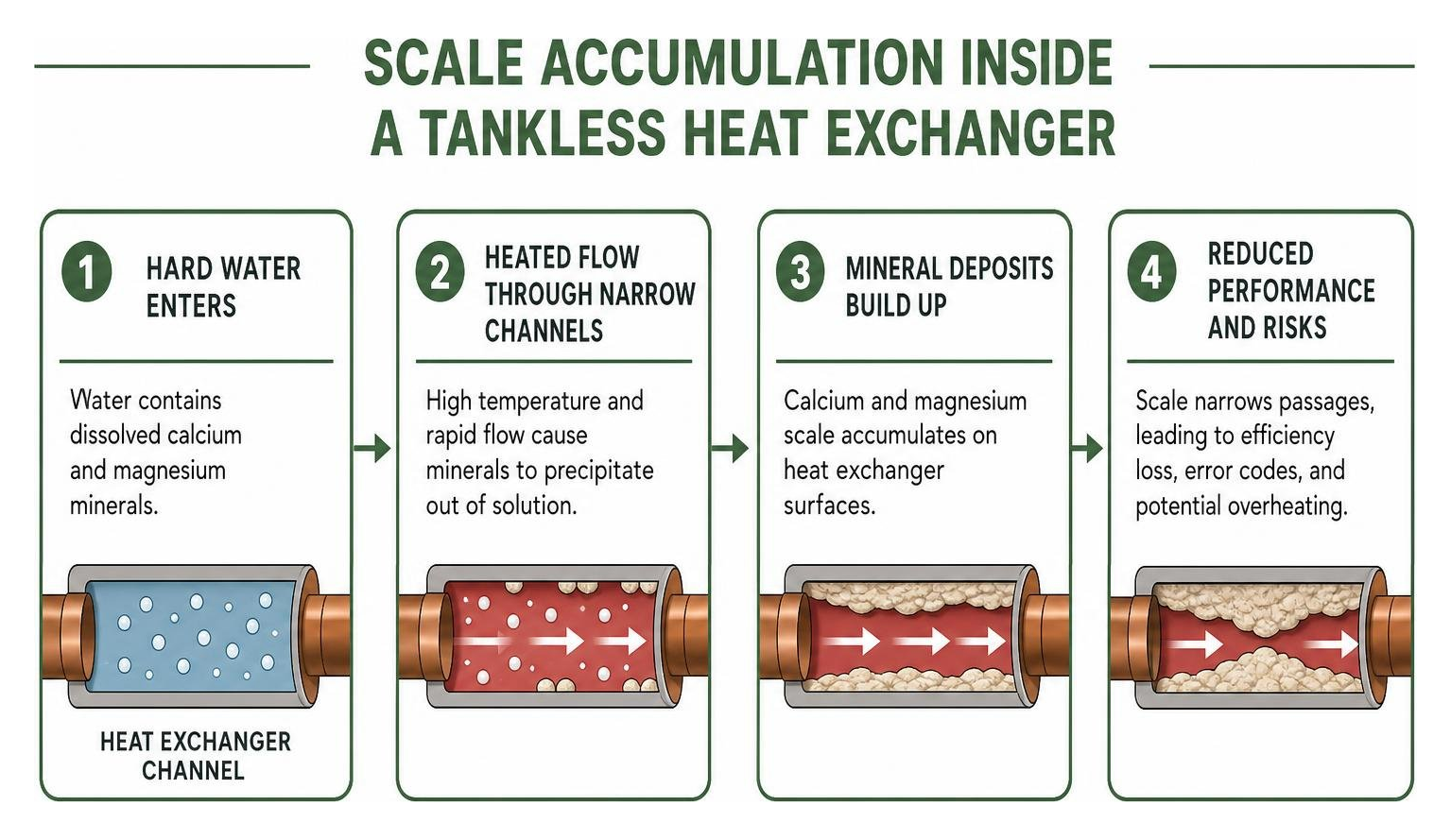
Water passes through narrow channels inside a tankless heat exchanger at rapid flow rates and high temperatures. These conditions cause dissolved calcium and magnesium to precipitate out of solution quickly. In areas with high mineral concentrations, untreated water can clog tankless heat exchangers within 18 to 24 months, triggering error codes, overheating, and sudden efficiency drops.
Implementing customized water treatment for Southern California homes safeguards your tankless investment and maintains manufacturer warranties.
We provide localized water quality testing and protective treatment across our local communities:
- Homeowners in coastal areas can access Carlsbad water quality services and Oceanside water quality solutions to address regional hardness variations.
- Residents further south can rely on Encinitas plumbing solutions for tailored descaling systems.
- Inland communities with higher mineral content can protect high-efficiency appliances with specialized San Marcos water quality care.
Frequently Asked Questions About California Water Treatment
Are salt-based water softeners restricted in parts of California?
Yes. Several municipal water districts and sanitation agencies across California have implemented local ordinances or restrictions regarding self-regenerating salt-based water softeners.
When softeners regenerate, they discharge brine high in sodium and chloride into local sewer systems. Wastewater treatment plants cannot easily remove dissolved salts, which increases the salinity of recycled wastewater used for agricultural irrigation and groundwater replenishment. In areas where brine discharge is restricted, salt-free TAC conditioners or exchange-tank delivery services offer compliant ways to manage hard water without violating local plumbing codes.
Will a salt-free conditioner make tap water feel slick?
No. The distinctive “slick” or “silky” feeling associated with softened water occurs when calcium and magnesium ions are removed and replaced with sodium or potassium, allowing natural oils and soaps to rinse freely without forming insoluble curd.
Because salt-free conditioners transform minerals into suspended micro-crystals without removing them, the water retains its natural surface tension and mineral texture.
How do I determine the exact water hardness level in my home?
You can verify your water’s hardness through three reliable methods:
- Annual Water Quality Reports: Municipal water providers (such as the Carlsbad Municipal Water District or Oceanside Water Utilities) publish annual Consumer Confidence Reports detailing average hardness levels across their distribution zones.
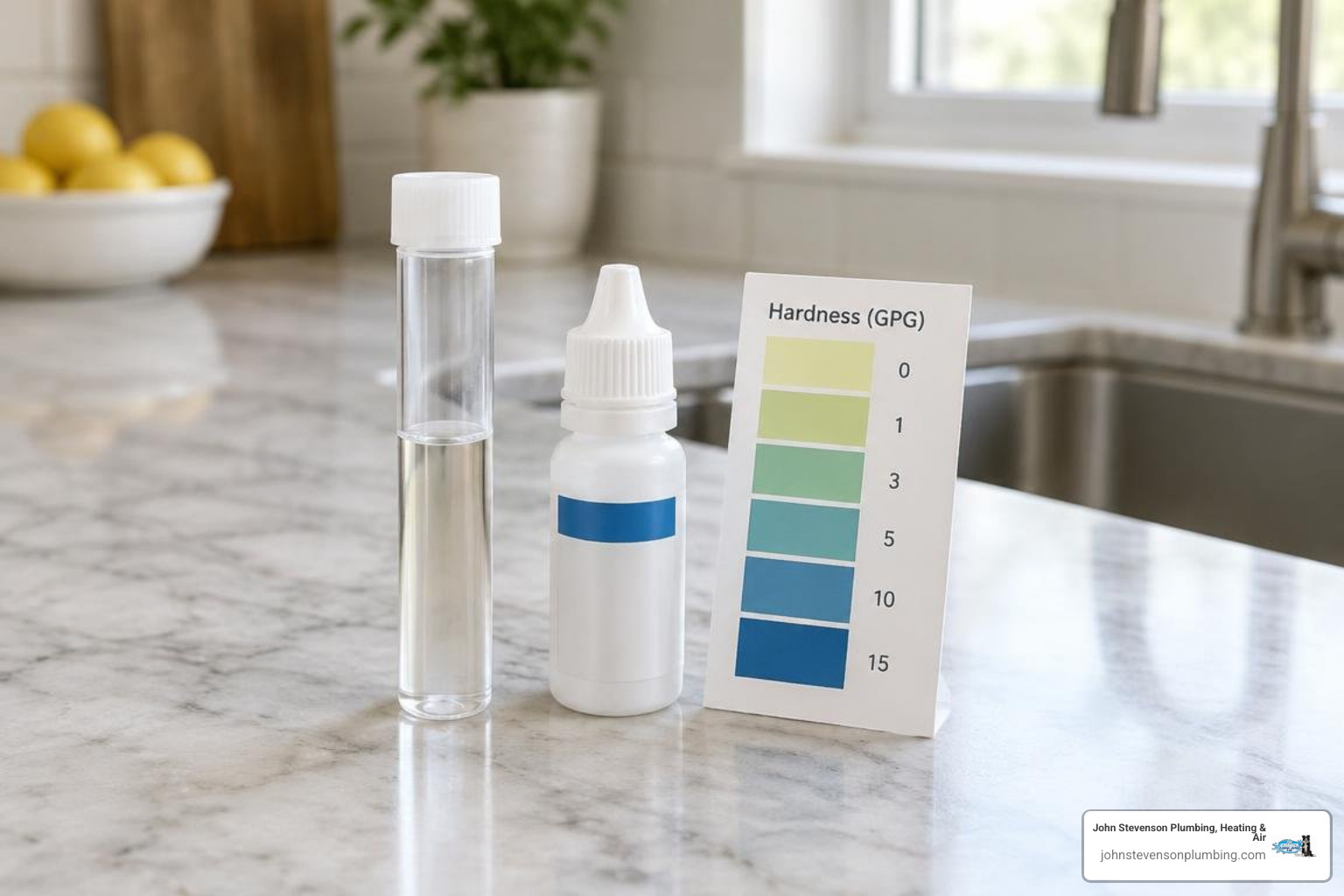
- At-Home Titration Test Kits: Liquid drop-count titration kits measure hardness in grains per gallon more accurately than basic test strips.
- Professional In-Home Water Diagnostics: A certified plumbing technician can perform an on-site water test to check hardness, total dissolved solids (TDS), and chlorine levels, helping you choose the right system size for your household.
Conclusion
Untreated hard water can quietly damage household plumbing, reducing water pressure and causing premature appliance failure. Selecting the ideal treatment system requires balancing water hardness, appliance demands, environmental considerations, and local plumbing regulations.
Whether your home is best suited for an ion-exchange water softener, a zero-waste salt-free descaler, or a combined whole-house filtration system, our licensed technicians deliver dependable guidance. At John Stevenson Plumbing, Heating & Air Conditioning, our work is backed by our 5-Star Service Guarantee—featuring thorough diagnostics, clear service details, certified technicians, and 24-hour satisfaction check-ins.
Protect your pipes, fixtures, and water heaters today by scheduling your consultation for expert water quality services.